
Did you know that a large proportion of Brazilian families are in debt? According to the Brazilian Institute of Geography and Statistics (IBGE), many people have difficulty managing their debts and maintain good financial health.
Renegotiate your debts with the banks It can be an effective solution for those looking for paying off debts e começar de novo. Neste guia, você vai aprender estratégias práticas para renegociar suas dívidas e recuperar o controle de suas finanças.
By understanding your current situation and preparing yourself properly, you'll be able to create a realistic plan to paying off debts and improve your relationship with the credit.
The Reality of Debt in Brazil
Debt is a troubling reality in Brazil, affecting millions of families. According to a CNN Brasil report, in August 2023, the proportion of indebted families in the country stood at 78.1%, a figure that remains high despite a slight decline.
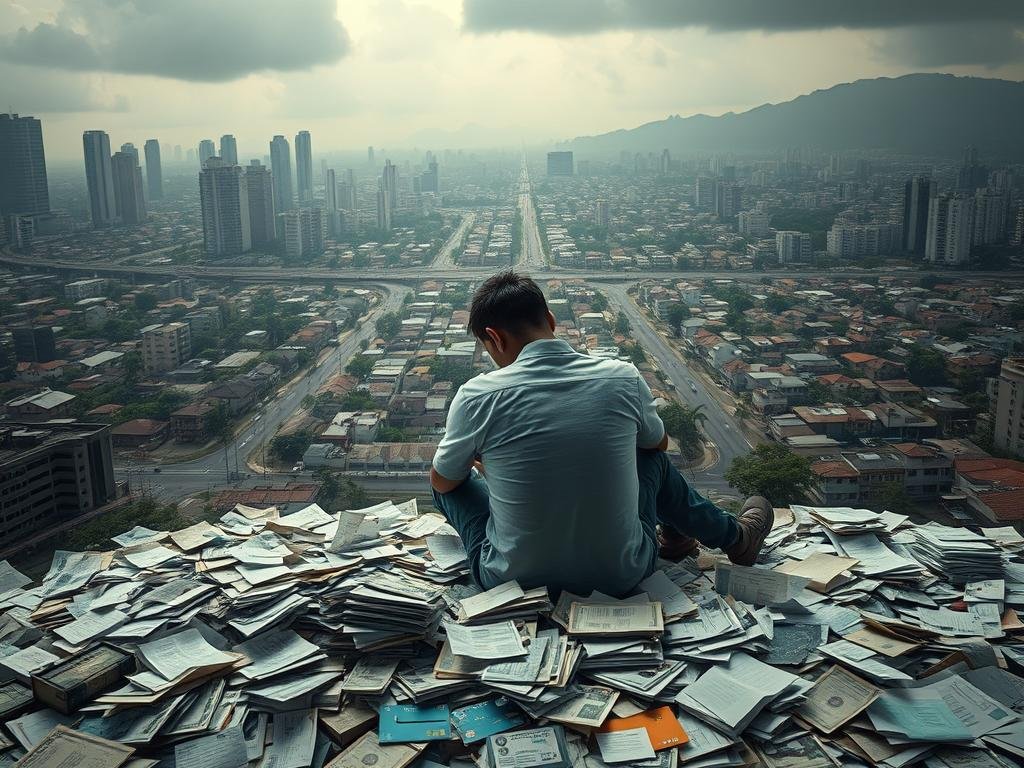
Current Overview of Bank Debt
Bank debts are one of the main causes of indebtedness among Brazilian households.
High interest rates They are a crucial factor that can turn small debts into major financial problems if they are not managed properly.
This is because interest can add up quickly, making it difficult for families to pay off their debts.
The Impact of Debt on Financial Life
Excessive debt can have significant consequences on people's lives. It can lead to stress and anxiety related to finances, in addition to limiting financial and professional opportunities due to restrictions on credit.
In addition, having one’s name listed on credit protection agencies’ blacklists can affect personal and family relationships, creating a vicious cycle that is difficult to break.
A precarious financial situation can make it difficult to rent a home, make installment purchases, or secure new loans, thereby affecting one’s quality of life and financial stability.
Understanding Your Financial Situation Before Negotiating
Before beginning any negotiations, it is crucial to understand your current financial situation. This involves identifying all your debts, understanding your monthly expenses, and assessing your ability to pay.
How to Identify All Your Debts
To start, you need to have a complete list of all your debts. This includes credit cards, personal loans, loans for purchasing goods, and any other financial obligations.
Tools for Checking Debts
There are several tools that can help you identify outstanding debts. You can check the websites of credit reporting agencies such as SPC and Serasa, as well as the free tool Registrato, offered by the Central Bank. Learn more about how to renegotiate debts.

Assessment of Your Ability to Pay
Calculating your ability to pay is essential. This involves considering your monthly income and essential expenses to determine how much you can set aside for debt payments.
| Monthly Income | Essential Expenses | Ability to Pay |
|---|---|---|
| R$ 5,000.00 | R$ 3,000.00 | R$ 2,000.00 |
| R$ 4,000.00 | R$ 2.500,00 | R$ 1,500.00 |
By understanding your financial situation, you can create a realistic plan to pay off your debts without compromising your basic livelihood.

- Year of publication: 2025. | Includes an index: Yes. | Book volume: 1. | Book cover: Hardcover. | Genre: History. | Number of…
Organizing Your Budget to Pay Off Debts
Organizing your budget is the first step toward creating a sustainable repayment plan and paying off your debts. This involves clearly understanding your income and expenses.
Practical Methods for Financial Organization
There are several tools for organizing your budget, such as mobile apps, spreadsheets on the computer or even write it down on paper.
Choose a way to keep track of your finances and record all transactions, such as salaries, extra income, and payments received.
Identifying Essential and Non-Essential Expenses
After recording your income, list all your fixed and variable expenses, such as your electricity bill, school tuition, health insurance, groceries, and others. Identify which ones are essential and which ones can be reduced or eliminated.
Creating a Realistic Payment Plan
Once you have a clear picture of your financial situation, you can create a payment plan. There are methods such as the “snowball” technique (paying off the smallest debts first) or the “avalanche” method (prioritizing those with the highest interest rates).
Set realistic goals based on your current financial situation and allocate your available resources among your various debts, taking into account interest rates and repayment terms.
Here are some additional tips for your plan:
- Create a payment schedule that is challenging but achievable.
- Prioritize your debts based on interest rates and repayment terms.
- Keep your plan flexible so you can adjust it as your financial situation changes.
Learn how to renegotiate debts with banks: foolproof tactics
Knowing how to approach debt renegotiation with banks is crucial to finding a viable and lasting solution. Renegotiating debt isn't just about reducing the amount owed, but also about reorganizing your finances to avoid future complications.
The ideal time to start negotiating
The best time to start negotiating is when you have a clear picture of your finances and can demonstrate your ability to pay.
It's important to keep your finances in order and understand your financial limitations before contacting the bank.
Effective Approaches to Contacting Financial Institutions
When contacting financial institutions, it is crucial to be clear and honest about your financial situation. Prepare a summary of your situation And having all the necessary documents on hand can make the process easier.
Negotiation Techniques That Work
Effective negotiation techniques include be prepared to make counterproposals and don't accept the first offer without careful consideration. Remember that banks usually make a higher initial offer.
How to Handle Unfavorable Proposals
If the initial proposal is unfavorable, Don't hesitate to reject it and make a counteroffer based on your financial situation. It is essential to justify your refusal based on your financial circumstances and to present viable alternatives.
By following these strategies, you’ll be better prepared to renegotiate your debts effectively. As one expert puts it, “The key to a successful renegotiation lies in preparation and the ability to make a case for your financial situation.”
Specific Strategies for Different Types of Debt
Different types of debt require specific approaches for effective renegotiation. It is essential to understand the characteristics of each type of debt in order to develop an appropriate action plan.
Credit Cards and Overdraft Protection
For credit card debt and overdrafts, it is essential prioritize interest rate negotiations and work toward reducing the total amount of debt. You can contact the bank and request a plan to custom payment.
Personal Loans
In the case of personal loans, renegotiation may involve extending the repayment term or adjusting the installment amounts. It is important to evaluate the terms offered by the bank and compare them with other options on the market.
Asset Financing
For auto or real estate loans, renegotiation may involve adjusting the installment amounts or extending the repayment term.
It is crucial to review the terms of the contract and understand the risks of late payments. The table below summarizes the main strategies for each type of debt:
| Type of Debt | Renegotiation Strategies |
|---|---|
| Credit Cards and Overdraft Protection | Negotiating interest rates and reducing the total amount |
| Personal Loans | Extension of the payment deadline or adjustment of installment amounts |
| Asset Financing | Revision of installment amounts or extension of the payment period |
For more information on how to get out of debt, you can visit the website Learning about Finance.
Official debt restructuring programs
Brazil has specific programs to help people renegotiate their debts with financial institutions. These programs are designed to offer more favorable terms and help individuals regain their financial stability.
Desenrola Brasil: How It Works and Who Can Participate
Desenrola Brasil is a federal government program designed to help individuals in debt renegotiate their debts.
To participate, you must have debts of up to R$ 20,000 and have a negative credit history. The program facilitates debt renegotiation, allowing debtors to pay off their debts under more affordable terms.
"Renegocia!" Initiative: Benefits and Access
"Mutirão Renegocia!" is another initiative that offers benefits to debtors. This program allows for simplified debt renegotiation, providing more flexible payment terms.
To access the benefits, interested individuals should review the specific requirements and enroll in the program.
Credit portability as an alternative
If you have a loan with one financial institution and another institution offers lower interest rates, you can request loan portability.
This involves transferring the debt to the new institution, which will then offer more favorable terms.
It is essential to run simulations and request the Total Cost of Ownership (TCO) to understand the total amount you will pay.
| Program | Description | Benefits |
|---|---|---|
| Unwind, Brazil | Debt renegotiation for amounts up to R$ 20,000 | Affordable payment terms |
| Renegociate Together! | Simplified Debt Restructuring | Flexible payment terms |
| Credit Portability | Debt Transfer to an Institution with Lower Interest Rates | Reduction in the total cost of debt |
Conclusion: Rebuilding Your Financial Life After Renegotiation
Once you've followed the strategies outlined here, you'll be ready to effectively renegotiate your debts.
Renegotiating debt with banks is a process that, when done correctly, can offer several benefits, such as clearing your credit history, improving your credit score, and freeing up more money to invest in your dreams.
When renegotiating their bank debts, you not only solve immediate problems, but you also learn to manage your financial situation more effectively.
It is essential to maintain a shape an appropriate repayment plan and create a realistic strategy to avoid falling back into the cycle of debt.
With agreement If the outlook is favorable, you can begin to rebuild your credit and improve your relationship with financial institutions. Remember that the key to a solution A lasting solution lies in changing consumption habits and financial planning.
FAQ
Q: What are the main advantages of renegotiating debt with banks?
A: Renegotiating debts with banks can lead to lower interest rates, more affordable payments, and extended repayment terms, helping to make the debt repayment process more manageable and less stressful.
Q: How can I tell if I'm eligible to renegotiate my debt?
A: Before you begin renegotiating, it is essential to assess your ability to pay and identify all of your debts. This will help you better understand your financial situation and create a realistic plan.
Q: What is Desenrola Brasil, and how can I participate?
A: Desenrola Brasil is an official debt renegotiation program designed to help individuals pay off their debts. To participate, you must check the eligibility requirements and follow the enrollment instructions provided by the program.
Q: Can I renegotiate credit card and overdraft debts?
A: Yes, it is possible to renegotiate credit card and overdraft debts. It is recommended that you contact the financial institutions to discuss renegotiation options and reach an agreement that suits your financial situation.
Q: What are the consequences of not paying my debts?
A: Failing to pay debts can result in high interest charges, penalties, and a negative impact on your credit. In addition, it can lead to legal action by creditors, which can make the situation even worse.
Q: How can I avoid getting into excessive debt in the future?
A: To avoid excessive debt, it is crucial to organize your budget, prioritize essential expenses, and keep strict control over your spending. In addition, it is recommended that you build up a financial reserve to handle unforeseen circumstances.