
Have you ever stopped to think about how an armed conflict in a distant country can actually influence your life here in Brazil?
It seems so far from our reality, but the truth is that we are all connected in ways that often go unnoticed. Shock waves international conflict travel far beyond the borders of the countries involved.
When a war happens anywhere in the world, the effects reach us through different channels. From the price of food at the supermarket to your emotional health, everything can be affected.
In this article, we will explore together these invisible connections that link your Brazilian routine to global events. You will discover how economic, social, and even psychological aspects are influenced by distant conflicts.
Following these events isn't just about staying informed, but about understanding the forces shaping your present and future. Prepare yourself for a journey that will transform your perspective on the personal relevance of international affairs.
By the end of this reading, you will have a clear understanding of how armed conflicts create domino effects that reach every corner of the planet, including your own life in Brazil.
Introduction: Contextualizing the Global Conflict
Different regions of the planet face conflicts that, despite the distance, generate noticeable effects in our daily lives. We live in a unique historical moment with multiple crises occurring simultaneously.
International Scenario Overview
Europe is experiencing one of the most devastating conflicts of recent decades. Meanwhile, East Asia is experiencing growing tensions with territorial disputes.
The Middle East continues to be a stage for violence and instability. African countries like Sudan face insurgencies that generate severe humanitarian crises.
Why is this topic relevant to you?
You might question why we should care about wars in other countries. The answer lies in global interconnection What characterizes our time.
This subject gains relevance because the effects of international conflicts do not respect borders. They reach you through the economy, security, and emotional well-being.
No country, including Brazil, is immune to the ripple effects of these global events. Understanding this moment is fundamental to your personal planning.
How a War on the Other Side of the World Affects You
The impact of an international conflict can manifest in surprising ways in your daily Brazilian life. These distant events create ripples that reach all aspects of your life.
Direct and Indirect Impact on Your Life
The consequences reach you in two shapeThe main ones. The direct effects are the easiest to see on a daily basis.
When the price of gasoline rises at the pump, it can be the result of a war what affects the oil market. The same happens with staple foods like wheat and corn.
Millions of people suffer directly from conflicts. But billions are affected indirectly through economic and social changes.
| Type of Impact | Practical examples | How do you feel |
|---|---|---|
| Straight | Price increases, shortages | In your pocket when shopping |
| Indirect | Anxiety, political changes | On your mental health and routine |
| Mixed | Immigration policies, trade agreements | In the social environment and opportunities |
The effects Indirect exposures are equally important. Seeing images of human suffering can generate distress, even if geographically distant.
Part your reality is shaped by decisions made in response to conflicts. By example, International policies influence your access to products and services.
Understanding these connections helps us better navigate an increasingly interconnected world. people those who recognize these ties are better prepared for global challenges.
Emotional and Mental Health Impacts
The anxiety you feel when following news about international conflicts has a proven scientific explanation. Your body reacts even when you are geographically distant from conflict zones.

Reactions to Toxic Stress and Anxiety
Experts identify that people exposed to constant accounts of violence develop what they call “elevated toxic stress.” Your body activates continuous defense mechanisms, such as increased heart rate.
The children are especially vulnerable. Science proves that exposure to stress Toxins alter developing brain architecture. This affects your learning and socialization abilities.
Post-Traumatic Stress Disorder and Its Symptoms
Between 50% and 75% of the people those who experienced direct combat suffer from severe symptoms. Constant nightmares, flashbacks, and insomnia are common in these cases.
The World Health Organization health estimates that mental disturbances more than double during humanitarian crises. One in five people develop conditions like depression or PTSD.
Even if you are far from the physical conflict, you can experience vicarious anxiety. Recognizing these signs is crucial to protect your health mental and seek support when needed.
Socioeconomic Consequences of War
The forced displacement of civilians represents only the beginning of a chain of devastating socioeconomic effects. When millions of people flee violence, the entire economic structure of a region is transformed.
Population Displacement and Economic Crisis
Since the start of the conflict in Ukraine, over 1.7 million citizens have left their country. Crowded train stations show the daily drama of entire families, including children and the elderly.
This massive movement creates a Crisis Cities that are emptied lose their workforce, while receiving cities face sudden demand for jobs and housing.
| Type of Impact | Regions of Origin | Receptor Regions | Global Effect |
|---|---|---|---|
| Displacement | Loss of population active | Public utility overload | International migratory pressure |
| Economic | Collapse of economy local | Increase of social costs | Supply chain instability |
| Social | Infrastructure abandonment | Tensions with population local | Crisis prolonged humanitarian |
| Commercial | Productive paralysis | Informal market expansion | Shortage of essential products |
Resources that should go to health and education are being redirected to the conflict. Millions of people lose everything in days, creating a Crisis that can last years.
For you in Brazil, this instability affects investments international e-commerce. economy Global, feel every wave of these transformations.
Geopolitical Influences and International Alliances
The relationships nations form a complex geopolitical chessboard that defines the direction of the world you live in. Historians point out that nationalist and imperialist sentiments are part fundamental in the origin of great conflicts.
Nationalism, Imperialism, and Rivalries
Excessive nationalism and imperialist desire create tensions between countries. New nations often seek to assert their power on the world stage.
This pursuit of influence breeds mutual suspicion. violence often arises from historical rivalries and territorial disputes.
How example, observe a tendril relationship among powers like United States, China, and Russia. These disputes reflect historical competition for resource control.
Changes in Global Power Balance
The balance of power International relations are like a delicate balance. When emerging nations challenge this balance, tensions increase significantly.
Alliances between countries They function as safety nets. But they can also drag multiple nations into regional conflicts.
You can notice these changes through arms races. Other countries invest billions in weapons and military defense.
The United States maintain alliances with dozens of nations. This means that local conflicts can quickly involve multiple countries.
Understanding these dynamics helps you anticipate how geopolitical tensions affect your security and opportunities in Brazil.
Humanitarian Crises and Emergencies in the Current Context
A situation The current situation reveals multiple simultaneous humanitarian crises, each with its specific causes and devastating consequences. These emergencies affect millions of people on different continents.
Causes and Consequences of Crises
Crises don't come out of nowhere. They result from years of tensions, violence armada and government negligence. Climate change also contributes to this moment critical.
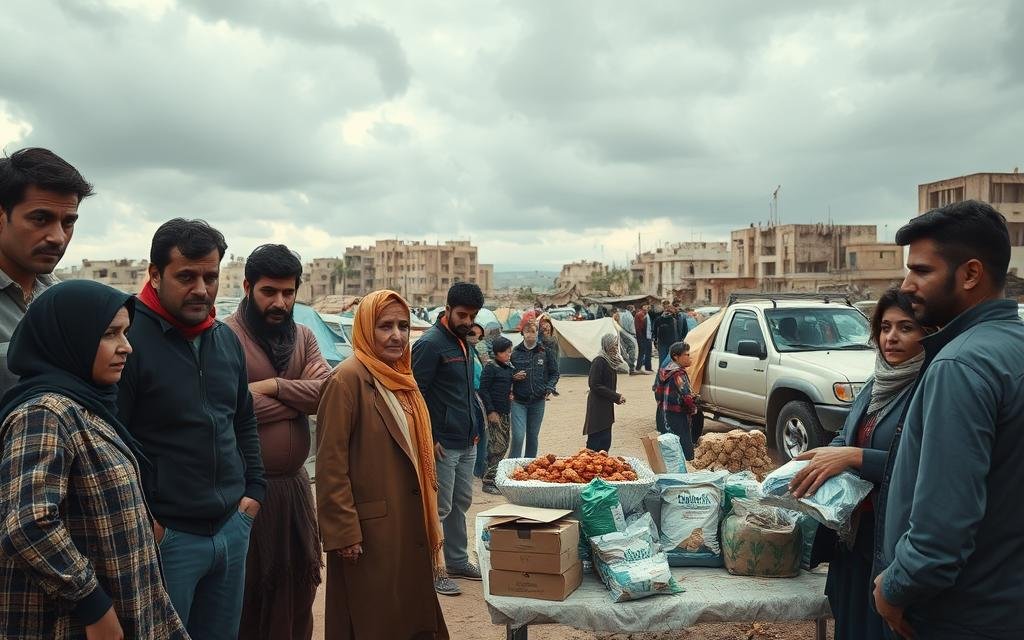
The UN identified 11 priority crises in 2023. These include the Horn of Africa with extreme weather and Haiti with political instability. Each region faces unique challenges.
Impacts on Infrastructure and Human Rights
When bombings destroy cities, basic infrastructure completely collapses. People they are left without potable water, sanitation, and electricity.
| Type of Crisis | Main Causes | Affected Population | Rights Violated |
|---|---|---|---|
| Armed Conflict | Violence politics, territorial disputes | Millions of people displaced | Access to health, safety |
| Climate Disaster | Prolonged drought, excessive rain | Rural and urban communities | Food, decent housing |
| Economic Collapse | Political instability, sanctions | Whole families | Education, decent work |
| Health Crisis | Destroyed infrastructure | Children and the elderly | Access to medicines |
The children are especially vulnerable in this half of destruction. In besieged cities, families face starvation and inhumane conditions. On the other side of the world, understanding these realities is fundamental.
The Case of the War in Ukraine and Other Current Conflicts
While world attention is focused on Ukraine, other conflicts continue to cause silent suffering. This case specific has become one of the most followed globally, with numbers that impress by their human magnitude.
Relevant Data and Statistics
More than 1.7 million Ukrainians have left their country since the beginning of the invasion. Men between 18 and 60 years old were prevented from leaving and forced to take up arms.
The situation of soldiers reveals the human side of war. While some fight with determination, others surrender without resistance. The image of a young man Soldier Crying while calling mom went viral on social media.
This conflict It's already been more than two years, turning into a protracted war. The humanitarian and economic consequences continue to grow each month.
Comparison with Other Conflict Regions
While the War in Ukraine Dominating headlines, Sudan faces a devastating civil war. Regions like the Sahel and the Horn of Africa have suffered from insurgencies for years.
These conflicts displaced millions of people, creating prolonged humanitarian crises. The difference in media coverage is evident, but the suffering is equally real.
Can you get more information about the origins of this specific conflict to understand its historical context. While one conflict receives global attention, dozens of others continue to affect entire populations.
The soldiers in all these wars share a common reality: many are young people who would rather be with their families. War in Ukraine reminds us that behind the numbers there are always human faces and stories.
Historical Lessons: Comparing Global Wars and Conflicts
Analyzing historical events, we can better understand the patterns that lead to international conflicts. story offers us a valuable map for navigating current challenges.
Study large conflicts The past reveals repetitive mechanisms. These patterns help identify warning signs early.
Examples of the World Wars
The two big ones wars world are exampleThe marked points of how regional crises can escalate. Before 1914, tensions in the Balkans created an explosive environment.
Between 1905 and 1914, large countries Europeans doubled spending on weapons. This arms race preceded the global conflict.
In years In 1930, the situation repeated itself on an even larger scale. Nations spent as much as 20% of their GDP on military defense.
The Transformative Power of Conflicts in History
The wars The world wars completely redrew the geopolitical map. After the First World War, empires collapsed and new nations emerged.
The United States emerged as a global power during this period. The Second World War consolidated the hegemony of two superpowers.
Soldiers They faced traumatic experiences that shaped generations. Their stories remind us of the devastating human costs.
| Conflict | Period | Geopolitical Shifts | Key Takeaways |
|---|---|---|---|
| World War I | 1914-1918 | Decline of empires, rise of the US | Complex alliances expand conflicts |
| World War II | 1939-1945 | USA and USSR as superpowers | An arms race precedes wars |
| Balkan Wars | 1912-1913 | Regional Tensions before World War I | Local conflicts can escalate. |
| Arms race | 1905-1914 | Preparation for major conflicts | Military spending indicates tension |
Other countries learned from these traumatic experiences. International organizations were created to prevent further conflicts Global.
Ignore these lessons from story leaves us vulnerable to repeating mistakes. Observing similar patterns today is part essential for prevention.
The Media's Influence on Conflict Perception
Your perception of wardistant is built through the lens of the media, which selects and frames each image and news story. The shape How you receive information determines your emotional understanding of those events.
In moment currently, you are constantly exposed to content about war through multiple channels. This exposure profoundly shapes their view of conflicts happening on the other side of the planet.
Journalistic Coverage and Social Media
For half On social media, impactful images go viral instantly. The photo of the soldier crying while calling his mother humanized the conflict for millions of people.
The journalistic coverage of war It's not always balanced. Conflicts involving nuclear powers dominate the headlines, while others receive little attention.
You consume information about war of shape Fragmented. Notifications, tweets, and short videos can generate anxiety without proper context.
Films like “Rambo: First Blood” also influence your perception. They romanticize thingthat are actually much more complex.
It is essential to develop critical thinking skills regarding media coverage. Question why half The conflicts that receive attention help you better understand global reality.
International Experts' and Analysts' Perspective
Scientific understanding of the effects of armed conflict comes from meticulous research conducted by specialists international. These professionals dedicate years studying how wars impact different aspects of human life.
Opinions and Scientific Data on the Impact of War
Theresa Betancourt, specialist From Boston College, explains that young people in conflict zones experience “elevated toxic stress.” This condition has lasting consequences for health mental.
Joop de Jong, from the University of Amsterdam, warns about the difficulty of measuring deep trauma. There are no precise instruments to assess the full extent of suffering.
One example striking comes from a 2019 study with Holocaust survivors. The research showed a significant reduction in brain gray matter due to prolonged stress.
Analyses on Global Health and Policies
Richard Caplan, from the University of Oxford, analyzes the risk current escalation of conflicts. Although difficult to measure, there is a risk plausible for regional expansion.
The data about the subject show that part significant portion of exposed individuals develop problems of health mental. In many cases, is observed increase on the rates of PTSD and depression.
O deadline Recovery can span decades. The effects impact not only direct survivors but also future generations.
Trust in the analysis of specialists that dedicate time Studying these phenomena is essential. Your research provides deep insight into the true human costs.
Future Challenges and Possible Global Scenarios
Looking at the geopolitical horizon, new global challenges are beginning to take shape. Experts warn of potential conflicts that may arise in the coming years.
Geopolitical Risks and Preventive Measures
You need to understand the riskgrowing in the international arena. Cooperation between China, Russia, North Korea, and Iran represents a significant shift.
Vladimir Putin and Xi Jinping openly articulate their strategic vision:
“Objective of forming a more just and multipolar world”
This moment History remembers patterns that preceded great wars. O increase The 6.8%% in military spending in 2023 is the largest since 2009.
| Geopolitical Bloc | Top Threats | Preventive Measures |
|---|---|---|
| China-Russia-Iran | Military cooperation, supply of weapons | Multilateral diplomacy |
| United States and allies | Challenge to Western Hegemony | Strengthening alliances |
| Other countries neutral | Pressure to choose sides | Balanced diplomacy |
Scenarios for a Future of Uncertainty
A Cold War teaches us valuable lessons about crisis management. Even in timehigh-voltage situations, it is possible to avoid direct confrontation.
The United States face crucial decisions with the new administration. Policies of defense will need to balance firmness and dialogue.
In the next years, you will witness growing competition between rival blocs. Any minor incident could rapidly escalate into conflicts bigger.
Despite the riskYes, this moment offers opportunities for preventive diplomacy. Control agreements weapons and international cooperation can prevent new wars.
Conclusion: How a War on the Other Side of the World Affects You
The understanding you've gained about global interconnectedness reveals how your Brazilian reality is interwoven with international events. The consequences armed conflicts cross borders and reach your daily life through multiple shapes.
In long term, these situations shape the world Where do you live? Countries like United States play a crucial role in decisions that affect us all.
Of the other side from the planet, millions suffer directly. But billions experience indirect effects through prices, policies, and anxiety.
Your awareness of these connections is the first step toward meaningful engagement. Investing in prevention and diplomacy builds a safer future for everyone.
The scars of any conflict take generations to heal. Understanding this transforms your perspective on the personal relevance of global events.
FAQ
How can a distant conflict really impact my daily life?
Even from afar, a war can affect your routine in several ways. You might feel the effects on food prices, fuel costs, and the instability of the global economy. Crises in other countries can also influence the cost of living and your purchasing power here in Brazil.
What are the main mental health effects on the population during a war?
Situations of armed conflict generate toxic stress and anxiety, even for those far from the front lines. Constant exposure to tragic news can lead to symptoms of post-traumatic stress, affecting the emotional well-being of millions of people around the world.
Humanitarian crises affect other countries in several ways:* **Displacement of people:** Crises often lead to large numbers of people fleeing their homes, seeking refuge in neighboring countries or further afield. This can strain resources such as housing, healthcare, education, and employment in host countries. * **Economic impact:** Host countries may incur significant costs in providing humanitarian aid, managing refugee flows, and addressing potential social instability. Conversely, countries experiencing crises can experience a collapse in trade and economic activity, affecting regional economies. * **Security concerns:** In some cases, large-scale displacement can lead to increased pressure on border security and potential for social unrest or crime in host countries. Spillover effects from conflict zones can also pose security risks. * **Health risks:** The movement of people can facilitate the spread of infectious diseases, posing a public health challenge to surrounding regions and potentially globally. * **Strain on international aid:** Humanitarian crises demand significant resources from the international community, which can divert aid from other ongoing emergencies or development projects. * **Political instability:** The long-term presence of large displaced populations can create political tensions within host countries and influence their foreign relations. * **Resource scarcity:** Crises can lead to shortages of essential goods like food, water, and medicine, potentially impacting global supply chains and prices. * **Increased demand for international cooperation:** Such crises necessitate coordinated responses from multiple countries, international organizations, and non-governmental organizations, fostering or straining diplomatic relations.
Humanitarian crises frequently result in mass population displacement. This puts pressure on the infrastructure of neighboring nations and can affect international agreements, immigration policies, and the global economy, creating ripple effects.
Is the war in Ukraine an isolated incident or does it reflect a global trend?
The war in Ukraine is a current example of how geopolitical rivalries and nationalism can escalate into open conflict. Experts warn that this type of situation increases the risk of instability in other regions, affecting the global balance of power.
What is the role of media and social media during a conflict?
Journalistic coverage and social media have enormous power in how you perceive war. They can amplify certain narratives, impact public opinion, and in some cases, spread misinformation, influencing how the population views the conflict.
Are there lessons from history that we can apply to current conflicts?
Yes. Past conflicts, such as the World Wars, show that wars have long-term consequences for the economy, global health, and international relations. Understanding history helps predict possible scenarios and seek preventive measures.