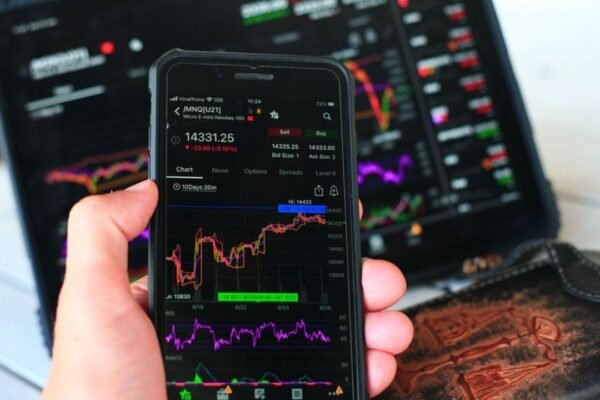

Have you ever felt that uncontrollable urge to buy a stock just because everyone is talking about it on social media and in the news? That impulse—which is often irrational—is what we call Herd Effect, one of the biggest enemies of your wallet.
Na Bolsa de Valores, seguir a multidão geralmente significa comprar na alta e vender no pânico da baixa, destruindo qualquer chance de rentabilidade a longo prazo. Entender esse comportamento é o primeiro passo para deixar de ser uma ovelha e se tornar um verdadeiro investidor.
In this article, we’ll uncover the psychology behind this phenomenon and provide you with the tools you need to shield your mind from collective euphoria. Get ready to change the way you view the financial market forever.
Key Findings 🌟
- Evolutionary Origin: The herd effect is an ancient defense mechanism that, in the financial market, becomes a dangerous trap.
- The Danger of FOMO: The fear of missing out (FOMO) is the main driver of impulse purchases at the top.
- Identification: Knowing how to distinguish a real trend from a herd mentality is crucial to protecting your assets.
- Strategy: Successful investors act contrary to the majority, buying to the sound of cannons and selling to the sound of violins.
What Is the Herd Effect in Practice?
The Herd Effect occurs when individuals make decisions based on the actions of a larger group, disregarding their own analysis or rational information. In the financial market, this results in sharp upward or downward movements without a clear fundamental justification.
When you see an asset skyrocketing nonstop, your primitive brain interprets it as, “If everyone is flocking there, it must be safe.” However, in the stock market, the safety of the crowd is an illusion that often costs the unsuspecting dearly.
The Psychology Behind Movement
Our biology is programmed to seek protection within a group because, in prehistoric times, being alone meant certain death at the hands of predators. This survival instinct is triggered when we see charts rising and people making money, generating a chemical response in the brain.
The problem is that the financial market isn't a savanna, and following the crowd usually leads you straight into financial ruin. Control that instinct exige autoconhecimento e uma estratégia de investimento muito bem definida antes de abrir o home broker.
Comparison: Rational Investor vs. Herd Investor 📊
Below, we compare the attitudes of those who follow the crowd with those who follow a solid strategy. See where you currently fit in:
| Features | Herd Investor | Rational Investor |
|---|---|---|
| Time of Purchase | Buying on a High (Peak) | Buy on the dip (opportunity) |
| Reaction to Falls | Desperate seller at the bottom | Analyzes fundamentals and maintains/buys |
| Source of Information | Tips from YouTubers and Forums | Reports and Internal Analysis |
| Planning | Immediate (want profits today) | Long Term (Focus on Value) |

Expert Tip 💡
“Be fearful when others are greedy, and be greedy when others are fearful.” This quote from Warren Buffett It sums up the perfect antidote to the herd mentality.
If your taxi driver or barber has started giving you tips on stocks that rose 100% this week, it’s a clear sign that the market is saturated and a correction is coming.
Signs That You're Following the Herd ✅
It’s hard to recognize herd behavior in yourself, because confirmation bias leads us to believe that we’re acting logically. Use this list to examine your recent behavior:
- [ ] You bought a stock just because you saw someone post a screenshot of their profits on Instagram or Twitter.
- [ ] Do you feel physical anxiety and a fear of losing money when you see a chart rising without you?.
- [ ] You can't explain, in less than a minute, what the company does and how it makes a profit.
- [ ] You sold a high-quality asset simply because the entire market crashed during a day of panic.
- [ ] His investment decisions are made in a matter of minutes, without reading any reports or financial statements.
Glossary of Terms 📖
To trade safely and avoid being manipulated, it is essential to master the market’s vocabulary. Here are some key terms related to this topic:
FOMO (Fear of Missing Out):
An acronym for “Fear of Missing Out.” It’s the social anxiety that drives you to buy an expensive asset just so you don’t feel left out of others’ profits.
Sardine:
A derogatory term used in the market to describe the small, novice investor who always loses money by following the lead of the big sharks.
Financial Bubble:
A situation in which asset prices rise far above their true value, driven by euphoria, and invariably crash, causing massive losses.
Market Correction:
A natural decline in prices following an excessive rise, serving to bring prices in line with the economic reality of companies.
General Investor Sentiment 🗣️
When analyzing forums like Reddit and Telegram groups, a cyclical pattern becomes apparent: unbridled euphoria always precedes a period of despondent silence. Experienced investors report that the biggest losses of their lives occurred when they tried to “ride the wave” without doing any analysis.
The consensus among stock market survivors is clear: money changes hands from the impatient (the herd) to the patient (the strategists). Those who try to get rich quick by following “hot tips” invariably end up financing the profits of the professionals.
Key Points 📌
- Volatility is not risk: The herd investor confuses price fluctuations with a loss in value, selling excellent assets at the wrong time.
- The media amplifies the effect: Sensationalist news stories are designed to generate clicks and audience engagement, often fueling panic or unnecessary euphoria.
- Discipline trumps intelligence: You don't have to be a genius to make money in the stock market, but you do need the nerve not to follow the crowd.

Special Offer 📣
If you want to stop losing money and learn how to invest like a pro, while shielding your mind from pitfalls, check out this exclusive opportunity:
Unraveling the World of Options
Related Topics 🧠
To deepen your understanding and avoid cognitive biases, explore these concepts that are closely linked to mass behavior:
- Confirmation Bias: The tendency to seek out only information that aligns with one's preexisting opinion.
- Loss Aversion: The pain of losing is psychologically twice as intense as the pleasure of winning.
- Fundamental Analysis: The study of companies' financial health: the best antidote to speculation.
Conclusion: The Herd Effect: The Invisible Mistake That Destroys Your Profits
The Herd Effect is a biological trap that can devastate your finances if not properly controlled. In the stock market, profitability lies in the ability to act rationally while everyone around you is losing their heads.
By applying the strategies discussed here and maintaining a long-term focus, you put yourself in a position of competitive advantage. Always remember: in the financial market, patience pays dividends, while impulsiveness charges exorbitant interest rates.
Frequently Asked Questions
The actual trend is supported by fundamentals, such as the company's rising profits. The herd mentality is purely speculative and has no basis in the financial statements.
Yes, but it's extremely risky. It requires getting in at the start of the trend and—the hardest part—having the composure to get out before the bubble bursts.
Close your home broker app, take a deep breath, and review the fundamentals of your companies. If nothing has changed in the business, the price drop is a bargain, not a problem.
Because they know that the real profit lies in market inefficiency. They buy the liquidity that the herd provides by selling in desperation.