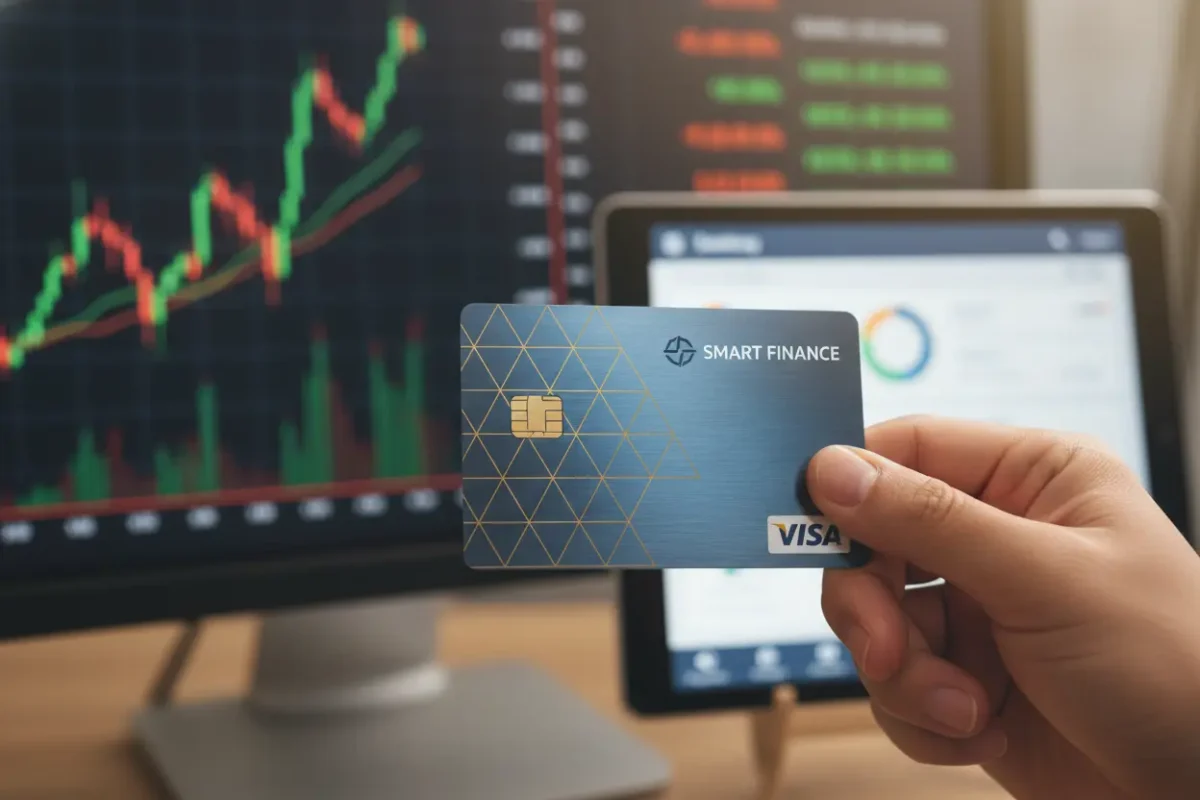
Is your money slipping away, and you don't know why? Common budgeting mistakes may be to blame. This practical guide reveals the most common financial pitfalls and offers straightforward solutions to help you take control. Learn how to optimize your spending, avoid debt, and pave the way for profitable investments and a prosperous financial future.
The Hidden Side of the Budget: Why Does Your Money Disappear?
You reach the end of the month without understanding where your paycheck went. This happens to more than 70% of Brazilians, according to data from the Central Bank of Brazil—and the reason is rarely a lack of income.
The central problem is the lack of financial planning in detail. Two silent errors are the main causes of this monthly shortfall.
Not Tracking Expenses
When you don't write down every expense, you lose sight of your actual budget.
It seems too simple to be a serious problem. But the BCB points out that households without detailed track of their expenses tend to spend between 15% and 25% more than they earn.
In practice, this means that someone who earns R$ 4,000 per month could be “losing” up to R$ 1,000 without any clear justification.
📊 Quick Simulation: If you set aside R$ 500 each month—which currently goes unaccounted for—and invest it in a CDB with an annual yield of 13%, at the end of 12 months you will have accumulated approximately R$ 6,390—with compound interest working in your favor.
The strategy here is straightforward: use apps like Mobills, Organizze, or Nubank's own digital account to categorize each expense as it happens.
Ignoring Small Expenses
R$ 8's daily cup of coffee, the forgotten signature in R$ 29, and the delivery in R$ 45 on Thursday.
Individually, they seem insignificant. But when added up over the course of a month, these hidden expenses can exceed R$ 600—the equivalent of a loan payment or a monthly investment contribution.
A cost optimization It starts right here: by tracking what we call “petty expenses.” They don’t show up on your statement as the culprits, but they consistently eat away at your budget.
Understanding where your money goes is the first step. The second is recognizing the true cost of financial mistakes—and it has a name: interest.
Knowing where your money goes is essential, but understanding how much it costs not to keep track of it is even more revealing.
Interest and Fees: The Hidden Cost of Budgeting Mistakes
Budgetary mistakes aren't just a thing of the past. They take their toll in the present—literally.
Two financial products pose the greatest risks for those who lack self-control: overdraft protection and revolving credit card debt.
Overdraft Protection and Revolving Credit on Credit Cards
Overdraft fees charged by banks such as Bradesco and Itaú can reach 8,171 TP3T per month, according to historical data from the BCB. In 2026, with the Selic rate projected to be in the range of 14.75% per year, revolving credit rates will remain high—and may exceed 400% per year for some issuers.
That throws any budget off balance.
- A credit card revolving balance of R$ 2,000 can grow to R$ 10,000 in less than 12 months.
- An overdraft of R$ 1,500 used for 30 days can result in more than R$ 120 in interest—per month.
- O limit The reduction in the credit limit due to delinquency directly affects the score credit, making it difficult to access financing future.
⚠️ Common mistake: Paying only the minimum amount due on a credit card bill is one of the most expensive pitfalls of the Brazilian financial system. The remaining balance is automatically rolled over into a revolving credit line, with interest rates that have historically tended to be the highest in the personal credit market.
Federal Revenue Service Fines
Another hidden cost comes from the Federal Revenue Service. Errors on income tax returns result in a minimum fine of R$ 165.74, which can reach up to 75% of the tax due in cases of willful omission.
The tax strategy is simple: organize your documents throughout the year, not just in April.

Digital financial management: the first step toward avoiding unnecessary interest and fines.
Avoiding interest is urgent. But building a safety net against unforeseen events is what sets those who go into debt apart from those who invest.
Emergency Fund vs. Debt: The Crucial Comparison for Your Financial Security
The absence of a emergency reserve It is the most common trigger for debt. When something unexpected happens—a layoff, a health problem, car repairs—those without savings turn to expensive credit.
And then the cycle begins.
The Cost of Not Having a Reservation
Without a savings account, a personal loan is usually the immediate solution. In 2026, average personal loan rates at traditional banks range from 6% to 8% per month.
📊 Quick Simulation: A loan of R$ 5,000 at 7% per month, paid in 12 installments, results in a total cost of approximately R$ 9,200. You would pay R$ 4,200 in interest alone—because you don’t have a reserve fund.
That amount could have been accumulated in 10 months with monthly contributions of R$ 500.
How to Build Your Savings Wisely
The ideal savings reserve covers 3 to 6 months of fixed expenses. For someone who earns R$ 4,000 and has R$ 2,500 in monthly expenses, this means having between R$ 7,500 and R$ 15,000 available.
The best product for storing this reserve is the 2029 Selic Treasury Bond, with daily liquidity and returns tied to the benchmark interest rate—currently projected at 14.75% per year. Alternatives such as daily-liquidity CDBs from Nubank, Inter, or PicPay also serve this purpose well, with yields ranging from 100% to 110% of the CDI.
- Selic 2029 Treasury Bond: daily liquidity, low risk, yield close to the Selic rate
- Nubank CDB: 100% based on the CDI, immediate redemption, no custody fee
- CDB Inter: up to 110% of the CDI for longer-term maturities, with daily liquidity in some options
Best choice: For emergency savings, the Tesouro Selic 2029 or daily liquidity CDBs with a 100% CDI rate are the options that offer the best balance between safety and yield in 2026.
With a savings cushion in place, you gain more freedom of choice. And a credit card, when used wisely, can become a tool that works in your favor.
Credit Cards: Villain or Ally? How to Use Them to Your Advantage
O smart credit card That's not the problem. The problem is using it without a strategy.
When used wisely, a credit card can provide real benefits—and even contribute to long-term financial health.
Overuse as a Trap
The most common mistake is using a credit card as a source of extra income. When the available credit limit is treated as extra cash, the budget goes out the window.
The BCB warns that excessive use of revolving credit is among the main causes of household debt in Brazil. In 2026, more than 40% of indebted households cite credit cards as their primary source of debt.
💡 Smart Strategy: Use your credit card only for expenses that are already included in your budget. Never use your credit card to buy anything you couldn't pay for in cash. This simple rule eliminates the risk of revolving debt.
Credit Cards as a Source of Extra Income
When used responsibly, the card offers tangible benefits:
- Cashback: Cards like the Nubank Ultravioleta give you up to 1% back on everything you spend.
- Miles: Itaucard Platinum and XP Visa Infinite cards earn points that can be redeemed for tickets.
- Score: Payments made on time build a positive credit history with Serasa and Boa Vista, making it easier to access financing at lower rates.
📊 If you spend R$ 2,000 a month on a card with 1% cashback, you’ll get R$ 240 back a year—without any extra effort.
Best choice: For those who already have an emergency fund and pay their bills in full, a card that offers cashback or frequent flyer miles is a real financial ally.

The balance between borrowing and investing sets the pace for building your wealth.
Understanding mistakes is essential. But what turns knowledge into results is a concrete action plan.
Your Budget in 5 Steps: A Practical Guide to Financial Management in 2026
A debt management and budget control do not require complex spreadsheets. They require consistency in five key actions.
Each step below is designed to work in the real-life situation of those who have variable income, whether you have outstanding debts or are starting from scratch.
Step-by-Step Guide to Breaking the Cycle
1. Record all expenses — Use digital banking apps like Nubank, Inter, or C6 Bank. They automatically categorize each transaction and show you where your money is going in real time.
2. Set clear financial goals — Sem destino, qualquer valor parece suficiente. Estabeleça objetivos concretos: quitar uma dívida em 6 meses, montar a reserva em 10 meses, iniciar aportes em CDB ou Treasury Direct até dezembro de 2026.
3. Build an emergency fund — Before making any investment, make sure you have 3 to 6 months’ worth of expenses set aside in a liquid investment.
4. Negotiate your debts and avoid exorbitant interest rates — Platforms such as Serasa Limpa Nome and the Desenrola Brasil program (extended through 2026) allow you to renegotiate debts with discounts of up to 96%. Use them before taking out new credit.
5. Plan for Income Tax Throughout the Year — Keep receipts for medical expenses, education, and private pension contributions each month. This reduces your taxable income and may result in a tax refund—or help you avoid fines from the Federal Revenue Service.
💡 Smart Strategy: Set aside 10 minutes every week to review your bank statement. This simple habit, when maintained for 90 days, has historically been shown to reduce unnecessary spending by up to 20%, according to studies on financial behavior.
With your budget in order and your debts under control, the next natural step is to put your money to work for you.
Affordable Investments: Growing Your Money and Avoiding the Savings Trap
Savings accounts are still the most popular financial product among Brazilians. But in 2026, with the Selic rate projected at 14.75% per year, keeping savings as one’s sole investment will result in a real loss of purchasing power.
The affordable investments The returns available today exceed those of savings accounts with equivalent safety and liquidity.
CDB and Tesouro Direto: The Real Alternative to Savings Accounts
| Product | Estimated Revenue (2026) | Liquidity | Who Is It Ideal For? |
|---|---|---|---|
| Savings | ~6,171 TP3T per year | Monthly | Anyone who isn't yet familiar with the alternatives |
| Nubank CDB (100% CDI) | ~14,651 TP3T per year | Daily | Emergency and short-term reserves |
| 2029 Selic Treasury Bond | ~14,751 TP3T per year | Daily | Conservative profile, any amount |
| CDB XP (110% CDI) | ~16.11 TP3T per year | On the due date | Who can let their money sit idle? |
| BTG CDB (112% CDI) | ~16.41 TP3T per year | On the due date | Investor with a 2+ year investment horizon |
📊 Quick Simulation: R$ 5,000 deposited in a savings account for 12 months yields approximately R$ 308. The same amount in a CDB with a 100% CDI rate yields about R$ 732 after income tax. The difference is R$ 424—just by choosing the right product.
The Importance of Financial Literacy
Personally, I believe that the biggest obstacle to investing isn't a lack of money. It's a lack of accessible information.
Most people have never been taught the difference between the CDI, Selic, and IPCA. This makes simple products seem complex—and savings accounts seem safe simply because they’re familiar.
A financial literacy That changes the situation. When you understand what you're signing up for, you make decisions with more confidence and less fear.
Best choice: For those who are withdrawing from their savings accounts now, Nubank’s CDB with daily liquidity at 100% of the CDI is the most balanced entry point in 2026—no fees, no red tape, and FGC protection up to R$ 250,000.
Investing wisely is one part of the equation. The other is not losing money to the taxman due to a lack of attention.
The IRS and Your Wallet: Avoiding Fines and Optimizing Your Income Tax
Filing your income tax return is one of those times when past budgeting mistakes come back to haunt you. And many people don’t realize there’s a problem until they’re already under audit.
O personal tax planning It is not limited to businesses. Any individual can—and should—adopt legal strategies to reduce the amount of tax owed.
Common Mistakes on the Tax Return
The most common errors that result in penalties from the Federal Revenue Service include:
- Failure to Report Income from Financial Investments (CDBs, mutual funds, stocks)
- Failure to report employment terminations or FGTS withdrawals
- Reporting Medical Expenses Without Receipts
- Forgetting to include dependents or including them incorrectly
The penalty for late filing starts at R$ 165.74 and can reach 20% of the tax due. Intentional omission, on the other hand, can result in a penalty of 75% of the undeclared amount.
How to Legally Minimize Your Income Tax
There are statutory deductions that reduce the income tax base—and that many taxpayers simply overlook:
- Medical expenses: no deduction limit, provided they are documented
- Education: deduction of up to R$ 3,561.50 per dependent in 2026
- PGBL Private Pension Plan: deduction of up to 12% from gross taxable income
- Court-ordered child support: full deduction
💡 Smart Strategy: Contributing to a PGBL in 2026 can directly reduce the tax owed the following year. For those in the 27.5% income tax bracket, every R$ 1,000 contributed to a PGBL can generate up to R$ 275 in a tax refund.
Managing your budget, investments, and income tax are individual pillars. But there is a broader dimension that ties all of this together.
Financial Literacy: The Path to a Debt-Free Future with Greater Freedom
The initiative Financial Literacy The Brazilian Central Bank’s approach is based on a simple principle: informed financial decisions lead to real economic resilience.
It's not just about saving more. It's about understanding the system so you don't get taken advantage of by it.
Financial Education as a Form of Protection
The BCB defines financial citizenship as the combination of education, inclusion, protection, and participation in the financial system.
In practice, this means:
- Know Your Rights as a Consumer of Credit
- Knowing how to identify budget pitfalls before falling for them
- Understanding Loan Agreements Before Signing
- Use the BCB Registry to check your debts and banking relationships for free
⚠️ Common mistake: Many people sign financing contracts without reading the CET (Total Effective Cost). The CET includes all fees, insurance, and charges—and may reveal that a loan “at 1.5% per month” actually costs more than 25% per year.
Building Economic Resilience
Debt Traps They take hold when consumers don't have enough information to ask questions. Financial education breaks this cycle.
Small changes in behavior—tracking expenses, maintaining a savings buffer, avoiding revolving credit, and filing income tax returns correctly—lay the groundwork that has historically tended to lead to progressive financial freedom.
It's not a quick process. But every conscious decision takes you one step further away from debt and one step closer to true financial independence.
This content is for information purposes only and does not constitute financial advice. Please consult a 2026 expert before investing.
Warning: The images used in this article are merely illustrative and may not accurately represent the content described.
Stop watching your money slip away! By understanding and correcting common budgeting mistakes, you’ll pave the way to financial freedom. Start today by tracking your expenses, building your emergency fund, and investing wisely. Change your habits, improve your credit score, and open the door to the best credit and investment opportunities. Your wealth is waiting for you!
FAQ – Common Questions About Budgeting Errors and Planning
We've created this section to explain the key points on how to protect your money and optimize your investments in a practical and secure way.
While savings often fail to keep pace with inflation, the Selic Treasury offers greater value and security for your reservation. We recommend this transition to ensure that your investments maintain purchasing power while serving as a safeguard against unforeseen events.
Assuming a CDB that pays 100% of the CDI, this amount would yield approximately R$ 40 to R$ 50 per month in 2026, with income tax already deducted. It's an excellent way to avoid the budget error leaving the money sitting there without earning anything.
We must report the total balance on the “Assets and Rights” form and the profits on the “Income Subject to Exclusive Taxation” tab. Using the official statement from your brokerage firm or online bank is essential to avoid being flagged for a tax audit by the Internal Revenue Service.
Using the card is only beneficial if we pay the full amount of the bill strictly on time to avoid the exorbitant interest rates. If there is a risk of a delay, the cost of the fees will far outweigh the benefit of the miles, which could negatively impact your financial planning.