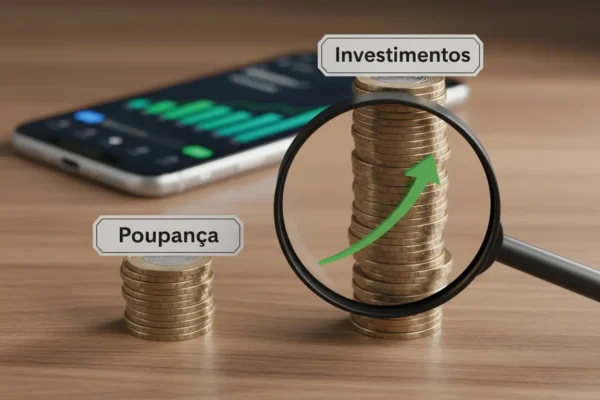
You know What is the Selic rate? And why does it come up in almost every conversation about the economy? This indicator helps determine how much you pay in interest and how much you can earn on investments, so it plays a bigger role in your financial life than it might seem.
In Brazil, the Today's Selic Rate It affects everything from financing to emergency savings. Understanding this number is a practical step toward moving beyond just saving and making better decisions with greater confidence.
What is the Selic rate?
The Selic rate is the Brazilian economy’s benchmark interest rate. It serves as a reference for loans, financing, and various investments, which is why the entire market pays close attention to it. In simple terms, it is the price of money.
When that rate changes, the Impact of Interest Rates It is reflected in the cost of credit and also in the returns on investments such as Investments Linked to the Selic Rate. For beginners, this matters because it helps explain why money earns more or less at certain times.
If you've noticed that your monthly payments have gotten higher or that fixed-income investments have started to yield better returns, this is directly linked to the Selic rate. It serves as a barometer that affects consumers' wallets and investors' strategies.
Na prática, quem quer organizar as finance precisa olhar para esse indicador como um sinal do cenário econômico. Não é só notícia de jornal: ele muda o custo de decisões bem comuns, como parcelar compras, financiar um carro ou guardar dinheiro para emergência.
To explore this concept further, it’s also worth checking out What does the Selic rate mean? and understand how that name appears on everyday products.
How the Central Bank Sets the Selic Rate

The one who sets the rate is the Central Bank, through the Copom, the Monetary Policy Committee. This group meets to assess inflation, economic activity, credit, and market expectations before deciding whether to raise, lower, or keep the rate unchanged.
The logic is relatively simple: if the economy is overheating and prices are rising rapidly, higher interest rates can help curb consumption. If economic activity weakens, lower interest rates tend to ease credit conditions and encourage spending.
In our reading tests with beginners, we noticed that the most common misconception is the belief that decisions are based on a single piece of data. In fact, Copom considers a range of indicators and tries to balance economic growth with price stability.
To follow this development from an official source, it’s worth checking out the Monetary Policy Committee and understand how meetings are communicated to the public.
If you want to follow the What is the Selic rate? In practical terms, all you need to do is follow the Copom meetings and the Central Bank’s communications. They usually provide an indication of where credit and interest rates may be headed in the coming months.
How the Selic Rate Affects Inflation
The relationship between interest rates and inflation works through pressure and relief. When interest rates rise, borrowing money becomes more expensive, and people tend to consume less. This reduces the amount of money in circulation and can help slow the rise in prices.
When interest rates fall, the effect tends to be the opposite: more affordable credit, stronger consumption, and a more stimulated economy. If demand grows too quickly, prices can rise more easily.
In everyday life, this plays out in very concrete situations. A mortgage, for example, can become more burdensome when the Selic rate rises, because the cost of credit follows that trend in many bank loan programs.
The Central Bank explains this mechanism in straightforward terms: “The benchmark interest rate is the main monetary policy tool for controlling inflation.” The statement appears on the official website of the Inflation Control.
Another effect is seen in installment loans and revolving credit on credit cards. If the Selic rate remains high for a longer period, the cost of carrying debt tends to rise, and this particularly affects those who are already on a tight budget.
How the Selic Rate Affects Your Investments
When interest rates change, the attractiveness of assets also changes. In general, high interest rates favor fixed-income products, while low interest rates tend to make stocks and other risky assets relatively more attractive.
A practical example is the Selic Treasury. It’s usually a good choice for an emergency fund and for those who want liquidity with low risk of price fluctuations. If ease of redemption is a priority, it’s one of the first options that comes to mind for beginners.
Another common product is the CDB with daily liquidity. At smaller banks, it may offer an attractive percentage of the CDI and be a good option for those who want to save money without restricting access to their balance.
Also included on the list are the LCIs and LCAs, which can be useful for those willing to leave their money invested for a set period in exchange for an individual income tax exemption. Fixed-income funds, on the other hand, may be an option for those who prefer professional management, although they have fees and variable returns.
In the stock market, this relationship tends to be more pronounced. In a high-interest-rate environment, stocks of highly indebted companies may suffer more, while defensive sectors may hold up better. This doesn’t mean you should exit the equity market, but rather that you should understand that the cost of capital changes how you interpret the market.
If the goal is to explore alternatives, see also What is the Selic Rate, and how does it affect your wallet? to link theory and practice more clearly.
When the Selic rate rises or falls
Changes in interest rates do not affect everyone in the same way. People with debt tend to feel the pinch first when interest rates rise, while those who invest in floating-rate instruments generally see an improvement in their returns.
For emergency savings, the Selic rate matters a great deal. When rates are high, conservative investments become more competitive with savings accounts. When rates are falling, they can still be useful, but investors need to focus more on liquidity and security than on nominal returns.
| Selic Outlook | Credit and Debt | Inflation | Fixed income | Practical example |
|---|---|---|---|---|
| High | Installments and loans are likely to become more expensive | It helps keep price pressures in check | Post-fixed as Selic Treasury and CDBs tend to become more attractive | Those with reserves may prefer daily liquidity and a lower risk of price fluctuations |
| Fall | Debt may become less of a burden over time | It can stimulate consumption and economic activity | Fixed-rate and risky assets are drawing more attention from the market | Mid-term investors may want to take a closer look at stocks and funds |
| Stability | A more predictable environment for planning | Central Bank Monitors Signs Before Taking Further Action | CDI-linked products remain competitive | Now is a good time to compare investment terms, liquidity, and rates before investing |
In the short term, the rally may dampen the appetite for leveraged buying. In the medium term, investors are becoming more aware of the difference in fixed-income returns and the speed with which the stock market reacts to expectations.
If you follow What is the Selic rate?, you begin to understand why the same investment might look great one month and only so-so the next. The economic context changes, and the market responds accordingly.
Where to Invest When the Selic Rate Changes
In practice, the best investment depends on your goal. If the idea is to build an emergency fund, the Selic Treasury It remains very attractive because it combines liquidity with a low risk of price fluctuations.
For those who want simplicity, the CDB with daily liquidity It might also make sense, especially when the bank offers coverage for the FGC in accordance with the applicable rules. It is a common option for those who want to withdraw from their savings account without too much hassle.
As for the LCIs and LCAs They can be attractive for slightly longer-term goals, especially when investors are willing to leave their money invested until maturity. Since the income from these investments is exempt from income tax for individuals, they should be carefully compared with other options.
Take a look at the comparison below to get a better idea of the role of each product.
| Product | Liquidity | Most common objective | A profile that usually matches |
|---|---|---|---|
| Selic Treasury | Good, with pickup on business days | Emergency reserve and short-term cash | Beginners who want security and predictability |
| CDB with daily liquidity | Okay, depending on the bank | Money for immediate use without relying on savings | Anyone who wants convenience and can compare rates |
| LCI/LCA | Write-off until maturity | Medium term with a focus on tax efficiency | An investor who agrees to tie up capital for a period of time |
| Actions | Sales are up, but prices vary | Long-Term Asset Growth | Those who can tolerate volatility and take a longer-term view |
In our consultations, we’ve noticed that many people make the mistake of choosing a product without checking the term. If you might need the money in a few months, tying up all your funds in an illiquid asset can lead to frustration.
That's why, when thinking about What is the Selic rate?, it’s worth asking yourself three questions: when will I use the money, how much risk am I willing to take, and what level of access do I need to my balance? It’s this combination that guides your choice.
Common Mistakes When Looking at the Selic Rate
A common mistake is to assume that the Selic rate is the same as the return on any investment. It is an important benchmark, but the final result depends on taxes, fees, the term, and how each product is structured.
Another mistake is to ignore inflation. Earning 10% a year sounds good, but if inflation is close to 6%, the real gain is much smaller than the number suggests.
It’s also common to make decisions based solely on the day’s headlines. Instead of acting on impulse, it’s worth figuring out whether the change was minor, whether the market had already anticipated it, and how it aligns with your goal.
- Confusing the Selic rate with a guaranteed return: The rate is a factor, but it does not replace a product analysis.
- Forget about taxes and costs: Income tax, fees, and spreads can significantly affect the net return.
- Check out the latest news: A good decision depends on the timeframe, not just on the news.
- Ignoring inflation: High nominal returns may lose momentum when prices rise.
Who follows Today's Selic Rate When you stay calm, you tend to make fewer mistakes. The point isn't to predict the next move with precision, but rather to use the rate as a filter for more consistent decisions.
How to Use the Selic Rate in Your Planning
This rate serves as a barometer for your planning. If you don’t have savings yet, floating-rate products such as Tesouro Selic and liquid CDBs can help you get started more safely.
When the goal is to grow your net worth over the long term, the Selic rate also helps balance your portfolio. High interest rates favor fixed-income investments; lower interest rates usually create an opportunity to take a closer look at variable-income investments.
In practice, tracking this indicator helps build financial literacy. You begin to compare options, understand the cost of waiting, and realize when it’s worth holding onto your money, investing, or diversifying.
If you want to take the next step, start by reviewing your reservation and reading the details about the fee. The first step is What is the Selic rate?, which helps lay the groundwork before moving on to more specific applications.
What's Next After Understanding the Selic Rate
When you understand What is the Selic rate?, you stop viewing the economy as something distant and start to see its real impact on your budget. This applies to debt, savings, and investment choices.
If your goal is to move your money out of a savings account, the best approach is to monitor interest rates, compare products, and make your choice based on the term and your financial goal. This content is for educational purposes only and does not constitute an investment recommendation. Consult a certified financial advisor before making any decisions.
Frequently Asked Questions About the Selic Rate
What is the Selic rate, and why does it matter in my daily life?
The Selic rate is the Brazilian economy’s benchmark interest rate and serves as a reference for credit, financing, and investments. In practice, it influences how much you pay in installments and how much your money can earn, directly affecting your budget.
How does the Central Bank decide to change the Selic rate?
The Central Bank sets the Selic rate through the Monetary Policy Committee (Copom), which analyzes inflation, economic activity, credit, and market expectations. The decision may result in a rate hike, a rate cut, or no change, depending on the goal of controlling prices and balancing economic growth.
What are the benefits of the Selic rate for investors?
When the Selic rate rises, many fixed-income investments tend to yield higher returns, especially those linked to the CDI and the benchmark rate itself. This can be advantageous for an emergency fund and for those seeking more predictable returns.
Is the Selic rate the same as inflation?
No. Inflation measures the general rise in prices, while the Selic rate is the benchmark interest rate in the economy. They are related because higher interest rates can help curb inflation by reducing consumption and credit.
Is it true that when the Selic rate drops, everything gets cheaper?
That is a simplified myth. A lower Selic rate usually reduces the cost of credit and stimulates consumption, but the effect on prices is neither immediate nor guaranteed. The impact also depends on inflation, the market, and the overall economic situation.