
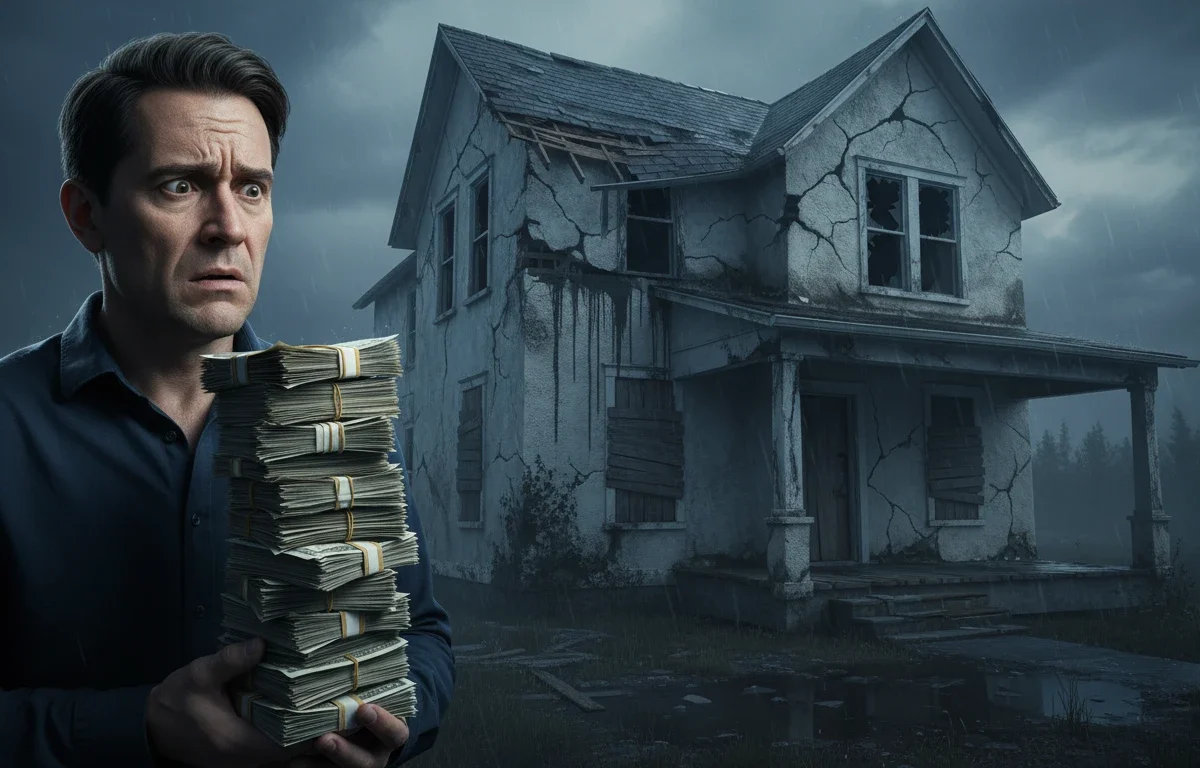
For many people, buying a home is the biggest financial decision of their lives. It’s a milestone, a dream come true. However, there is The biggest mistake you can make when buying a property that causes you to lose money. Many people let themselves be carried away by their emotions or by haste.
They overlook crucial details that, in the long run, end up costing a lot. This article will show you how to avoid this common pitfall. Learn how to make a smart and secure investment.
Highlights
- The biggest mistake when buying real estate is making a purely emotional decision while ignoring financial and market analyses.
- Thorough research and a professional inspection are crucial steps for avoiding unexpected costs and future problems.
- Neglecting red tape and hidden costs can lead to significant financial losses and legal headaches.
- Having qualified experts on hand is essential for a safe, profitable, and regret-free purchase.
What is the most serious mistake you can make when buying a home, and how can you avoid it?
The most serious mistake when buying a property is making a decision based solely on emotion or aesthetics, without a rational and in-depth analysis of the market and the finance personal. To avoid this, prioritize thorough research, rigorous financial planning, and consulting with specialized professionals before making any commitments.
The excitement of finding your “dream home” can be dangerous. It clouds your judgment when it comes to practical and financial considerations. Many buyers fall in love with a property before even checking its actual structural or legal condition.
This blind passion hinders effective negotiation. It also makes it impossible to identify structural or documentation-related problems. Consequently, the result is an investment that becomes a heavy financial burden.
It's crucial to keep a cool head. The decision must be based on logic, not just emotion.
The Emotional Trap: Why It's Costly and How to Resist It?
Emotion is a powerful force. When looking for a home, it can lead us down risky and costly paths. Seeing a modern kitchen, a lush garden, or a panoramic view can completely distract us from what really matters.
Think about it: would you buy a car based solely on its color, without checking the engine, the mileage, and the maintenance history? Buying a home requires the same—or even more—rationality and sound judgment. It’s a high-value asset.
Impulse buying It is one of the biggest pitfalls in the real estate market. The rush to close a deal can stem from the fear of missing out on a “once-in-a-lifetime opportunity.” This feeling is often artificially created.
All of this contributes to poor decisions. They can lead to regret and considerable losses.
What are the emotional triggers What are the most common mistakes that lead to errors?
- The ideal of the “perfect home”: A romantic view that overlooks flaws.
- Pressure from friends or family: Outside opinions that may not align with your interests.
- The desire to change one's life quickly: Impatience that undermines the research.
- The perception of scarcity in the market: The fear that there won't be another property quite as good.
- The visual appeal: Professional photos and videos that mask real problems.
These feelings, while natural, need to be kept in check. They cannot be the only factor dictating your purchasing decision. Allow yourself to feel, but make your decision with reason.
Forget About Research: The Secret No One Tells You to Avoid Losses
Many buyers neglect to do market research. They look at only a few properties and make a decision quickly. This lack of information is an open invitation to future financial problems.
One in-depth research It goes far beyond simply visiting houses and apartments. It involves understanding the area, its historical significance, the services available nearby, and the neighborhood's safety.
Location is a decisive factor for the return on your investment. A neighborhood in decline or with poor infrastructure can cause your property to lose value over time. On the other hand, a growing area with new businesses and transportation options tends to increase its value significantly.
Do you know how the real estate market has performed over the past five years in the area you're interested in? And what are the projections for growth or stagnation in the future? Without this crucial information, your decision to buy is a real shot in the dark.
In addition, it is important to consider the profile of the neighbors, the types of local businesses, and traffic during peak hours.
All of this directly affects your quality of life and the property’s resale value. Don’t underestimate the importance of getting to know your future neighborhood thoroughly.
Interesting Facts and Surprising Statistics About the Real Estate Market
- In 2023, Brazil saw an average increase of 12% in residential real estate sales, driven by lower interest rates and government incentive programs. However, this growth was not uniform across all state capitals and cities.
- The average time it takes to sell a property can vary dramatically: from 3 to 6 months in booming major cities, such as São Paulo and Rio de Janeiro, to more than 1 year in smaller cities or less sought-after neighborhoods.
- Urban planning studies show that properties located less than 1 km from urban parks or public transportation stations (subway, BRT) tend to appreciate in value up to 20% faster than others in the same area. This is due to the higher quality of life and greater mobility they offer.
- About 30% of real estate purchases in Brazil are made by investors seeking rental income. This demand intensifies competition for good opportunities, requiring end buyers to conduct even more careful and strategic research.
- The average age of first-time homebuyers in Brazil has been rising, reaching 35 years old, reflecting the need for more financial planning and capital accumulation.
| Features | Emotional Buyer | The Rational Buyer |
|---|---|---|
| Main Focus | Aesthetics, immediate sensations, idealism | Cost-effectiveness, appreciation potential, data |
| Market Analysis | Superficial, based on only a few visits | In-depth, with historical data and projections |
| Negotiation | Weak, prone to giving way quickly | Forte, look for the best deals and discounts |
| Risks | High, prone to financial surprises | Low-level risks: mapped, mitigated, and calculated |
| Final Result | Regret, financial loss | Satisfaction, a sound investment, and security |
The False Economy: Focusing Only on the Initial Price and Regretting It Later
The asking price listed in the ad is just the tip of the financial iceberg. Many buyers focus solely on that price. They forget—or don't even consider—the countless hidden costs that arise after the contract is signed. This is a false economy that can end up costing a lot.
Taxes, registration fees, necessary renovations, homeowners“ association dues, property tax. The list of additional expenses is long and can catch any budget off guard. A house that seemed ”cheap” can quickly become incredibly expensive.
Imagine buying an apartment at an attractive price. Then you discover that the roof needs urgent repairs. Or that the entire electrical system is compromised and needs to be completely replaced.
These unforeseen events can eat away at any budget. They can turn what seemed like a good deal into a real financial nightmare. It’s essential to have a specific financial reserve set aside for these contingencies.
What are the main additional costs What do you need to consider in your planning?
- Real Estate Transfer Tax (ITBI): It ranges from 2% to 4% of the property’s assessed or market value, depending on each municipality’s laws. It is a mandatory cost.
- Notary Fees: These include registering the property in your name and the public deed. These fees can total up to 1.5% of the property's value, depending on the state's fee schedule.
- Financing Rates: Costs related to property appraisal, loan origination, and mandatory insurance. These may range from bank for a bank.
- Broker Commission: Although it is usually paid by the seller, it is crucial to check this clause in the contract. In some cases, it can be negotiated.
- Renovations and Repairs: Almost every pre-owned home needs some kind of repair or renovation. Set aside a budget for this, even if it's just for minor repairs.
- Condominium Fees and Property Tax (IPTU): These are recurring monthly expenses. Check the current and past amounts to avoid surprises in your budget.
- Certificates of No Objection: Although they are low-cost, they are essential for legal certainty and may be subject to issuance fees.
“Most of the costs associated with a property aren’t visible on the ‘For Sale’ sign, but rather in the details that come up after the purchase and in the paperwork involved.”
Neglecting the Home Inspection: What Could Come Back to Haunt You After You Move?
A professional home inspection is a crucial step—and, unfortunately, one that is often overlooked. It ensures that the property doesn’t have any serious hidden problems that might only become apparent after you move in. Many buyers skip this step, relying solely on the property’s appearance.
Hiring a qualified professional—such as a civil engineer or architect—to inspect the property is an investment that pays off. They can identify structural defects, electrical problems, plumbing leaks, and hidden defects. These are issues that a layperson would be unlikely to detect on their own.
Walls with chronic water damage, damaged roofs, and outdated and inadequate electrical wiring. These are just a few examples of problems that lead to exorbitant and unexpected expenses. They can surface months after you move in, turning your dream into a nightmare.
Don't rely solely on the salesperson's word or your own visual inspection. Ask for inspection reports. Demand warranties, if possible. The security of your purchase and your peace of mind depends directly on that diligence.
Bypassing Bureaucracy: The Legal Headache You Didn't See Coming
The process of buying a property is, by its very nature, complex. It involves a significant amount of paperwork and legal procedures. Ignoring this aspect is a serious mistake that can have grave legal consequences.
A property documentation And, above all, the seller's documentation must be thoroughly verified. Certificates of no outstanding debts, the property's history, and up-to-date registrations with the Real Estate Registry. Every document counts.
Issues such as outstanding property debts, court-ordered liens, labor disputes, or inheritance disputes can derail the purchase. Or, worse yet, shift the entire burden and legal liability onto you, the new owner.
A lawyer who specializes in real estate law can make all the difference in this process. He ensures that the transaction is secure, transparent, and legally valid, protecting your interests.
To learn more about the legal aspects of buying real estate and the importance of legal due diligence, see this in-depth article on real estate law. Being well-informed is your best defense.
Another crucial point is reviewing the purchase and sale agreement. Do not sign anything without reading every clause. Ask for clarification on any terms you do not understand.
Rushing can lead to unfavorable agreements. It can also result in fines or obligations you weren't aware of.

The Importance of a Good Professional: Who Can Save You from Losing Money?
Trying to buy a property on your own to “save money” can, ironically, end up costing you much more. The expertise of qualified professionals is your best defense against The biggest mistake you can make when buying a property that causes you to lose money.
One experienced real estate agent He’s not just a “real estate agent.” He has in-depth knowledge of the local market. He can negotiate better prices, identify good investment opportunities, and guide you toward the properties that best fit your profile and budget.
One real estate attorney He is your legal guardian. He ensures the transaction is secure by reviewing contracts, certificates, and all the paperwork. He helps prevent unpleasant surprises and future lawsuits.
Financial advisors, on the other hand, can help you plan your investment. They assess your ability to pay, the best financing options, and the financial feasibility of the purchase.
Always rely on the help and expertise of professionals. They are your best investment for a real estate purchase you won’t regret—one that’s completely secure and offers great long-term appreciation potential. A good professional saves you time, money, and worry.
The decision to buy a property should never be rushed under any circumstances. It is a huge step that requires caution, thorough research, and a great deal of rational thinking. Avoiding the mistake of letting your emotions get the better of you is the first essential step toward success in this endeavor.
Analyze every detail, ask probing questions, conduct thorough research, and, above all, rely on the invaluable support of qualified professionals. That way, you’ll ensure a safe investment that will yield solid returns and bring you much joy.
Conclusion: A Critical Mistake When Buying Real Estate: Avoid Losing Your Money
Avoid The biggest mistake you can make when buying a property that causes you to lose money It's simpler than it seems: replace emotion with reason, and haste with thorough research. Buying a property requires a cool, calculated analysis that takes into account all the costs, risks, and legal aspects involved.
Be smart, do your research, consult experts, and protect your assets. Your dream home doesn't have to turn into a financial nightmare. Planning is the key to success.
Frequently Asked Questions
The most common mistake is making a purchase based on an emotional impulse, without a detailed analysis of the market, the location, and the total costs involved, which leads to hasty decisions.
Conduct thorough market research, include all taxes and fees (ITBI, notary fees, renovation costs) in your planning, and hire a professional to conduct a comprehensive inspection of the property.
Yes, a real estate attorney is essential for verifying all documentation related to the property and the sellers, reviewing contracts and certificates, ensuring the legal soundness of the transaction, and preventing future legal problems.
In addition to the price, consider the ITBI tax, notary fees (registration and deed), financing fees, real estate agent’s commission (if applicable), renovation costs, condominium fees, IPTU property tax, and clearance certificates.
Emotion can lead to hasty and irrational decisions, causing the buyer to overlook structural defects, accept unfavorable prices, or neglect the paperwork, resulting in financial losses and regret.