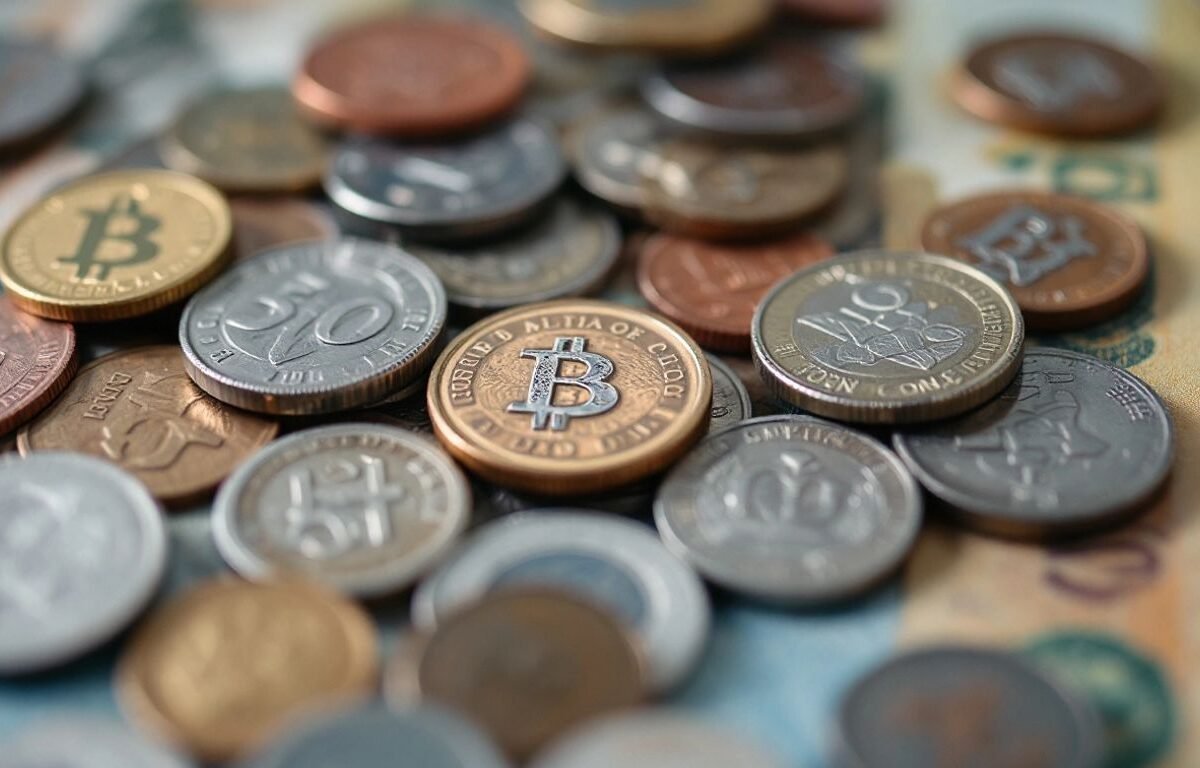
What is Money? Money is an essential tool in our society, used to facilitate exchanges and transactions. From its earliest forms, such as barter, to modern coins and bills, the concept of money has evolved and adapted to the needs of people and economies. In this article, we’ll explore the history of money, its functions, and how it impacts our lives and society as a whole.
Key Takeaways
- Money began as a way to keep track of debts and evolved into coins and paper bills.
- It serves as a medium of exchange, a unit of account, and a store of value.
- The acceptance of money depends on a social contract among people.
- Modern technology is transforming the way we use money through electronic payments.
- Money also has a social and psychological impact, influencing perceptions of power and security.
The History and Evolution of Money

Early Forms of Currency
The earliest forms of currency emerged as records of debt, in which objects such as stones or pieces of wood were used to represent value. These records circulated among people and were exchanged for goods until they were redeemed. This shows that anything that could represent value could be considered currency.
The Transition from Barter to Currency
Barter, which is the direct exchange of goods, was one of the earliest forms of trade. Over time, societies began to use objects with intrinsic value, such as gold and silver, as currency. These metals were preferred because, even if they were not exchanged, they could be melted down and used in other ways.
The Impact of Currency on Trade
The introduction of currency facilitated trade, allowing people to buy and sell goods more efficiently. Currency also helped establish trust among merchants, since everyone accepted the same medium of exchange. This led to a significant increase in commercial transactions.
The Evolution of Financial Institutions
As trade expanded, financial institutions emerged to manage money. Banks began offering services such as loans and deposits, allowing people to keep their money safely. These institutions play a crucial role in the modern economy by helping to regulate the flow of money and credit.
The history of money is a fascinating journey that reflects the evolution of human societies and their need for exchange and trust.
Characteristics and Functions of Money
Money plays a fundamental role in modern society. It is more than just coins and bills; it is a symbol of value and trust. Let's explore its main features and functions:
Medium of Exchange
- Money facilitates trade, allowing people to buy and sell goods and services.
- It eliminates the need for barter, where goods were exchanged directly for other goods.
- The use of money makes transactions faster and more efficient.
Accounting Unit
- Money serves as a standard unit for measuring the value of different goods and services.
- This allows people to compare prices and make informed choices.
- For example, if one product costs R$ 50 and another costs R$ 100, it is clear that the second one costs twice as much as the first.
Value reserve
- The money can be saved and used in the future, serving as a savings.
- This is important for financial planning and economic security.
- The ability to store value is essential for achieving financial goals.
Ease of Storage and Transportation
- Cash is easy to carry and store, which makes it convenient for everyday use.
- Unlike physical goods, such as food or furniture, money doesn't take up much space.
- This makes it easier to conduct transactions in different locations.
Money is, in essence, a social contract that enables the exchange of value among people. Without it, the modern economy as we know it would not be possible.
These characteristics make money an indispensable tool in the economy, influencing the way we interact and conduct transactions in our daily lives. For more information on how to manage your finance For personal finance, check out a comprehensive guide that offers essential tips on financial planning and savings strategies.
Money in Different Cultures
Names and Values in Different Countries
Money is known by different names around the world. For example:
- Real in Brazil
- Euro in Europe
- The U.S. Dollar
These names reflect the cultural and economic diversity of each region.
Social Contract and the Acceptance of Money
The value of money is not intrinsic, but rather a social contract. This means that everyone in a society agrees to accept a certain form of money. Without that acceptance, money would have no value.
Issuing Entities and Certification
Entities that issue money, such as central banks, play a crucial role. They ensure the certification the value of money, ensuring that it is accepted in transactions. This is essential for confidence in the financial system.
Money is more than just a medium of exchange; it is a reflection of a society's social and cultural relationships.
Currency and Amounts Table
| Country | Currency | Approximate Amount (in USD) |
|---|---|---|
| Brazil | Real | 0.20 |
| Europe | Euro | 1.10 |
| United States | Dollar | 1.00 |
These examples show how money varies depending on each country's culture and economy. Understanding these differences is essential to understanding the role of money in our lives.
Money and the Modern Economy
Electronic Payment Technologies
The evolution of technologies Digital payments have transformed the way people conduct transactions. Today, it is common to use:
- Credit cards and debit
- Payment Apps
- Digital currencies
These innovations make everyday life easier, allowing people to shop quickly and safely. The Digitization of Money It also brought new challenges, such as financial information security.
Financial and Derivatives Markets
Financial markets are essential to the modern economy. They enable companies and individuals to:
- Raise capital
- Make investments
- Manage risks using derivatives
These financial instruments help stabilize the economy, but they can also lead to crises if they are not properly regulated.
Debt and Wealth
Debt is a major issue in today's economy. Many people and companies take on debt in order to:
- Fund projects
- Purchase goods
- Investing in Opportunities
However, excessive debt can lead to serious financial problems. Responsible Money Management It is crucial for preventing personal and economic crises.
Economic Inequality
Economic inequality is a recurring theme in discussions about money. It manifests itself in various ways:
- Income Disparities
- Unequal Access to Financial Services
- Limited opportunities for certain groups
This inequality can affect economic growth and social stability. Therefore, it is essential to seek solutions that promote financial inclusion and equity.
Money, at its core, is an idea that reflects commitments between people. Proper management of money is vital to economic and social well-being.
Economic Theories of Money

Money as a Commodity
The theory that views money as a merchandise suggests that it arose from goods that were in high demand because of their characteristics, such as durability and divisibility. These goods became the basis for exchange and the measurement of value.
Money as a Sign
Another perspective is that money is a sign, a symbol that represents value. This idea emphasizes that money is not just a physical object, but rather a concept that facilitates transactions between people. The acceptance of money depends on a social contract among individuals.
Stability of the Value of Money
The stability of the value of money is crucial to the economy. When the value of money is volatile, it can lead to uncertainty and crises. A relationship between the amount of money in circulation, and the price level is key to understanding this stability.
Government Influence and Monetary Policy
The government’s role in regulating money is essential. Monetary policies—which include issuing currency and controlling inflation—are tools that governments use to keep the economy stable. Modern monetary theory, for example, discusses how the government can influence the economy by controlling the money supply.
Money is more than just a medium of exchange; it is a reflection of social relationships and commitments between individuals over time.
Summary
Economic theories about money help us understand its function and importance in society. From its origins as a commodity to its role as a symbol and the influence of the state, money is a central element in economic interactions.
Social and Psychological Aspects of Money
Money is not just a medium of exchange; it also carries profound social and psychological meanings. The way we perceive money can influence our decisions and behaviors.
Money and Power
- Money is often associated with power and influence.
- Having money can open doors and create opportunities.
- Economic inequality can lead to social tensions.
Money and Financial Security
- Many people see money as a form of security.
- A lack of money can cause anxiety and stress.
- Organize Your Personal Finances It is essential for achieving financial peace of mind.
Money and Personal Fulfillment
- Money can be a means of achieving dreams and goals.
- However, the relentless pursuit of wealth can lead to dissatisfaction.
- It is important to strike a balance between to have e to be.
Money is a concept that takes shape in human relationships, reflecting social commitments and values.
These aspects show that money is much more than a simple medium of exchange; it is a reflection of our social relationships and of how we see ourselves in the world.
Money isn't just a financial tool; it also affects our emotions and relationships. Understanding how money influences our social and psychological lives is essential for achieving a healthy balance. If you want to learn more about how to deal with these issues, Visit our website and discover valuable tips!
Conclusion
In short, money is much more than just coins and bills. It is an essential tool we use to exchange goods and services, making our daily lives easier. From its origins in simple barter to today’s complex digital transactions, money has evolved and adapted to the needs of society. It is important to understand that, although money has physical value, its true significance lies in the relationships and commitments it represents among people. Therefore, when dealing with money, we must remember that it is a means to achieve our goals and not an end in itself.
Frequently Asked Questions
What is money?
Money is a means we use to buy things, such as food and clothing. It can come in the form of coins or bills.
How did money come about?
Money began with the barter system, in which people exchanged goods directly. Over time, coins and paper money were created to facilitate these exchanges.
What is the role of money in society?
Money makes it easier for people to exchange goods and services, allowing us to buy and sell them.
Why does money have value?
The value of money stems from an agreement among people. Everyone agrees to accept money as a form of payment.
What are coins and bills?
Coins are pieces of metal, while bills are pieces of paper. Both are used as money to facilitate purchases.
How is money managed?
The government, through central banks, controls money by setting rules on how it is issued and used.