
Have you ever heard of cryptocurrencies? Do you really know what they are and how they work? Find out in this article “What are cryptocurrencies?” the meaning of cryptocurrencies and how they work. Let's discover a new, digital world that is changing the way we use money.
How cryptocurrencies work
Cryptocurrencies use networks of blockchain. These are public, decentralized registries. They store all transactions securely, thanks to encryption.
Miners verify transactions. They use computers to solve mathematical problems. In this way, they ensure the security and accuracy of the blockchain.
Price variation comes from supply and demand. Factors such as the media and investor confidence have an influence. That's why prices change very quickly.
Imagine a network of connected computers. Each transaction is recorded in a block. These blocks are linked together to form the blockchain. Each one has the transactions of a certain time.
Encryption protects transactions. Only the people involved have access. In this way, cryptocurrencies are a safe way to handle money.
Miners are essential. They verify transactions on the network. To do this, they solve math problems. It's a job that requires a lot of energy and computing power.
“Cryptocurrencies work on blockchain networks, which are public and decentralized records of all transactions carried out with these currencies.”
- Supply and demand influence the price variation of cryptocurrencies.
- Encryption guarantees the security of transactions.
- The miners validate the transactions and record them on the blockchain.
Types of cryptocurrencies
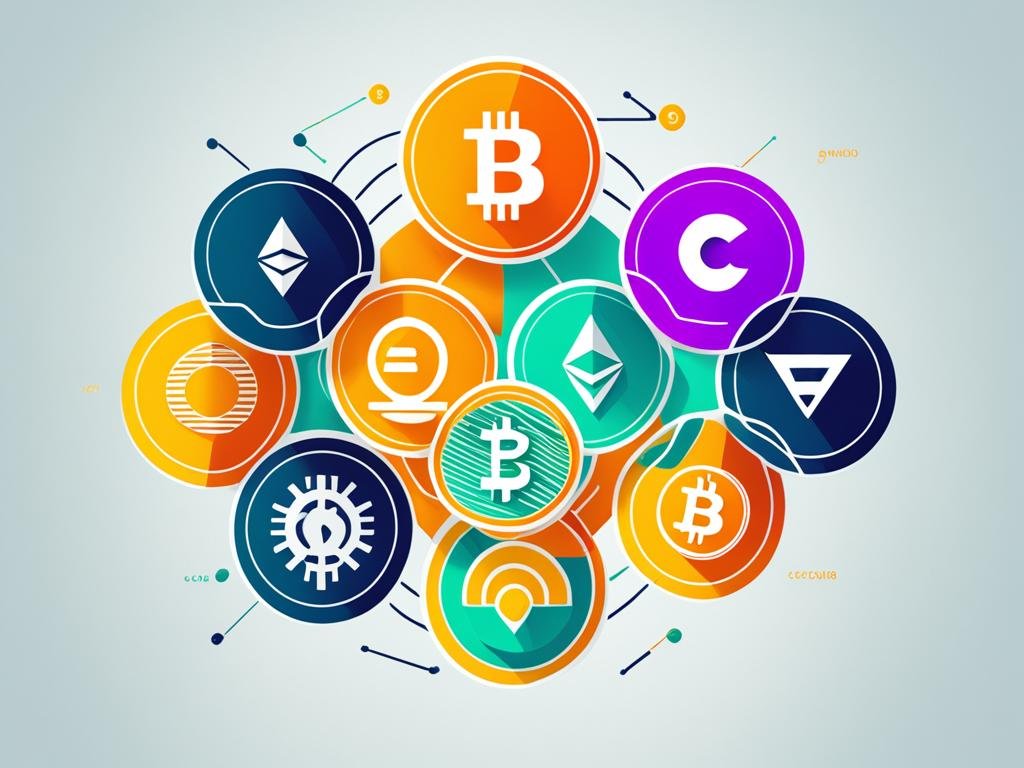
There are many different cryptocurrencies on the market. Each one is unique in its characteristics and uses. In addition to Bitcoin, There are others that are very popular. Such as Ethereum, o Litecoin, o Ripple and Tether.
O Ethereum is not just a cryptocurrency. It's a platform that uses blockchain. There Ether is used to make smart contracts.
O Litecoin looks like the Bitcoin. However, it processes transactions faster.
O Ripple focuses on payments globally. It uses a technology called distributed ledgers.
O Tether is a special type. Its value is linked to currencies such as the dollar.
Each cryptocurrency is unique. They have different uses and advantages.
To see all the cryptocurrencies, go to this link link. There you will find more details about them.
Read on to find out more about cryptocurrencies. You'll understand their pros and cons and what the future holds.
Advantages of cryptocurrencies
Cryptocurrencies are more modern currencies than paper money. Transactions are fast and secure. You can send or receive money in just a few minutes, no matter where you are.
A great advantage is the privacy they offer. All actions are stored in a special way, without revealing your financial data. This gives you more freedom and security when using your money.
Using cryptocurrencies also costs less. The fees for international financial transactions are lower, as they don't involve banks. This is very helpful for those who need to make payments in other countries.
With cryptocurrencies, you have control in your own hands. You don't need government approval to touch your money. So you can do whatever you want with it, without having to answer to anyone.
Cryptocurrencies are about speed, security, economy and freedom in the use of money.
But, of course, cryptocurrencies also have weaknesses. Price fluctuations and a lack of specific laws, for example, can pose challenges. That's why it's always good to be well-informed when investing and to be careful.
Benefits of Cryptocurrencies
- Fast, secure and transparent transactions
- Greater privacy
- Lower transaction fees
- Greater control over your money
In the next segment, we'll talk about the difficulties and risks associated with cryptocurrencies. We'll understand more about disadvantages and take precautions.
Disadvantages of cryptocurrencies
Cryptocurrencies offer many advantages, but they also have disadvantages and risks. Before investing, it's a good idea to be aware of these disadvantages.
Price volatility
A major problem with cryptocurrencies is the constant change in their prices. In other words, their value can change very quickly. This makes it difficult to predict how much your investment will be worth.
Dealing with volatility is essential for those who invest in cryptocurrencies. Analyzing well and diversifying your bets helps to reduce the risks.
Lack of regulation
Being a new market, cryptocurrencies are not well regulated in many places. The risk of fraud and price manipulation is higher. This also brings uncertainty and can harm those who invest.
When investing, check the laws of your country. Choosing reliable brokers is essential to protect yourself from uncertainty.
Security risks
The technology behind cryptocurrencies is secure, but wallets and brokers can be hacked. You could lose all your coins. Extra care is needed to protect yourself.

Use secure hardware wallets, perform two-factor authentication and store your private keys safely. When choosing brokers, prefer those that are well recommended.
Before investing in cryptocurrencies, carefully evaluate the pros and cons. Educating yourself and being prudent is the way to make the most of this new market.
The future of cryptocurrencies
Many think the future of cryptocurrencies full of surprises and changes. The basis of these, blockchain technology, could affect many sectors. This includes finance, supply chains and governance.
Cryptocurrencies are being used and adopted more around the world. More companies and people are accepting them to pay for things. This technology makes financial transactions faster and safer. You don't need banks to intermediate. Verification of transactions by miners makes everything safer.
Blockchain technology could change the way we do financial and business things. It makes transactions cheaper and more efficient. It also allows contracts to be created that fulfill themselves, helping with automation.
Although promising, the path of cryptocurrencies has its challenges. They are not yet fully integrated into the world economy. The lack of clear rules and acceptance makes the market insecure. Governments and institutions need to set guidelines for security and stability.
The progress of cryptocurrencies depends a lot on the blockchain. It needs to evolve to better serve the market. It is essential that it continues to guarantee security and efficiency in transactions.
In the end, the future of cryptocurrencies is promising. With more technological advances and acceptance around the world, they could become an important part of the economy. And of commerce in general.
Cryptocurrency security
Talk about cryptocurrency security is very serious, especially for you. Transactions are protected by cryptography and the blockchain is secure. However, wallets and brokers can be attacked by hackers.
When you buy, store and trade your cryptocurrencies, it's essential to take good care of them. The ideal is to use hardware wallets such as those from Ledger or Trezor. They provide greater security by keeping private keys away from unauthorized access.
Using two-factor authentication (2FA) is another important tip. With it, you need a second password in addition to the traditional one. This protects your cryptocurrencies, even if someone discovers your main password.
Keeping your private keys safe is crucial. And yes, remember: they are the master key to entering your cryptocurrencies. Keeping them safe, away from hackers and other people, is essential. So either use an offline wallet, or print them out and store them in a well-protected place.
And when trading cryptocurrencies, choosing a safe place to do so is the first step. Look for brokers that are known for their security. See if they use cryptography and keep your money separate from theirs. Don't forget to check out the latest security tips and keep an eye out for possible scams.
Cryptocurrencies offer many advantages, but taking care of security is essential if you want to enjoy them in peace. Tips such as using hardware wallets, 2FA and keeping your private keys safe help reduce the risk of falling victim to scams.
Cryptocurrency regulation
A cryptocurrency regulation is a topic in many countries. Some already have rules for market security. Others are still thinking about how to do this.
Regulation is very important for the safety of users. It also helps to further embed cryptocurrencies in the financial world.
Cryptocurrencies can improve financial transactions. But they need rules to help and protect them.
Regulatory harmonization
Governments face the challenge of harmonizing the rules. As cryptocurrencies are global, each country can have different rules. This can complicate making a regulatory system the same for everyone.
Governments need to join forces to balance protection and innovation in cryptocurrencies. This can be done with international help. Together, better and simpler rules can be created.
The importance of regulation
Regulating cryptocurrencies helps protect users and investors. It also improves confidence in the financial market. Clear rules prevent fraud and money laundering.
Regulation also increases the confidence of companies and financial institutions. They want clear rules for entering the cryptocurrency market.
With rules, governments can better control the use of cryptocurrencies. This prevents problems and keeps the financial system strong.
In short, regulation plays a key role in the cryptocurrency market. It seeks security, transparency and the trust of participants. But governments need to balance rules for security and innovation.
Conclusion: What are cryptocurrencies?
Cryptocurrencies are a type of digital money with no central control. They use blockchain and cryptography. Thus, transactions are fast, reliable and clear. Users have more control over their money.
But cryptocurrencies have their downsides. Prices change a lot and they are not regulated. Knowing this is important before investing. Still, many people see a bright future for this market.
Over time, cryptocurrencies could change the world economy. But there are challenges, such as security and laws. That's why learning a lot and being careful are essential when starting to invest.
Don't forget to follow our blog “Wealth Formula” for more topics and information on the world of investments.
Source links
- https://www.infomoney.com.br/guias/criptomoedas/
- https://blog.nubank.com.br/o-que-e-criptomoeda/
- https://www.kaspersky.com.br/resource-center/definitions/what-is-cryptocurrency
Content update: May/2024
- The cryptocurrency market is witnessing growing institutional adoption, driven by products such as spot Bitcoin ETFs, which bring greater legitimacy and capital flow.
- Layer 2 solutions such as Polygon and Arbitrum are gaining prominence, aiming to solve the scalability and cost challenges of Layer 1 blockchains, making transactions faster and cheaper.
- The emphasis on security and self-custody of digital assets is intensifying, with users seeking greater control over their private keys to mitigate security risks at brokerages.
| Aspect | 2020 (Estimated) | 2024 (Estimated) |
|---|---|---|
| Total Market Value | Approx. US$ 200 billion | Above US$ 2 trillion |
| Number of Global Users | Around 100 million | More than 400 million |
| Main Use Cases | Store of value (Bitcoin), DApp platforms (Ethereum) | Store of value, DeFi, NFTs, Gaming (Web3), Payments, B2B solutions |
| Main concern | Volatility, Legitimacy | Regulation, Security (exploits in DApps), Sustainability, Usability |
| Innovations in the Spotlight | DeFi (start) | Layer 2s, ZK-Rollups, Account Abstraction, RWA Tokenization |
Current Perspectives and Recommended Practices
The universe of cryptocurrencies continues its accelerated evolution, transcending the mere idea of ‘digital money’. Today, we are witnessing a convergence of innovations that are shaping the financial and technological future.
The growing integration of Web3, with its digital property concepts (NFTs) and decentralized applications (DApps), is redefining entire industries, from entertainment to asset management.
For the investor and enthusiast, some practices are crucial in May/2024. Portfolio diversification remains a pillar, but now complemented by in-depth research into projects with solid foundations and real use cases. Security, always paramount, requires the adoption of hardware wallets and constant vigilance against phishing attacks and other cyber threats.
In addition, keeping up to date with the global regulatory landscape is vital, as government decisions can significantly impact the value and usability of digital assets. Continuing education is your greatest ally in successfully navigating this dynamic and promising market.
Complementary FAQ: Digging deeper into cryptocurrencies
What are the main trends in the cryptocurrency market today?
Current trends include the tokenization of real-world assets (RWA), the advancement of Layer 2 scalability solutions, the growing adoption of stablecoins for payments and the integration of artificial intelligence with blockchain technology for optimization and security.
How do Web3 and NFTs relate to cryptocurrencies?
Web3 represents the next generation of the internet, decentralized and built on blockchain. Cryptocurrencies are the financial fuel of this new era, while NFTs (Non-Fungible Tokens) are the backbone of digital property within Web3, enabling the verification of authenticity and scarcity of assets such as art, collectibles and even digital identity.
What are the emerging risks for cryptocurrency investors?
In addition to volatility and lack of regulation, emerging risks include vulnerabilities in smart contracts (exploits in DApps), sophisticated fraud (pump-and-dump, rug pulls), abrupt regulatory changes in major economies and the technical complexity of certain platforms, which can make safe adoption difficult for beginners.
How are sustainability and ESG impacting the crypto sector?
Concern about the energy consumption of certain blockchains (especially those based on Proof-of-Work) is driving the search for more sustainable alternatives, such as Proof-of-Stake. Projects focusing on ESG (Environmental, Social, and Governance) are gaining traction, and the industry is adapting to demonstrate greater environmental and social responsibility, attracting more conscious investors.
What role do stablecoins play in the crypto ecosystem?
Stablecoins are cryptocurrencies whose value is pegged to a more stable asset, such as the US dollar. They serve as a bridge between the fiat and crypto worlds, facilitating fast transactions, international remittances and serving as a safe haven in times of high market volatility, without the need to convert to traditional currency.