
Have you ever wondered what capitalization is and whether it’s worth signing up for? Many Brazilians are looking for ways to save or invest, but come across this unique financial product. In this comprehensive guide, we’ll explain how capitalization works, its costs, its actual returns, and the best alternatives for your money. Get ready to make smarter financial decisions and grow your wealth by 2026.
What Is Capitalization: Understanding This Financial Product
Have you ever walked into your bank to unblock a card and walked out with a “savings plan” that offers a chance to win cars and houses?
This situation is extremely common and perfectly illustrates What is capitalization, and is it worth signing up for? only if you understand that this isn't an investment.
In practice, a capitalization bond is a financial product regulated by the SUSEP (Superintendence of Private Insurance).
It works like a scheduled purchase of debt securities, where part of your money is set aside and the other part goes toward prize drawings and fees.
How Quotas Work Technically
When you make a capitalization payment, your money is divided into three different “pools.”.
The capitalization installment is the only one that actually comes back to you at the end of the term agreed upon with the bank.
A raffle entry fee is the amount you “bet” to enter the drawing for the prizes offered by the organization.
Finally, the underwriting fee is used to cover the administrative expenses and the profit of the company issuing the security.
SUSEP Regulation and Security
Unlike a CDB or savings accounts, the capitalized amount is not protected by the Credit Guarantee Fund (FGC).
Its security lies in the oversight provided by the federal agency, which ensures that the company has sufficient reserves to honor redemptions.
⚠️ Common mistake: Believing that capitalization is a conservative form of investment similar to Treasury Direct. It is, technically, an accumulation product with a lottery-style component.
The Illusion of Forced Savings
Many managers market this product as a solution for people who lack the discipline to set aside money each month.
Although automatic debits help build a habit, the opportunity cost in 2026 is too high to ignore.
Saving money that loses value to inflation is, in fact, a slow way to watch your purchasing power decline.
Many people sign the contract because of the excitement of the drawing, but they overlook the mathematical impact on the final balance.
Is Capitalization Worth It? The Real Return in 2026
To determine whether this product makes sense today, we need to look at the return on investment, capitalization compared to the current Selic rate.
In April 2026, with interest rates at levels that still favor the fixed income, leaving money “tied up” without generating any real return is a risky choice.
Most securities adjust their value based solely on the TR (Reference Rate), which is often close to zero or well below the IPCA.
The Impact of Inflation on Your Net Worth
If you invest 200 R$ per month in a capital accumulation plan, at the end of 60 months, you will receive the adjusted principal amount.
The problem is that those 12,000 R$ units accumulated by 2031 will buy much less than they do today, in 2026.
📊 Quick Simulation: > – Capitalization: R$ 5,000 after 12 months → R$ 5,050 (estimated using TR). > – CDB 100% Selic: R$ 5,000 after 12 months → R$ 5,450 (estimated net). > – Opportunity cost: R$ 400 in just one year.
The Math Behind Drafts vs. Performance
The odds of winning a significant prize are statistically low, similar to those of federal lottery games.
In my personal opinion, it’s more efficient to invest in a real asset and use a small portion of the returns to buy a lottery ticket, if you want to gamble.
That way, you keep your principal earning real compound interest instead of financing the bank's operations.
Liquidity and the Risk of Early Redemption
One of the biggest problems with capitalization is the redemption schedule during the first few months or years.
If you need the money before the due date, you may receive less than you actually deposited.
This happens because administrative fees are deducted right at the start of the contract, penalizing those who don't see it through to the end.
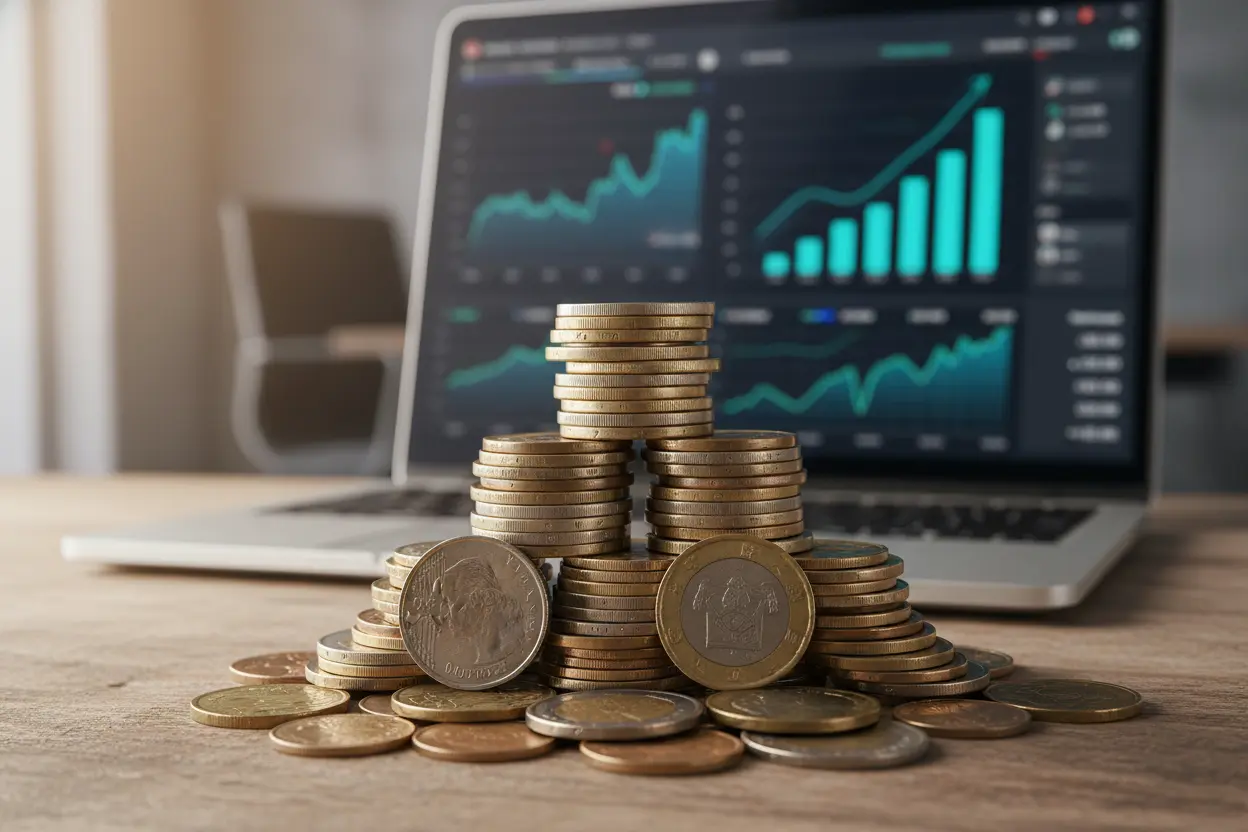
The visual comparison between the growth of compound interest and the stagnation of capitalization is clear.
To understand why the balance doesn't seem to be growing, we need to look at the hidden fees labeled as “fees.”.
Capitalization Costs and Fees: Where Your Money Goes
When you sign a contract, you rarely have a clear picture of how much of your money is “eaten up” by management fees.
Unlike an investment fund, where the fee is charged annually, with capitalization, the discount is applied monthly to the contribution.
It is essential to understand that the portion allocated to the drawing is non-refundable and serves as the price of a ticket.
The Impact of Income Tax on Premiums
If you're one of the lucky few to win, be aware that the house takes a hefty cut.
There is an incidence of income tax on bonuses withholding at source, at a flat rate of 20% on the amount received.
This means that an advertised bonus of R$ 100,000 actually deposits only R$ 80,000 into your account.
The Reference Rate (TR) and Its Yield
The adjustment of capitalization bonds generally follows the TR, which is the same rate used to adjust FGTS and savings accounts.
In scenarios of moderate inflation, the TR cannot even maintain the purchasing power of money.
💡 Smart Strategy: Before signing up, ask for the “Fee Schedule.” It shows exactly what percentage of your money will actually be invested each month.
Hidden Maintenance Costs
Some banks include insurance or home assistance services tied to the mortgage to justify the cost.
Consider whether you really need these services or if you're just paying more for something you'll never use.
In most cases, purchasing these services separately is much cheaper than doing so through a capitalization bond.
A direct comparison with real assets reveals the opportunity cost you pay when you choose luck over strategy.
Capitalization vs. Investments: Compare and Choose the Best
When we compare capitalization with actual investments, the numerical disadvantage becomes undeniable.
Products such as the Treasury Direct And daily-liquidity CDBs offer superior security and predictable returns.
Many people seek the savings account with prize drawings because they are unaware that modern brokerage firms offer bonuses and cashback on actual investments.
Comparative Yield Table (2026 Scenario)
| Product | Estimated Income (Year) | Liquidity | FGC Protection | Ideal For |
|---|---|---|---|---|
| Nubank (CDB) | 100% from Selic | Daily | Yes | Emergency Reserve |
| 2029 Selic Treasury Bond | Selic + Fixed rate | Daily (D+1) | National Treasury | Maximum Security |
| BTG Pactual (LCA) | ~90% from the CDI | After the waiting period | Yes | Income tax exemption |
| Capitalization | TR (Near 0%) | Only at the end | No | Forced Discipline |
The Power of Compound Interest in Tesouro Direto
In Tesouro Direto, 100% of your principal earns interest starting on the first day of the investment.
With capitalization, only the “capitalization share” earns a return, which drastically slows the growth of your net worth.
If you invest R$ 300 per month in a CDB that pays 100% of the CDI, in 5 years you’ll have a difference of thousands of reais compared to the capitalized amount.
The Security of the Credit Guarantee Fund
Institutions such as XP Investimentos and Inter offer CDBs that are protected by the FGC up to R$ 250,000.
This protection is much more robust for small investors than SUSEP's regulations governing debt securities.
The smart choice in 2026 is to divide your money into “pools”: one for investing and another, much smaller one, for leisure or gambling.

Managing your investments through an app ensures the transparency that traditional investment vehicles lack.
If, after reviewing the numbers, you still want to enter the raffles, there are ways to do so without breaking the bank.
How to Purchase a Capitalization Plan: A Mindful Step-by-Step Guide
If you've decided that What is capitalization, and is it worth signing up for? For your specific profile, proceed with caution.
Sometimes, this product is used as a banking incentive to lower interest rates on a mortgage.
In this specific case, the cost of the security may be offset by the savings in interest on the larger debt.
1. Review the grace period
Never buy a security without knowing exactly when you'll be able to withdraw your money without losing your investment.
Many contracts in 2026 require a minimum term of 12 to 24 months to receive a 100% refund of the capitalization portion.
2. Check the frequency of the drawings
There are lotteries with daily, weekly, or monthly drawings.
The more raffles there are, the larger the portion of the proceeds allocated to them tends to be, and the lower their final return tends to be.
3. Read the terms and conditions for partial redemption
Some products allow you to redeem part of the value before the expiration date, but doing so will disqualify you from the drawings.
Find out if this flexibility is included in the contract your bank is offering.
💡 Smart Strategy: If your goal is simply to enter prize drawings, look for digital accounts that offer free prize drawings based on your idle balance, without charging any fees for it.
Replacing traditional banking products with modern alternatives is the first step toward true financial freedom.
Boost Your Net Worth: Smart Options for 2026
The financial market in 2026 offers much more powerful tools than capitalization bonds for those who want to grow their wealth.
Digital banks like Inter and Nubank have transformed the way we save money with their “savings accounts” that automatically generate returns.
You can enjoy the same benefits of discipline without sacrificing the returns your hard work deserves.
Digital Accounts with Higher Returns
Today, any account that pays 100% of the CDI already outperforms capitalization in terms of real returns.
Institutions such as BTG Pactual offer platforms where you can set up automatic monthly investments in fixed-income funds.
This creates the same kind of “forced savings,” but with the benefit of interest working in your favor, not the bank’s.
Credit card with cashback and benefits
Instead of waiting for an uncertain drawing, you can use a credit card that gives you real cash back on every purchase.
Banks such as XP offer “Investback,” a program where the money spent goes directly into an investment fund.
📊 Real Economy Simulation: – Monthly card spending: R$ 3,000. – Cashback of 1%: R$ 30 per month. – In 12 months: R$ 360 guaranteed “bonus” on the amount invested. – With compounding: R$ 0 guaranteed (depends on luck).
The Path to True Wealth
Financial education teaches us that there are no shortcuts or magic formulas based on bank sweepstakes.
Financial success in 2026 comes from consistently investing in income-generating assets, such as dividend-paying stocks or real estate funds.
Use technology to your advantage and automate your investments with brokerages that don't charge custody fees.
This content is for information purposes only and does not constitute financial advice. Please consult a 2026 expert before investing.
Capitalization may be appealing because of the prize drawings, but for those looking for ‘investment’ and ‘extra income,’ there are much more advantageous options. Compare ‘CDB,’ ‘Tesouro Direto,’ and ‘credit cards’ with benefits. Make smart choices for your ‘credit limit’ and ‘net worth’ in 2026. Your money deserves to earn more!
Warning: The images used in this article are merely illustrative and may not accurately represent the content described.
FAQ – Common Questions About What Capitalization Is and Whether It’s Worth It
We've created this section to answer the most frequently asked questions about capitalization bonds and help you make a fully informed decision.
Income tax applies only to prizes won in raffles, with a tax rate of 20% withheld at source by the Federal Revenue Service. When you redeem the accumulated amount, income tax is generally not charged, since the return rarely exceeds the amount you originally invested.
You are unlikely to receive 100% of the amount invested if you request early redemption, due to the fines and grace periods as provided for in the contract. Therefore, before understanding What is capitalization, and is it worth signing up for?, it's important to know that your liquidity will be affected if you need the money urgently.
Capitalization is a credit instrument focused on prize drawings, functioning as a form of “forced savings” with no focus on profits. Real investments, on the other hand—such as Tesouro Direto—focus on the returns from compound interest to grow your net worth consistently and safely.