
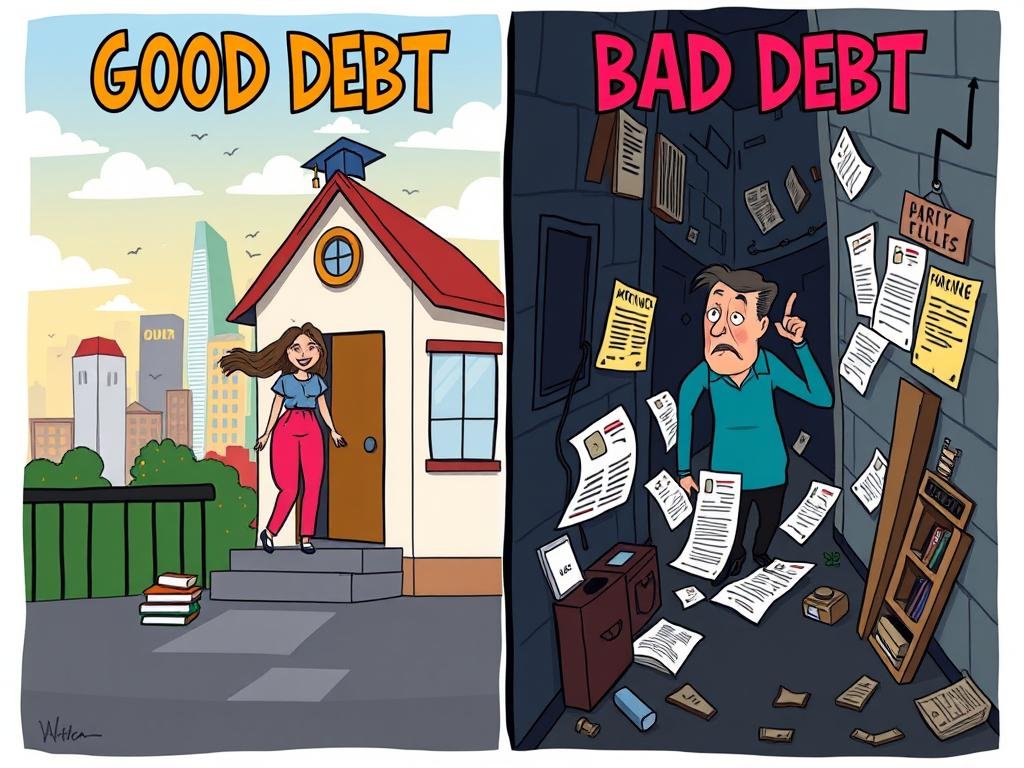
Your Good and Bad Debt: Have you ever wondered how to tell the difference between Good and Bad Debt? It is essential to understand the types of debts to maintain financial control.
With good management of income, expenses, and investments, you have a clear picture of your finances.
Having an emergency fund and reviewing your budget are crucial steps. Save and pay debts Overdue payments also help a lot. But do you know how to identify and manage them? debts Good and bad?
Learn how to manage your debt for a better financial life. Understand the difference between positive and negative debt.
With these tips, you'll be able to create a financial plan to achieve goals—such as retirement—and maintain a good standard of living.
Understanding the Concept of Good and Bad Debt
It is crucial to know the difference between good debt e bad debt to manage your finances. A good debt helps your budget, such as a loan for education or to buy a home. On the other hand, the bad debt It doesn't help and can cause financial problems.
Some characteristics of a good debt are:
- It has a clear purpose, such as investing in education or buying a house.
- It offers reasonable interest rates and flexible payment terms.
- It can help you build your net worth or improve your long-term financial situation.
- Engaging in nonessential spending, such as buying luxury items or making unnecessary purchases.
- High interest rates and strict payment terms.
- It can lead to excessive debt and harm your financial health.
Understanding these differences helps you manage your finances better. By making wise choices about your debts, you can avoid problems.
That way, you can take full advantage of the benefits of a good debt and minimizes the damage from a bad debt.

The Main Types of "Good" Debt in the Brazilian Market
To understand the Types of Good Debt In Brazil, it's essential to be aware of your options. They can help improve your financial situation.
In Brazil, there are several options, such as low-interest loans and financing for investments.
Some of the options for Types of Good Debt include
- Personal loans with competitive interest rates
- Mortgages for the Purchase of Real Estate
- Education Loans
In Brazilian market, it's vital to understand the different types of "good" debt. This helps improve your financial situation.
With the help of financial institutions and experts, you can find the best option for you.

Remember, managing debt is crucial to good financial health. With the right options for Types of Good Debt And with an effective management plan, you can achieve your financial goals.
Thus, it maintains a healthy financial position in the Brazilian market.
The Most Common Types of Bad Debt and How to Avoid Them
It is crucial to know how to identify and avoid bad debt to maintain financial health. According to First Source, it is essential to avoid unnecessary spending. Keeping track of expenses is also crucial.
Excessive use of the credit card It is one of the leading causes of bad debt. This can create a spiral of debt that is difficult to pay off.
Another problem is the unnecessary loan. This happens when you take out loans for non-essential expenses. It's important to be careful with loans and avoid those with high interest rates.
Having a financial planning effectively helps prevent bad debt and maintain financial stability.
To avoid bad debt, it is recommended that you:
- Stick to a strict budget and keep track of expenses;
- Avoid excessive use of the credit card;
- Do not hire unnecessary loans;
- Having a financial planning effective.
With these tips, you can avoid bad debt and maintain your financial health. Remember, prevention is the best way to avoid financial problems.
| Type of Debt | Features |
|---|---|
| Bad Debt | Excessive use of the credit card, unnecessary loans, usurious interest rates |
| Good Debt | Investment loans, low-interest financing |
How Debt Affects Your Credit Score
Understand how debt affects the credit score to make informed decisions. According to Second Source, personal financial management is crucial for maintaining a healthy credit score and avoid financial problems.
O credit score It is calculated based on several factors. It includes payment history (35%), credit utilization (30%), length of credit history (15%), credit mix (10%), and new credit accounts (10%).
| Factor | Weight in the credit score |
|---|---|
| Payment history | 35% |
| Use of Credit | 30% |
| Length of Credit History | 15% |
| Credit mix | 10% |
| New credit accounts | 10% |
Debts can have a Financial impact significant impact on your credit score. It's important to manage your debts effectively. That way, you can maintain a good credit score and avoid financial problems.

Strategies for Turning Bad Debt into Investments
To turn bad debt into investments, it is crucial to understand the debt strategies existing ones. A common approach is the refinancing, which exchanges expensive debt for cheaper debt.
Another option is the consolidation, which consolidates multiple debts into a single one, making it easier to pay them off.
It's also important to do a settlement planning tailored to your needs. This takes into account your current financial situation and your plans for the future.
You can focus on paying off high-interest debts first, such as credit cards and overdrafts.
With the right strategies, you can turn bad debt into investments. This improves your financial health. Remember, consolidation e refinancing They are powerful tools for managing debt.

| Strategy | Description |
|---|---|
| Refinancing | Replacing high-interest debt with debt at lower interest rates |
| Consolidation | Consolidating multiple debts into a single one |
| Settlement Planning | Creating a Customized Plan to Pay Off Debts |
The Role of Financial Planning in Debt Management
To manage debt, it is crucial to have a financial planning Well done. That prevents financial problems and brings stability.
About 70% of the population does not fully understand the financial education, which makes it difficult to debt control.
One financial planning It's helpful for short-, medium-, and long-term projects. It also prevents unnecessary expenses and provides financial independence.
There are three types of financial planning: personal, family, and business. It's important to have a good understanding of your financial situation before starting a planning effective.
For a financial planning To be successful, follow these tips:
- Start saving and investing early
- Diversify your investments based on risk and your goals
- Use the 50|30|20 method to divide your budget
- Build an emergency fund equal to 3 to 6 months' worth of essential expenses
In addition, it is essential to have discipline, patience, and resilience. With a financial planning Well done—you're achieving your financial goals and maintaining your debt control effectively.
| Planning Type | Description |
|---|---|
| Staff | Financial planning individual |
| Family | Financial Planning for Families |
| Business | Financial Planning for Businesses |
Tools and Apps for Debt Management
Managing your debt requires the right tools. There are several options for debt instruments e financial management apps. They help you stay in control of your finances.
Some of the main options include:
- Refresh.me, with prices starting at $12 per month;
- Mint, a free option with ads;
- YNAB (You Need A Budget), with prices starting at $14.99 per month;
- Empower, with free options and consulting services starting at 0.89% of assets under management annually;
- Quicken, starting at $41.88 per year.
In addition, 67.5% of Brazilian households have debts. This is according to the National Confederation of Goods, Services, and Tourism (CNC).
Use debt instruments e financial management apps It helps you manage your finances better. That way, you can achieve financial well-being.
To manage your debts, it's essential to choose the right tools. With the right options, you can create a repayment plan and start paying off your debts effectively.
Warning Signs: When Your Debts Are Getting Out of Control
It is crucial to be aware of the warning signs to avoid financial problems. Experts say it's essential to know when the out-of-control debt begin to affect your financial life. Some signs include:
- Difficulty paying bills and debts on time
- Increase in debt over time
- Receive debt collection notices
If you're facing these problems, it's time to take action. Creating a payment plan and setting clear financial goals is a good strategy.
It is also important to understand the warning signs and act quickly to prevent bigger problems.
Managing debt is essential for financial health. Therefore, it is essential to be mindful of warning signs and take steps to prevent the out-of-control debt affect your financial life.
How to Negotiate Your Debts Effectively
A debt negotiation It really helps with your financial health. Renegotiating debts with SPC Brasil can yield great results.
About 80% of consumers are able to manage their finances quickly and securely.
To negotiate effectively, it is essential to know the negotiation techniques. This means preparing for the negotiation, understanding the terms of the agreement, and having a clear strategy. That way, you can achieve your goals more easily.
- Track all outstanding financial matters
- Check your CPF status regularly
- Renegotiate debts
- Save money
- Set financial goals and have a solid financial plan
With the negotiation techniques Under the right circumstances, it's possible to strike good deals. The debt negotiation It can be a challenge.
But with the right tools and strategies, you can overcome these challenges and achieve financial stability.

Financial Habits for Managing Debt Wisely
To have financial habits healthy, it is crucial to manage their healthy debt. Start by setting up an emergency fund.
This emergency fund should cover 3 to 6 months of fixed expenses. It’s also important to pay off high-interest debt first.
Other tips include waiting 24 hours before making an impulse purchase. Cutting back on unnecessary expenses also helps a lot with your budget.
Investing helps you achieve long-term financial stability. Discipline and persistence are essential to achieving financial stability.
To learn more about fixed and variable expenses, visit learnaboutfinance.com.
Some financial habits Healthy options include:
- Set aside a percentage of your monthly salary
- Set and stick to a monthly budget to keep track of expenses and prioritize goals
By adopting these habits and keeping strict track of your finances, you'll be on the path to financial stability. That way, you'll avoid debt problems.
Conclusion
Understanding the differences between good and bad debt It is essential for making sound financial decisions.
Good debts are those that offer favorable terms, such as lower interest rates and more flexible repayment terms.
On the other hand, bad debt involves unfavorable terms, such as high interest rates and strict repayment deadlines.
It is important to identify the good and bad debt to avoid financial problems. Good debt can be an opportunity to improve your financial situation, while bad debt can disrupt your budget and affect your financial health.
To avoid bad debt, it is recommended that you seek professional financial advice. An expert can help you understand the terms of your debts and find appropriate solutions.
In addition, it is important to maintain strict financial control, avoid taking on new debt, and seek ways to reduce costs.
In short, it is essential to understand the differences between good and bad debt to make sound financial decisions.
Seeking professional financial advice and maintaining strict financial control are essential steps to avoid bad debt and improve your financial situation.
FAQ
Q: What characterizes good debt?
A: One good debt helps your financial situation. This includes loans for investments or for purchasing durable goods. These loans have lower interest rates and reasonable repayment terms.
Q: How can I identify bad debt?
A: Bad debt offers no benefits and can put a strain on your budget. Examples include excessive use of credit card and loans for non-essential items. They also include high-interest loans.
Q: How do good and bad debt affect my financial life?
A: Good debt helps your financial stability. Bad debt, on the other hand, can cause problems. This includes a low credit score and difficulty obtaining new loans.
Q: What are the main types of "good" debt in the Brazilian market?
A: In Brazil, “good debt” includes loans for investments. This includes mortgages and auto loans. It also includes lines of credit with attractive interest rates for small businesses.
Q: What are the most common types of bad debt, and how can I avoid them?
A: Bad debt includes excessive credit card use and taking out loans for things you don't need. To avoid this, it's important to have a budget. Avoid unnecessary spending and compare credit options.
Q: How do debts affect my credit score?
A: Managing your debts well is crucial for a good credit score. Bad debt can hurt your score. This makes it harder to get new loans and financing.
Q: What strategies can I use to turn bad debt into investments?
A: To turn bad debt into investments, consider the refinancing smart. The consolidation Debt management and repayment planning also help. These actions They can lower interest rates and simplify payments.
Q: How can financial planning help me manage my debt?
A: Planning your finances is essential for managing debt. It helps you identify excessive spending and set repayment goals. It also helps you develop strategies to achieve financial stability.
Q: What tools and apps can I use to manage my debts?
A: There are several resources that can help you manage your debt. Financial Management Apps, tracking spreadsheets and banking tools are useful. They allow you to monitor debts, schedule payments, and make informed decisions.
Q: What are the warning signs that my debt is getting out of control?
A: Warning Signs These include late payments and excessive credit card use. Difficulty paying other bills and a feeling of mounting debt are also signs. It’s crucial to stay alert and act quickly to regain control.
Q: How can I negotiate my debts effectively?
A: To negotiate debts effectively, be well prepared. Gather the necessary documentation and familiarize yourself with negotiation techniques. Being willing to reach an agreement with your creditors is also important.
Q: What financial habits can I adopt to keep my debt under control?
A: To maintain healthy debt, create a budget and avoid unnecessary expenses. Make your payments on time and maintain a good credit history. Being aware of your finances is essential for managing your debt.