
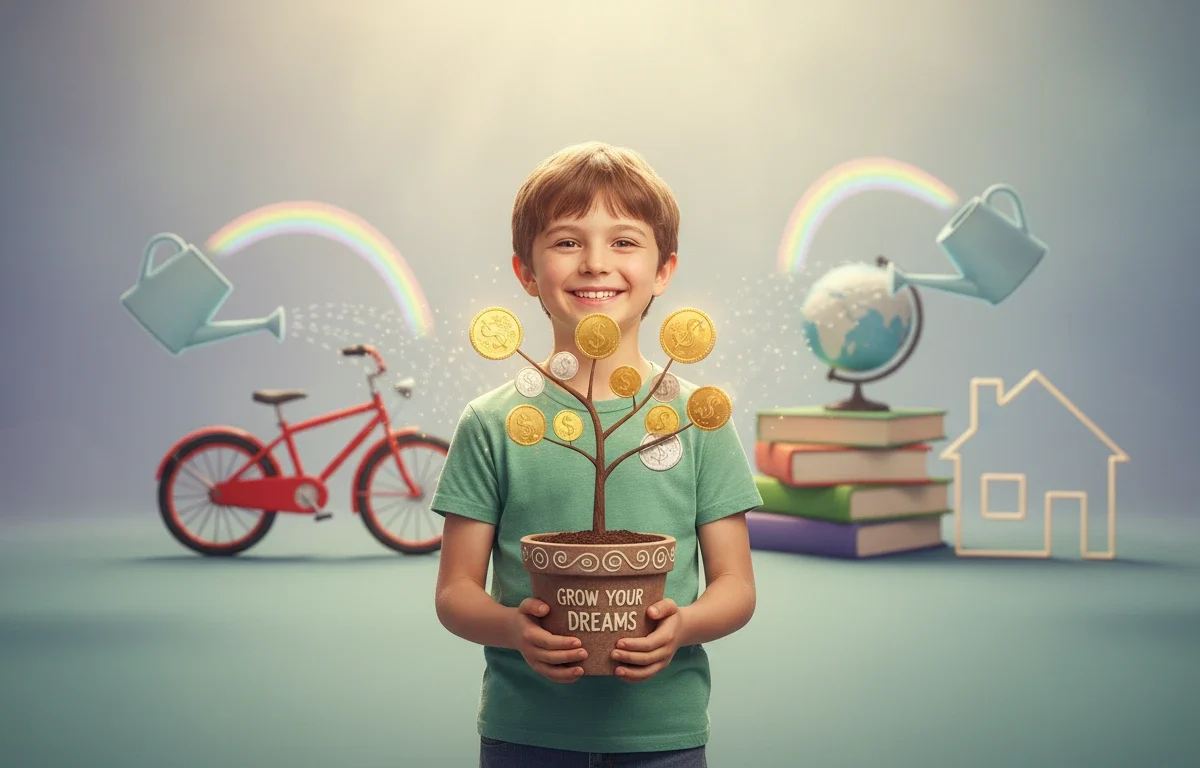
Want to know how to teach financial education for their children? It's a journey that starts early and shapes the future. Teaching children how to manage money is one of the greatest gifts you can give them. After all, financial independence begins with knowledge.
Highlights
- Start talking about money from early childhood.
- Use an allowance as a tool to teach responsibility and help children make choices.
- Encourage saving and planning for your dreams.
- Explain the difference between needs and wants in consumption.
- The example set by parents is the foundation of all financial education.
Why is it crucial to teach children about finances?
Teaching children about finances is crucial because it prepares them for a future in which they can make informed decisions. They learn to value money, make smart choices, and understand the importance of saving and planning. This builds a solid foundation for financial independence as adults.
Modern life demands this skill more than ever. Today's children will face complex economic challenges. That is why financial education is not a luxury, but a necessity.
When should you start talking about money? What's the best age?
Many parents wonder when the right time is to have this conversation. The truth is, there’s no one-size-fits-all age. It’s best to start early and adapt your language accordingly.
As soon as a child begins to understand the concepts of exchange and value, they are ready to learn. This is usually around age 3 or 4. Use everyday situations to introduce these concepts.
The Right Age: Is There an Ideal Time?
There's no magic formula for determining the exact age. What matters is consistency. Start with the basics and move forward gradually.
Keep track of your child's development. Every child learns at their own pace. The key is to use a playful and easy-to-understand approach.
Allowance: Freedom and Responsibility in Practice
An allowance is a powerful tool for financial education. It gives children the opportunity to manage their own money. That way, they learn through hands-on experience.
It's a mini-budget in the hands of little ones. With it come choices, sacrifices, and consequences.
How do you set the amount and frequency?
The amount of the allowance should be appropriate for the child's age and needs. It shouldn't be excessive, to avoid waste. Think about the expenses the child will need to cover.
Frequency matters, too. Weekly for younger children, every two weeks or monthly for older children. This teaches them to plan for different time frames.

Clear Rules: The Secret to Success
Set clear rules about how the allowance should be used. What should it cover? What can they buy with it? This helps prevent conflicts and frustrations.
Teach the difference between money that can be spent and money that should be saved. Encourage dividing it into categories: spending, saving, and giving.
Essential Tip: An allowance should not be a reward for doing household chores. These are family responsibilities. An allowance is for teaching financial management.
Saving and Investing: The Power of Dreams Come True
Saving is more than just putting money aside. It’s about learning to delay gratification. It’s about planning for the future and making dreams come true.
From an early age, children can understand that saving a little today means having more tomorrow. That's a valuable lesson.
The Magic Piggy Bank: The First Step to Saving
A piggy bank is the classic starting point. It makes the act of saving something tangible and visible. The child sees the money grow.
Choose a fun, transparent piggy bank, if possible. That way, seeing your progress will be even more motivating.
Beyond the Piggy Bank: Introducing Small Investments
With slightly older children, you can take it a step further. Explain how savings accounts at banks work. Show them how money can “work” for them.
Terms such as “interest” can be introduced in a simplified way. For more in-depth information on how to introduce investments to young people, Check out the CVM website. Use practical, easy-to-understand examples.
Conscious Consumption: The Value Behind the Price
Today's world is a constant invitation to consume. Teaching children about mindful consumption is essential. Children need to understand the impact of their choices.
This goes beyond price. It involves real value, necessity, and consequences.
The Difference Between a Want and a Need
Help your child distinguish between a want and a need. Ask, “Do you really need this, or do you just want it?” That simple question makes all the difference.
Discuss your priorities. We can't always have everything we want, and that's okay.
The ‘must-have’ trap’
The pressure from friends and advertising is real. Show them that not everything that's trendy is essential. Teach them to resist impulses.
It's important for them to develop critical thinking skills. This will protect them from making poor financial decisions in the future.
Entrepreneurship for Children: Unleashing the Little Genius
Fostering an entrepreneurial spirit can be fun. It teaches children about work, effort, and reward. Children learn how to create value.
Small initiatives can ignite that spark. Entrepreneurship is an excellent school of life.
Small Sales: Lemonade and Creativity
How about setting up a little lemonade stand? Or selling drawings? These simple activities teach you a lot.
The child experiences the cycle of production, sales, and profit. The child sees the results of his or her own efforts.
| Activity | Skills Learned | Recommended Age |
|---|---|---|
| Sell lemonade | Pricing, customer service, profit | 6–10 years |
| Make crafts | Planning, Creativity, Sales | Ages 8–12 |
| Small Services | Responsibility, the value of work | Ages 7–11 |
Fun Facts About Money for Kids: Did You Know?
The world of money is full of incredible facts. Learning about some of these interesting tidbits can make the subject even more fascinating.
After all, the history of money is fascinating.
- Where did the money come from? In the old days, people used to trade things, such as food for tools. This was called barter. To learn more about how money has evolved, Visit Wikipedia.
- First coins: The first coins appeared in Lydia (modern-day Turkey) more than 2,700 years ago. They were made of a mixture of gold and silver.
- Why is there a pig on the piggy bank? The tradition of the piggy bank dates back to the Middle Ages. At that time, a type of inexpensive clay called “pygg” was used to make pots for storing money. Over time, the name and the shape became intertwined.
- The Value of Time: Time is money! When you choose not to spend money today, your money can earn interest and be worth more tomorrow. That's the magic of compound interest.
- Inflation: That's when money loses its value. In other words, with the same amount of money, you can buy fewer things than before. It's as if prices were going up.
These facts show that money has a long and rich history. And it continues to evolve!

Tools and Games: Learning Through Play
Learning about finance doesn't have to be boring. There are many tools and games that make the process fun and interactive.
Play-based learning is more effective. It helps students retain concepts naturally.
Educational Apps and Platforms
There are several apps designed for children. They teach kids about saving, spending, and setting goals through gamification. Many banks offer platforms for children.
Check out options like “My First Investments” or “Finance for Kids.” They can be great resources.
Board games that teach finance
Games like “Monopoly” or “The Game of Life” are classics. They simulate real-life financial situations. Children learn to negotiate, invest, and deal with unexpected events.
For more tips and resources on financial education for children, The Blog do Serasa It offers a good overview. These games encourage important family discussions. It's a fun way to spend time and learn.
The Example Set by Parents: Your Best Investment
You are your children's primary role model. They closely observe your financial attitudes and habits. Actions speak louder than a thousand words.
Be transparent and consistent with your own finances. This builds trust.
Transparency and dialogue at home
Talk openly about the family budget in an age-appropriate way. Explain why certain choices are made. Show how money is earned and spent.
Important: Don't hide your financial difficulties. Address them honestly, turning them into opportunities to learn about resilience and planning.
Share your own financial challenges and successes. This makes the topic more relatable. Your children will see that it’s an ongoing learning process.
Financial education is a legacy. It prepares your children for a more secure future. Start this journey of discovery today.
Conclusion: Financial Literacy for Children: An Essential Guide for Parents
Teaching your children about financial literacy is an investment in their future. From an allowance to understanding mindful spending, every step is valuable. Remember that your example is the most important guide.
Start early, be consistent, and make learning fun. That way, you’ll be equipping them to make smart financial decisions throughout their lives.
Frequently Asked Questions
You can start talking about money in simple terms as early as age 3 or 4, adapting your language to the child's level of understanding.
No, an allowance should be a tool for financial education, not a reward. Household chores are family responsibilities.
Help them set a clear goal (e.g., a toy), set up a piggy bank, and track their progress. Show them that small savings lead to big achievements.
Yes, get them involved. Explain the product options, compare prices, and show them the difference between needs and wants. It's a great hands-on lesson.
Use this as a learning opportunity. Let him feel the consequences of running out of money for the rest of the period. Discuss what could have been done differently.