When it comes to emergency fund: where to invest, the right question isn't “How much will I earn?” but rather “Can I access my money quickly without losing any?” In personal finance, this distinction helps you avoid unexpected expenses related to health, unemployment, and urgent repairs.
According to the Central Bank, financial literacy begins with setting aside money for unexpected expenses. If you’re withdrawing from your savings account, it’s worth understanding which options offer security, liquidity, and simplicity without complicating your daily routine.
What is an emergency fund?
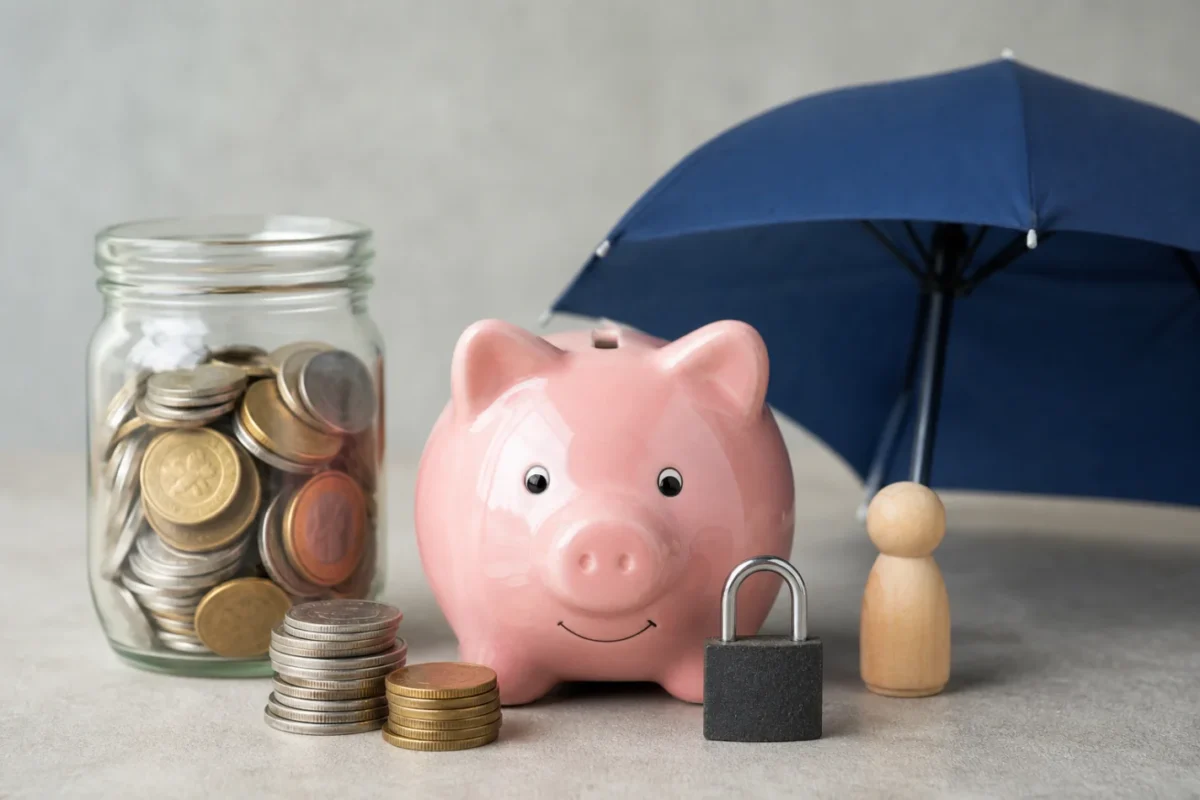
An emergency fund is money set aside for unexpected situations. It could be a doctor’s appointment, a car breakdown, or a job loss. It’s there to protect your budget and help you avoid costly credit card debt or overdraft fees.
Therefore, emergency fund: where to invest It doesn't go hand in hand with the pursuit of high returns. Here, the goal is quick access and low risk. In other words, it's the money that needs to be available when times get tough.
In practice, the reserve acts as a financial cushion. In our tests with beginner investors, we found that those who clearly set aside this amount make better decisions when the unexpected happens. And this reduces the urge to cash out ill-suited investments.
The Central Bank advises that planning and control help manage emergencies without compromising the budget. For those who want to move beyond savings accounts, this is the foundation before considering any more sophisticated financial products.
“Having a financial reserve helps you deal with unforeseen events without having to resort to expensive credit,” states the Central Bank of Brazil in financial education materials published on its website.
Central Bank of Brazil
How much to save before investing

The ideal amount depends on your cost of living. The most common rule of thumb is to save 3 to 6 months' worth of monthly expenses. People with an unstable income, children, or who are self-employed usually need a larger emergency fund.
emergency fund: where to invest Start with a simple calculation: add up your essential expenses, such as rent, groceries, transportation, electricity, and internet. Then multiply that total by the number of months of financial protection you need. The more predictable your income is, the lower that number can be.
Practical example: If you spend R$ 3,000 per month to keep your household running, a 3-month reserve would be R$ 9,000. If you want a 6-month reserve, the amount goes up to R$ 18,000. This calculation shows you exactly how much you need to save—no guesswork involved.
If your income drops during economic downturns, it makes sense to aim for 6 months. On the other hand, those with job stability and few fixed expenses can start with 3 months and increase that amount later. The important thing is to take the amount out of the realm of wishful thinking and incorporate it into your financial planning.
- List essential expenses: Just write down what keeps your life running smoothly.
- Add up the monthly costs: Use the average of the last three months so as not to underestimate.
- Select the months of coverage: Choose between 3 and 6 months, depending on your profile.
- Create the final goal: Multiply the monthly expense by the number of months specified.
When the goal is clear, it becomes much easier to make a decision emergency fund: where to invest without mixing that money with long-term goals. This step sets the stage even before you choose a product.
Emergency savings: where to invest
The practical answer hinges on three criteria: safety, liquidity, and predictability. If you might need the money today or tomorrow, it needs to be in a product that’s easy to redeem and carries a low risk of loss.
In everyday life, the most common options are Best Investment for Savings in Selic Treasury, CDB daily liquidity and paid subscriptions. Each one caters to a different type of reader, but all are better than leaving everything as is without evaluation.
Here's an objective comparison for anyone who wants to understand emergency fund: where to invest with a focus on practicality.
| Product | Liquidity | Risk | Recommended Profile |
|---|---|---|---|
| Selic Treasury | Funds available on D+1 after the sale | Low, tied to the federal government | Anyone who wants financial security and good financial management |
| CDB with daily liquidity | Daily withdrawal, in accordance with the bank's rules | Low to moderate, with FGC coverage within the limit | Anyone looking for simplicity and wanting to invest with a well-known bank |
| Interest-bearing account | Very high, with direct access to the balance | Low, depending on the institution | Those who prioritize practicality and immediate use |
| Savings | High, but with lower returns | Bass | Who hasn't switched to better options yet? |
If you want to learn more about how to organize your first investment, it's worth reading How to Set Aside an Emergency Fund and Where to Invest Now. And if you don't use a brokerage firm yet, check out How to Open a Brokerage Account and Start Investing.
The main idea is simple: Where to Keep Money Safely "For emergency situations, this doesn't mean settling for the lowest possible return. It means striking a balance between quick access and low risk without complicating the redemption process.".
Selic Treasury Bonds Are Worth It

For many people, the Selic Treasury bond is the most straightforward way to get started. It tracks the Selic rate, carries a low sovereign credit risk, and is usually easy to understand, even for beginners.
In practice, it usually works well for those who want to emergency fund: where to invest without relying on bank promotions. Redemption is relatively quick, and the money is returned to the account after the sale is completed through the Tesouro Direto platform.
Here's a simple example: if you managed to save R$ 1,000 at the start of your savings plan, you can start right there. You don't have to wait until you've reached your full goal to invest that amount in a product that offers a better return than a savings account.
Another important point is that Selic Treasury bonds tend to fluctuate less than fixed-rate or inflation-indexed bonds in the short term. This is helpful when the goal is to preserve value rather than try to predict the market.
If the goal is emergency fund: where to invest With discipline, the Selic Treasury is usually a solid choice. It doesn't promise extraordinary returns, but it delivers what matters: simplicity and stability.
Daily-Liquidity CDB Works
A CDB with daily liquidity can be a good option for those looking for convenience and easy redemption. It is issued by banks and may pay a percentage of the CDI, which usually makes it competitive compared to savings accounts.
The primary responsibility lies with the issuing institution. In addition, coverage of the FGC It complies with the fund’s rules, which provides an extra layer of protection for eligible assets. Still, it’s worth checking the bank and the redemption period before signing up.
When comparing products, keep two things in mind: the CDI percentage and the lock-in period. A CDB with a 100% CDI rate and daily liquidity is more transparent than a product with a higher yield but that is locked in for a few days or has complicated redemption rules.
In a real-life scenario, someone who receives a monthly salary and wants to set aside R$ 500 per month can use this type of product to automate contributions. That way, the savings grow easily without requiring daily decisions.
Among the options for emergency fund: where to invest, this type of investment typically appeals to those who want a higher return than a savings account offers, without straying from traditional fixed-income investments.
Interest-bearing checking and savings accounts
Interest-bearing checking accounts and savings accounts are familiar options for those looking for convenience. The advantage is immediate access to your money, without any complicated steps. This can be helpful for those who are just getting started.
Even so, they don't always provide the best balance for emergency fund: where to invest. In many cases, the return is lower than that offered by options such as Tesouro Selic or CDBs with daily liquidity, especially when the account does not pass on a good percentage of the CDI.
Savings accounts remain popular, but they are becoming less efficient for those who want to make their money work a little harder without sacrificing access to it. An interest-bearing account, on the other hand, can be a good option if the bank offers true liquidity without hidden fees.
If you're just getting started, an interest-bearing account can serve as a transitional step. However, as your savings grow, it's worth looking into more efficient products. For small deposits, this guide on How to Invest 100 reais a Month Safely and Consistently It helps you develop a habit without pressure.
| Option | Liquidity | Income | When it might make sense |
|---|---|---|---|
| Interest-bearing account | High | It depends on the bank | Ready to use right away with simple organization |
| Savings | High | Generally smaller than other alternatives | Anyone who hasn't yet switched to fixed-income investments |
How to Choose Without Making a Mistake
Making the right choice depends on a few objective criteria. First, check whether the money can be withdrawn quickly. Next, assess the product’s risk and determine whether it makes sense for a reserve that cannot withstand major fluctuations.
When we talk about emergency fund: where to invest, the order of priority changes little: liquidity comes before profitability. If the investment cannot be cashed out without complications, it’s already off to a bad start for that purpose.
Use these criteria to compare products without jargon:
- Liquidity: You need the money to be returned to your account quickly when something unexpected comes up.
- Security: Choose low-risk products and reliable issuers.
- Net return: Compare what's left after fees and taxes.
- Ease of access: Choose something you can look up and retrieve in just a few steps.
In our tests, we found that people who set aside savings in simple products tend to make better use of their money. On the other hand, those who spread their savings across complex alternatives often end up wasting time when they need it most.
If the goal is to break out of a rut, keep your savings in low-risk fixed-income investments. Equities and cryptocurrencies aren't suitable for this purpose, because their prices could drop right when you need the money most.
Common Mistakes When Setting Up a Reservation
The first mistake is leaving money sitting in a savings account out of habit, without comparing alternatives. This may seem conservative, but it isn't always the most efficient way to maintain a reserve with good liquidity.
Another common mistake is to confuse an emergency fund with risky investments. If you buy stocks or cryptocurrencies with money from your emergency fund, you run the risk of having to withdraw it during a market downturn and turning a temporary problem into a loss.
It’s also common to put everything under the “daily expenses” category. This may seem convenient, but it increases the chance of spending money without realizing it. Allocating the amount to a specific item helps build discipline and prevents confusion in your budget.
A simple example illustrates the problem: if your reserve is 10,000 R$ and you lose 700 R$ in a volatile investment, you’ll already start running short on coverage for unforeseen events. When it comes to reserves, preservation comes before growth.
For those who want emergency fund: where to invest To be on the safe side, the best approach is to avoid shortcuts. The smartest decision is usually the simplest one, as long as it ensures quick access and controlled risk.
Time to take the guesswork out of it
If you want to move your money out of a savings account, now is the best time to set up your savings plan. Start with Tesouro Selic, CDB, or an interest-bearing account, and choose the option that best fits your profile and comfort level.
In practice, emergency fund: where to invest It means prioritizing safety over returns. If you want to take the next step, the simplest way is to open an account and develop your strategy calmly, without rushing and without taking unnecessary risks.
This content is for educational purposes only and does not constitute an investment recommendation. Consult a certified financial advisor before making any decisions.
Frequently Asked Questions About Emergency Savings: Where to Invest
Emergency savings: Where should I invest to ensure security and liquidity?
The best savings account is one that offers low risk and quick access to funds, because the priority of a savings account is to be available in case of unforeseen circumstances. Before considering returns, make sure you can withdraw funds without losing money or facing long wait times.
How much should I save before investing my emergency fund?
The most common guideline is 3 to 6 months’ worth of essential expenses. Add up expenses such as rent, groceries, transportation, and fixed bills, then multiply that total by the number of months that makes sense given your circumstances and income stability.
How can you build an emergency fund in a practical way?
Start by listing only your essential expenses, calculate the average for the past few months, and set a clear goal. Then, set aside small, regular amounts until you reach the total. Setting this money aside prevents you from mixing it with your day-to-day expenses.
Is it better to prioritize returns or ease of withdrawal when choosing a savings account?
When it comes to an emergency fund, ease of access and security are more important than earning a little extra. The goal is to avoid costly debt when a problem arises, so complex or volatile investments aren’t the best choice.
Is it true that a savings account is still the best option for building a nest egg?
This is a common myth. Savings accounts may be simple, but they aren't always the most efficient option for those seeking security and liquidity. The best approach is to compare alternatives that offer quick access and lower risk, without complicating your daily routine.