
Highlights
- O ano de 2026 promete desafios e oportunidades para a economia global e brasileira.
- Inflation and interest rates will continue to shape investment and consumption decisions.
- Sectors such as technology and sustainability will be major growth poles.
- Financial preparation and investment diversification are crucial to navigating this period.
O economic scenario for 2026 is already beginning to take shape, and the expectation is for a year full of nuances. If you want to understand the movements and position yourself intelligently, it's essential to watch the signs. What could be in store for us in the coming months?
The outlook points to a period of continuous adaptation, where resilience will be a key word. Both in Brazil and around the world, various interconnected factors will influence the dynamics of markets and people's lives.
How can the economic scenario for 2026 impact your pocket?
The economic scenario for 2026 could have a direct impact on your pocket through changes in inflation, interest rates, job opportunities and the valuation of investments. Keeping up with the trends and adjusting your finances will be essential to protect your purchasing power and optimize your earnings.
Keep an eye on the news and market reports. Small changes can have big effects on your personal finances.
Inflation and Interest Rates: A Continuous Dance in 2026?
Inflation has been a global concern in recent years, and 2026 will be no different. While pressures may ease in some regions, in others, vigilance will be constant.
No Brasil, a batalha contra a alta dos preços continua sendo uma prioridade. O Banco Central tem atuado para manter a inflação sob controle, o que impacta diretamente a taxa básica de juros, a Selic.
This rate, in turn, influences all credit and investment in the country. A higher Selic rate can discourage consumption and indebtedness, but favors investments of fixed income.
Globally, central banks also adjust their monetary policies. Decisions by the Federal Reserve (USA) or the European Central Bank reverberate around the world.
It's a real financial orchestra, where every instrument needs to be in tune. Following these decisions is vital to understanding the direction of the economy.
Global Growth: Which Engines Will Be Strongest?
World economic growth in 2026 will be driven by different regions. While some developed economies seek stability, emerging markets may surprise.
China, for example, continues to be a key player, despite internal challenges. Its recovery has a cascading effect on various supply chains.
Other Asian countries, such as India and Vietnam, are also showing great dynamism. They attract investment and expand their industries, contributing to global GDP.
The European economies and the United States, meanwhile, can focus on consolidating their recoveries. Stimulus policies and investments in infrastructure will be important.
In the South American scenario, Brazil has growth potential, but it will depend on internal reforms and political stability. Agribusiness, for example, is an outstanding sector.
For more details on growth prospects by region, consult reports from institutions such as the International Monetary Fund (IMF) at en.wikipedia.org/wiki/International_Monetary_Fund.

Technology and Sustainability: Where do the Great Opportunities lie?
The technology and sustainability sectors will continue to be major drivers of innovation and investment in 2026. The digital transformation continues apace, creating new demands and markets.
Artificial intelligence, for example, is constantly evolving and is being integrated into more and more areas. From health to retail, its applications are vast.
In addition, the search for sustainable solutions is a global megatrend. Investments in renewable energies, electric mobility and the circular economy are on the rise.
Companies that position themselves at the forefront of these trends tend to stand out. They attract capital and talent, boosting economic development.
This is a time when innovation is not just an advantage, but a necessity. Adapting and investing in these areas can generate significant returns.
Useful Tips: How to Prepare for 2026?
Preparing for the economic scenario of 2026 requires planning and proactivity. A few tips can make all the difference to your finances and career.
- Diversify your investments: Don't put all your eggs in one basket. Distribute your capital in different types of assets, such as fixed income, shares and real estate funds. This helps mitigate risks and can optimize your returns. Also consider international investments for greater protection.
- Keep a solid emergency reserve: Unforeseen events happen. Having an amount equivalent to 6 to 12 months of your expenses saved in a highly liquid investment is essential. This reserve provides peace of mind in times of economic or personal instability. It is an irreplaceable safety cushion.
- Follow the news and trends: Stay informed about economic policy, indicators and global events. Knowledge is a powerful tool for decision-making. Subscribe to newsletters, follow market analysts and read reliable media outlets. The world is constantly changing.
- Invest in your professional qualifications: The job market is changing. Digital skills, soft skills and knowledge in emerging areas are increasingly valued. Continuous training increases your employability and opens new doors. Never stop learning and improving yourself.
- Review your budget regularly: Adjust your spending and income in line with economic reality. Prioritize the essential and cut out the superfluous to avoid debt. A well-planned budget is the basis for any successful financial strategy. Keep your bills up to date.
Geopolitical Challenges: A Factor of Uncertainty?
Geopolitical events will continue to be a source of uncertainty in 2026. Regional conflicts, trade tensions and changes in international alliances could impact the global economy.
Instability in certain regions can affect the price of commodities such as oil and food. This, in turn, influences inflation and production costs.
International trade can also suffer from barriers and new regulations. Companies with global supply chains need to be aware of these movements.
It's a complex scenario, where diplomacy and multilateral cooperation are more important than ever. The resilience of economies will be tested.
To understand more about geopolitics and its impacts, see the Wikipedia article on Geopolitics.
The Future of Work: New Skills in Demand?
The job market in 2026 will continue to change. Automation and artificial intelligence are redefining functions and creating new professions.
Professionals with skills in data analysis, programming, cybersecurity and sustainability will be in demand. The ability to learn and adapt is a plus.
The gig economy, with freelance and flexible jobs, is also expected to gain more strength. Many will seek greater autonomy and flexibility in their careers.
Companies, for their part, will need to invest in retraining their employees. Continuous training will be essential to remain competitive.
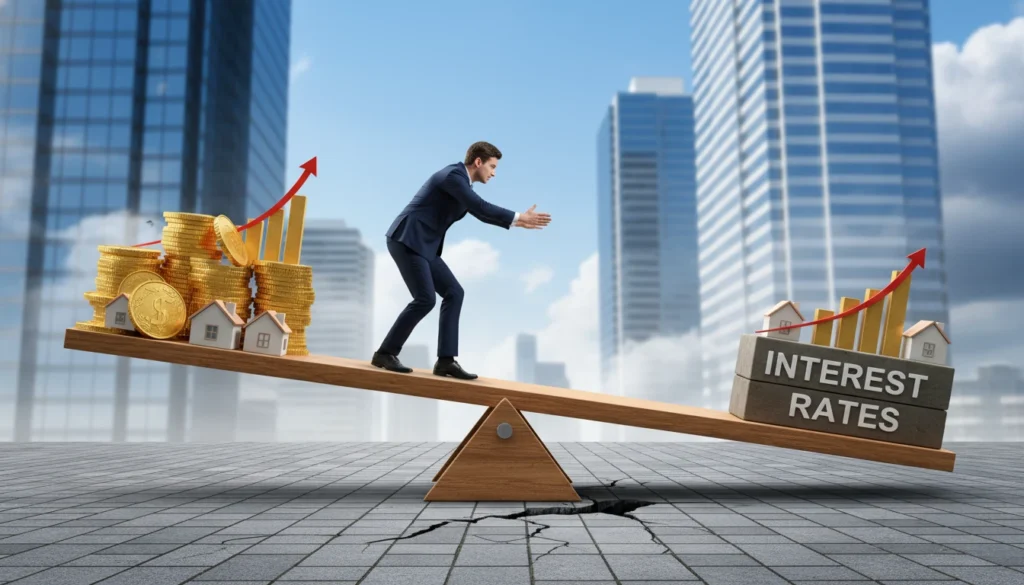
Financial Markets: Where Will the Money Turn?
The financial markets in 2026 will be a reflection of economic trends. Stocks, fixed income and even crypto-assets could offer opportunities and challenges.
No mercado de ações, empresas ligadas à tecnologia, saúde e energias renováveis podem manter seu bom desempenho. A análise fundamentalista será crucial.
Fixed income, on the other hand, will remain attractive in higher interest rate environments. Public and private bonds can be good options for those looking for security.
The cryptoasset market, although volatile, continues to evolve and attract investors. Regulation and institutional adoption will be important factors in its development.
This is a time for caution and information. Consulting experts and studying the options is always the best strategy before making any investment decision. For more information on fixed income, visit en.wikipedia.org/wiki/Fixed_income.
Conclusion: Economic Scenario 2026: What to Expect in Brazil and Worldwide
O economic scenario for 2026 presents itself as a mosaic of challenges and opportunities. Inflation, interest rates, global growth and technological innovations will be key pieces in this puzzle.
Keeping a close eye on these trends and preparing intelligently is key to navigating them successfully.
Be proactive with your finances, diversify your investments and always be ready to learn. The future of the economy is in constant flux, and information is your best guide. How about starting to plan today?
Frequently Asked Questions
The main challenge will be to balance inflation control with the search for sustainable economic growth, both in Brazil and globally.
Trends indicate that interest rates may stabilize or gradually fall in some economies, but this will depend on the path of inflation and the decisions of central banks.
Technology (especially artificial intelligence), renewable energies, health and agribusiness are promising sectors for investment in 2026.
To protect your money from inflation, invest in assets that yield more than inflation, such as fixed-income securities indexed to inflation and shares in solid companies.
Yes, geopolitics will have a significant impact, influencing supply chains, commodity prices and investor confidence in global markets.