
Have you ever stopped to think who is really in charge of your money? Is it you, or is there a silent war going on in the scenery what defines the value of your salary and the price of the things you buy?
In recent years, this dispute has become even more intense. Many Brazilians feel the impact of this complex relationship in their pockets. The cost of living goes up, and measures to contain it affect loans, financing and investments.
Understanding this dynamic is the first step towards making smarter financial decisions. You will discover how selic rate tries to tame the inflation and what the practical effects are on your day-to-day life.
Get ready for a clear and objective analysis. We'll unravel the mechanisms behind the numbers and show you how you can protect yourself and even profit in this context.
Introduction to Economic Battle
The economic climate in 2025 brings a curious combination of relief and challenges for your pocket. While some sectors are seeing price drops, other indicators remain at high levels, creating a complex scenario for your financial decisions.
Current context of the Brazilian economy
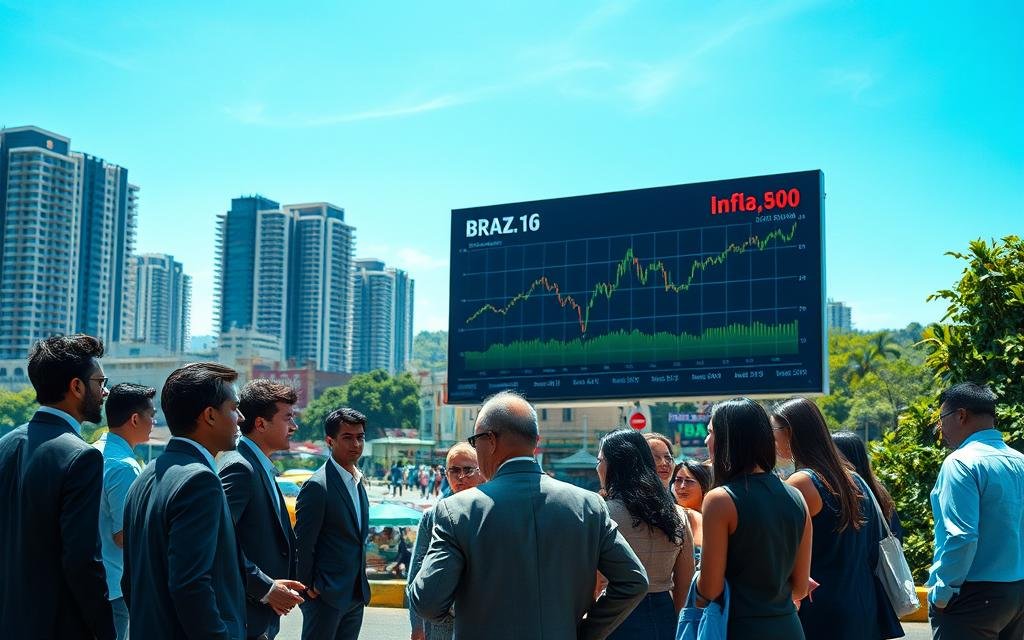
Recent figures show a slowdown in inflation, which fell from 5.5% in April to 5.1% in August. Specific factors contributed to this movement, such as the average discount of R$ 11.60 on the electricity bill of 80 million Brazilians.
Basic items such as rice, olive oil, coffee, meat and eggs have seen consecutive price drops. This deflation is the result of Brazil's over-harvest and the effects of US trade tariffs, which have increased supply.
Despite these positive signs, the selic rate remains at 15% per year. The Central Bank maintains this stance because inflation accumulated is still far from the official target of 3%.
Why you should care about the Selic rate and inflation
These figures are not just abstract statistics. They have a direct impact on your purchasing power and your day-to-day consumption choices. When inflation goes up, your money buys fewer products and services.
A selic rate influences how much you pay in loans and how much you can earn in investments. Understanding this dynamic helps you make smarter decisions about when to buy, invest or take out credit.
According to experts, the battle against inflation is which underlines the importance of monitoring these indicators in order to protect your finances.
Understanding the Selic Rate and Inflation
To navigate safely in today's economic sea, it is essential to master the basic concepts that govern our economy. Knowing these mechanisms helps you make more informed decisions about your money.
Definition and role of the Central Bank and Copom
A selic rate works as the anchor of the entire Brazilian financial system. It represents the basic cost of money in the economy and influences everything from overdrafts to the yield on your savings account.
O Central Bank, The Monetary Policy Committee (Copom) meets every 45 days to set this level. Decisions are made on a technical basis, analyzing growth, unemployment and, above all, the evolution of the inflation.
Control mechanisms and market expectations
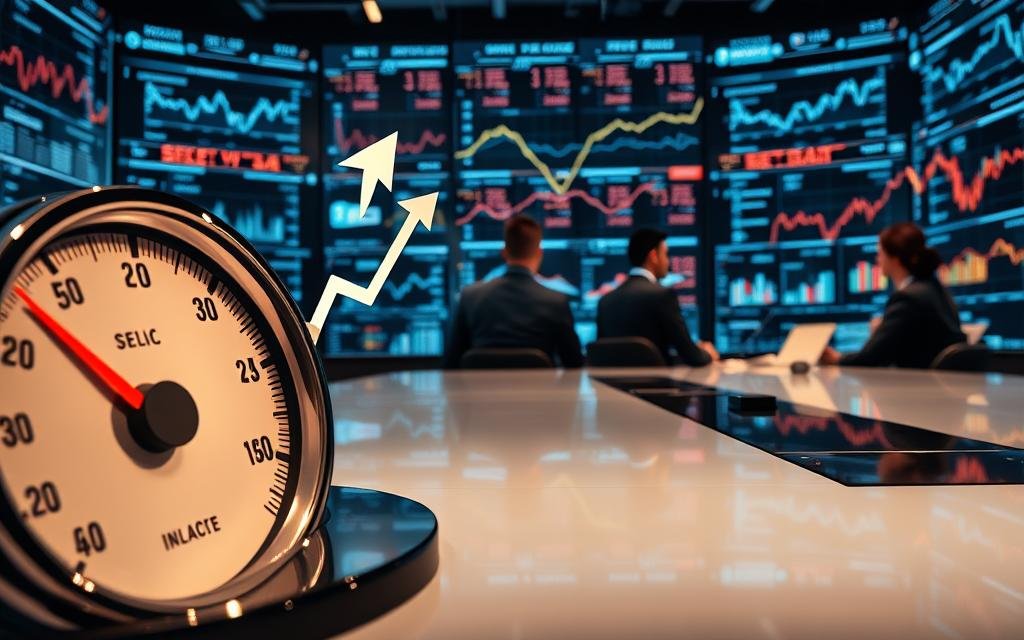
When the inflation threatens to overtake goal established, Copom raises the basic interest rate. This makes credit more expensive, reduces consumption and consequently puts pressure on prices. prices down.
The expectations of market are fundamental to this process. Currently, projections for the IPCA in 2025 have fallen to 4.8%, signaling greater confidence in inflation control.
| Indicator | Function | Current Value | Target |
|---|---|---|---|
| Selic rate | Basic interest rate | 15% per year | Controlling inflation |
| IPCA | Measuring official inflation | 4.8% (2025 projection) | 3% with tolerance |
| Inflation Target | Guide to monetary policy | 31TP3Q p.a. | Ceiling of 4.5% |
The control mechanism works by adjusting the prime rate, influencing the entire credit and consumption system in the economy.
This monetary policy seeks to balance economic growth with prices, This protects your purchasing power in the long term.
The Selic Vs. Inflation Battle: Scenarios and Challenges
Economists highlight critical points that still challenge inflation control in the country. The data The most recent figures show mixed signals, with some sectors falling while others remain stable. pressure ascending.
Analysis of the current scenario according to the experts
André Valério, an economist at Inter bank, confirms that “there are indeed several signs of a slowdown”. He notes consecutive falls in food and industrial goods such as electronics and household appliances.
The big challenge today is in the services, which accumulates inflation of around 6% in the last What. André Braz, from FGV, explains that restaurants, salons and school fees depend more on employment and income than on the exchange rate.
“Today no one is discussing whether the new Central Bank board can reduce interest rates for political reasons”
The expectations of market indicate that Central Bank should start cutting back on prime rate between January and March 2026. The minority of analysts project a move as early as December.
This decisive phase requires a balance between prices of services and not harm the consumption and economic growth. A politics money is still in high surveillance.
Impacts on Consumption, Investments and the Market
What happens to your money when interest rates and prices move? Your financial decisions are directly influenced by these economic dynamics.
Effects on fixed and variable income investments
Your investments of fixed income respond immediately to changes. When selic rate Since interest rates are high, investments such as CDBs and Tesouro Direto offer more attractive returns.
The important thing is to look at the real return. If a CDB yields 10% but inflation was 6%, your effective gain is only 4%. This preserves your purchasing power over time.
In other side, a variable income behaves differently. Actions banks can benefit from high interest rates. Sectors dependent on credit suffer more.
How expectations influence prices and income
The expectations of financial market move prices of assets. When investors anticipate a drop in interest rates, actions tend to value.
Your consumption is also affected. High interest rates make loans and financing more expensive. This reduces your money available for purchase.
| Type of Investment | Interest Sensitivity | Real Profitability | Recommendation |
|---|---|---|---|
| Fixed Income (CDB/Treasury) | High | Predictable | Security in a volatile environment |
| Equities | Average | Variable | Strategic diversification |
| Real estate funds | Low to Medium | Stable | Inflation protection |
Diversify your wallet is essential. Combine fixed income with variable income to take advantage of different scenarios. Your choices define your financial success.
External Influences and Monetary Policy Adjustments
Did you know that US monetary policies affect the prices you pay at the supermarket? Decisions made in Washington directly influence our economic scenario.
O Federal Reserve The US is preparing to cut its interest rate. The reference rate has been at 4.5% since January. This move creates opportunities for Brazil.
The role of the Federal Reserve and the global effects
André Valério, from Inter bank, explains the direct connection. “Lower interest rates in the United States help Brazil cut the Selic rate without a deterioration in the exchange rate”.
The dollar already reflects this dynamic. Since January, it has fallen by 12% against the real. This reduces the pressure on imported products.
The 50% tariffs imposed by Trump affected meat and coffee. Paradoxically, they helped lower prices on the domestic market.
Necessary adjustments in the national scenario and investor reaction
José Carlos Hausknecht, from MBAgro, explains the phenomenon. They are “internationally traded items that were coming off the back of rising prices”.
The investors react positively to policy alignment. They increase their allocation to local assets when they anticipate coordinated cuts.
Your money is impacted by these decisions. O value of their actions and prices of goods depend on this relationship.
To understand these mechanisms better, see FGV macroeconomic bulletin.
Conclusion: The Battle of the Selic vs. Inflation: Who Wins?
Experts agree that we are at a crucial moment in the politics Brazilian economy. Luis Otavio Leal, from G5 Partners, sums it up well: “We have several indications that inflation is losing momentum, which is ample proof that monetary policy is working”.
André Braz, from FGV, offers a realistic perspective on our situation. country. He points out that we are still far from having completely won this dispute, but we can already see a less arduous road ahead.
For you, this understanding of relationship between the selic rate and inflation is essential. With the prime rate still at high, their investments fixed income remains interesting.
The next few months will be decisive for growth economic. Their expectations and financial decisions must take this into account scenery in transformation.
Now you have the knowledge to interpret indices and make more informed decisions about consumption and investments. The goal of 3% still seems far away, but the path is clearer.
FAQ
What is Copom and what is its relationship with the Selic rate?
Copom, or the Monetary Policy Committee, is the Central Bank group that decides on the economy's basic interest rate, the Selic. They meet periodically to analyze inflation and the economic scenario, adjusting the rate to control prices. Their decisions directly influence the cost of credit, investments and consumption in the country.
How does the high Selic rate affect my investments in fixed and variable income?
When the Selic rate rises, fixed-income investments, such as the Selic Treasury, generally become more attractive, offering higher returns with less risk. On the other hand, variable income, such as shares, can become less interesting because credit becomes more expensive, putting pressure on company profits and economic growth. It's a time to reassess your portfolio.
Why does inflation have such an impact on my purchasing power and the value of my money?
Inflation is the general increase in the price of goods and services. When inflation is high, the same amount of money buys fewer products, eroding your purchasing power and affecting your family budget. Controlling inflation is crucial to preserving the value of your income and keeping the cost of living stable.
What are market expectations and how do they influence monetary policy?
Market expectations are the predictions that investors and analysts make about the future of the economy, especially inflation and interest rates. If inflation expectations rise, the Central Bank may be forced to raise the Selic rate to signal control, even before the official data. Their perceptions shape important decisions.
How do foreign monetary policy decisions, such as that of the US Federal Reserve, affect the Brazilian economy?
When the Fed (US Central Bank) raises interest rates, this can attract global investors to the US, impacting the flow of capital to countries like Brazil. This can put pressure on the exchange rate and influence our Central Bank's decisions, creating a scenario where global factors affect your investments and local credit.