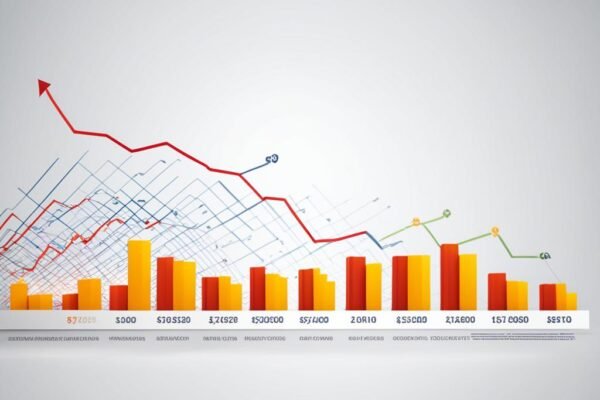

What is the Selic rate?Did you know that Selic rate Does it directly affect the cost of credit and the return on your investments?
Currently at 13.25% per year, it serves as the benchmark for the central bank's base interest rate Brazilian economy, as defined by the Central Bank.
This rate is essential for controlling the inflation and balance economic growth. It affects everything from loans and financing to the income of government bonds and other investments.
Understanding how it works can help you make smarter financial decisions.
The term comes from the Special Settlement and Custody System, managed by the Central Bank. Every 45 days, the Monetary Policy Committee (Copom) meets to adjust the Selic rate, taking into account indicators such as inflation and economic growth.
Want to learn more about how this affects your daily life? Keep reading to find out!
Introduction to the Selic Rate and Its Role in the Economy
A Selic rate It is one of the pillars of the Brazilian economy. It directly influences the cost of credit and investment returns.
Defined by the Central Bank, this rate is essential for controlling inflation and balancing economic growth.
O Monetary Policy Committee (Copom) It meets every 45 days to adjust the Selic rate. This decision is based on indicators such as inflation and economic growth.
When the Selic rate rises, interest rates on loans go up, while investments in government securities tend to yield higher returns.
Importance to the Brazilian Economy
The Selic serves as a powerful tool for regulating consumption and investment. When inflation is high, the Central Bank raises the Selic rate to slow down the economy.
On the other hand, a rate cut stimulates consumption and growth.
For example, a rise in the Selic rate can make real estate and auto loans more expensive. Conversely, a drop in the Selic rate can make fixed-income investments less attractive.
Understanding these mechanisms helps you make smarter financial decisions.
| Impact of the Selic Rate | Impact on the Market |
|---|---|
| Selic increase | More expensive credit, more profitable investments |
| Selic Rate Cut | Cheaper credit, less attractive investments |
This link between the Selic rate and the financial system is essential for economic stability. Understanding how it works can help you better plan your finances and take advantage of market opportunities.

With the establishment of the Special Settlement and Custody System (SELIC) in 1979, Brazil established its public debt market, where open market operations for monetary policy are conducted, as well as deficit financing and debt management for the National Treasury. In other words, the country’s monetary and fiscal policies are shaped within the SELIC system. This book provides a systematic overview of the SELIC market, from its origins to its current operations. It is intended for readers seeking knowledge in the fields of economics and finance, for the academic community specializing in economics (researchers, economists, undergraduate and graduate students), and for the general public interested in the Brazilian economy.
What is the Selic rate?
Discover the central role of the interest rate in the Brazilian economy. This rate, known as the Selic, serves as the benchmark for the country's base interest rates.
Defined by the Central Bank, it directly influences the cost of credit and the return on investments.
The Selic rate is calculated based on very short-term interbank transactions. These transactions, conducted through the Special Settlement and Custody System, determine the effective rate.
The target Selic rate, on the other hand, is set by the Monetary Policy Committee (Copom), which meets every 45 days.
O Central Bank It uses this rate as a tool to control inflation and stimulate economic growth.
When inflation is high, the Selic rate is raised to slow down consumption. On the other hand, a reduction in the rate stimulates the economy.
Government securities are directly affected by the Selic rate. They are used as collateral in interbank transactions, and their yields are tied to the benchmark rate.
This makes the Selic a crucial indicator for investors seeking both security and returns on their investments.
| Concept | Description |
|---|---|
| Effective Selic Rate | Average rate for overnight interbank transactions. |
| Selic Target Rate | Rate set by Copom as the monetary policy target. |
Understanding how the Selic rate works can help you make more informed financial decisions. To learn more about fixed-income investments, check out our guide here.
Historical Origins and Context of the Selic in Brazil
The history of the basic interest rate In Brazil, it is directly linked to periods of economic instability.
Officially established in 1999, it was created in response to the challenges of hyperinflation that had marked the previous decades.
O Central Bank adopted this tool to control prices and stabilize the economy.
In the 1980s and 1990s, inflation reached alarming levels, even exceeding 80% per month. In this scenario, the creation of the Selic rate It was a crucial step toward restoring confidence in the financial system.
It came to be used as a benchmark for adjusting the cost of the money and control the demand.
Changes in the Rate Over the Years
Over the years, the fees has experienced ups and downs, reflecting the country's economic challenges. During periods of crisis, such as that of 2008, the Central Bank raised the Selic rate to curb inflation and protect the economy.
In times of stability, however, the reduction in fees stimulated growth and access to credit.
- 2000s: The Selic rate was raised to combat post-Plano Real inflation.
- 2010–2016: Gradual reduction of the tax rate to stimulate the economy.
- 2020: A historic drop during the pandemic to make it easier to get loans.
This development shows how the Selic rate It has been an essential tool for stabilizing the economy.
Today, it remains one of the key indicators for investors and consumers, influencing everything from government bonds even the cost of financing.
How the Special Settlement and Custody System (SELIC) Works
The Special Settlement and Custody System (SELIC) is an essential mechanism for the Brazilian economy.
It serves as a centralized platform for trading government bonds, ensuring security and efficiency in financial transactions.
This system is responsible for processing very short-term transactions between financial institutions.
These transactions, carried out with federal securities, help define the fees the economy's benchmark interest rate, known as the Selic.
O Central Bank uses the SELIC rate to conduct monetary policy. By adjusting the supply of money In the market, it brings the effective Selic rate closer to the target set by the Monetary Policy Committee (Copom).
This mechanism also influences the profitability fixed-income investments. Government securities traded on the SELIC market are considered safe and offer returns linked to the fees base interest rate.
The transparency of the system is essential for economic control. It ensures that transactions are conducted in a clear and secure manner, contributing to the country's financial stability.
| Role of the SELIC | Benefits |
|---|---|
| Trading in Government Securities | Security and Efficiency in Transactions |
| Setting the Selic Rate | Monetary Policy Control |
| Return on Investment | Returns linked to the base rate |
Understanding how the SELIC works can help you make more informed financial decisions. This system is a cornerstone of the economy, influencing everything from the cost of credit to the returns on your investments.
How the Copom Sets the Selic Rate
Understand how the Copom decides on the interest rate that affects the entire Brazilian economy. This committee, composed of directors from the Central Bank, meets every 45 days to assess the economic outlook and adjust the basic interest rate.
Meeting and Decision-Making Process
The meetings of the Copom They take place over two days. On the first day, the experts present detailed analyses of the economy. On the second day, the directors discuss and vote on the decision about the fees.
The debate is based on data such as inflation, economic activity, and the international situation. The vote It follows the simple majority rule. In the event of a tie, the president of the Central Bank has the deciding vote.
Criteria and Indicators Considered
To set the fees, o Copom It analyzes various indicators. Among them, the following stand out:
- Current and projected inflation.
- Growth in economic activity.
- Financial market expectations.
- International landscape and exchange rates.
These criteria help ensure that the monetary policy is consistent with the goals of controlling inflation and stimulating growth.
After the meeting, the decision is released, followed by the detailed minutes a few days later. This transparent process allows investors and consumers to understand the reasons behind the changes in the fees.
Impact of the Selic Rate on Interest Rates and Credit
Changes to the prime rate Interest rates directly affect your wallet. They influence the cost of credit and profitability of their investments.
When the prime rate As interest rates rise, the interest charged on loans and financing also increases. This makes access to money more expensive for businesses and consumers.

Impact on Loans and Financing
An increase in the prime rate makes the credit. This means that mortgages, auto loans, and personal loans become more expensive.
For example, a loan of R$ 10,000 can incur significant additional costs due to higher interest rates. On the other hand, a reduction in the interest rate makes the credit more affordable, thereby stimulating consumption and investment.
Impact on Investment Returns
A prime rate also affects the profitability of investments. Government bonds and CDBs, for example, have yields tied to this rate.
When it rises, these investments become more attractive. On the other hand, a drop in the rate can reduce returns, encouraging investors to look for other options in the market.
In addition, variations in the prime rate have a psychological effect on investors. Frequent changes can create uncertainty, influencing both short- and long-term decisions.
That is why it is important to monitor the economic landscape in order to make more informed financial decisions.
| Impact of the Base Rate | Effect |
|---|---|
| Increase | More expensive credit, more profitable investments |
| Reduction | Cheaper credit, less attractive investments |
Understanding how the prime rate It works and can help you plan your finances better. Keep track of the decisions made by the Central Bank and assess how they affect your daily life.
The Impact of the Selic Rate on Loans and Investments
The decisions of the Central Bank about the basic interest rate have a direct impact on your daily life. It affects everything from the cost of credit until the profitability of their investments.
Let's explore some real-world examples that show how this happens.
Case Studies in the Financial Market
When the Selic rate go up, the interest Loans and financing become more expensive. For example, in 2022, the increase in fees resulted in real estate financing incurring a significant additional cost.
This discouraged the demand on credit, especially for high-value purchases.
On the other hand, a reduction in the fees makes the credit more affordable. In 2020, during the pandemic, the drop in the Selic rate made it easier for businesses and consumers to obtain loans, stimulating the economy.
This shows how the Central Bank use the fees to influence market behavior.
Investments are also affected. When the Selic rate is high, government bonds and CDBs are becoming more attractive, offering higher returns.
However, during periods of fees With interest rates low, investors are looking for alternatives, such as stocks or real estate funds, to earn higher returns.
The financial institutions pass on Selic rate changes to the products they offer. This means that, by following the decisions of the Central Bank, you can make more informed decisions about loans and investments.
Understanding these mechanisms is essential for planning your finances. Keep track of changes in the fees and assess how they affect your decisions in the financial market.
Relationship Between the Selic Rate, the CDI, and Other Indicators
Have you ever wondered how the Selic rate How does it relate to other financial indicators? These ratios are essential for understanding the behavior of the market and make more informed decisions. Let's explore this connection and how it affects your investments.
A Selic rate, as defined by the Central Bank, is the benchmark for the economy's base interest rates. The CDI (Interbank Certificate of Deposit), on the other hand, reflects the cost of money in interbank transactions.
Although they are different, both are closely linked and influence the profitability of various financial products.

Comparison of Rates and Impacts
A Selic rate and the CDI are usually close in value, with an average difference of 0.10% per year. For example, if the Selic rate is 13.75%, the CDI might be around 13.65%.
This small variation is crucial for investors seeking to maximize their returns.
When the Selic rate rises, the CDI tends to follow suit, making investments such as CDBs and LCIs more attractive.
On the other hand, a drop in the Selic rate reduces the yield on these products, encouraging investors to seek alternatives in the market.
In addition, the relationship between these rates affects the cost of credit. An increase in the Selic rate makes loans and financing more expensive, while a decrease makes it easier to access money.
Understanding this dynamic helps you plan your finances more effectively.
| Indicator | Description | Impact |
|---|---|---|
| Selic | Base interest rate for the economy | It affects credit and investments |
| CDI | Interbank interest rate | Tax Base for Income from Financial Products |
Understanding the differences between the Selic rate and the CDI is essential for navigating the financial landscape. These indicators not only reflect the cost of money, but they also help identify investment opportunities. Track changes and make more strategic decisions.
Effects of the Selic Rate on Consumption and Inflation
The Brazilian economy is directly affected by changes in the basic interest rate. When the Central Bank When the central bank decides to adjust the Selic rate, it affects everything from your wallet to how companies behave.
The main objective is to control the inflation and maintain economic stability.
Inflation Control and Price Adjustments
One of the most important roles of the Selic rate is to curb price increases. When the inflation is high, the Central Bank raises the rate to slow down consumption.
This happens because credit becomes more expensive, reducing the purchasing power of individuals and businesses.
For example, if the Selic rate rises, interest rates on loans and financing increase. This discourages borrowing, which helps reduce pressure on prices.
It is a strategy that seeks to balance the economy and prevent things from getting out of hand.
- Selic Rate Hike: Reduces consumption and controls the inflation.
- Selic Rate Cut: Stimulates consumption and economic growth.
In addition, companies are also feeling the effects. With credit becoming more expensive, many are cutting back on investments and adjusting prices to remain competitive.
This scenario could have a direct impact on your daily life, from the cost of products to job opportunities.
O government and Central Bank They work together to ensure that these decisions are made strategically.
The goal is to prevent inflationary pressures and maintain a stable economic environment for everyone.
Considerations for Investors and Financial Strategies
To investors, understand the fluctuations in the basic interest rate It is essential for making strategic decisions.
A selic rate, as defined by the Central Bank, directly affects the return on your investments and the cost of credit.
That is why it is crucial to stay abreast of changes in the monetary policy and adapt their strategies to the economic situation.
Tips for Investors
Diversifying your portfolio is one of the best ways to protect yourself from fluctuations in the selic rate. Invest in different types of titles, such as Tesouro Direto and CDBs, to balance risk and return.
Also, follow the meetings of the Central Bank to anticipate possible changes in the fees.
Another tip is to consider the deadline of investments. During periods when the selic rate, long-term securities tend to offer more attractive returns.
In bear markets, however, short-term investments may be more advantageous.
Risk and Return Analysis
Analyzing risk and return is essential for any investor. In times of uncertainty, choose to titles public ones, which are considered safer.
On the other hand, if you're looking for higher returns, consider investing in variable-income options, such as stocks and real estate funds.
Keep in mind that small variations in the selic rate can significantly impact the profitability of your investments. Therefore, stay informed and adjust your strategy as needed.
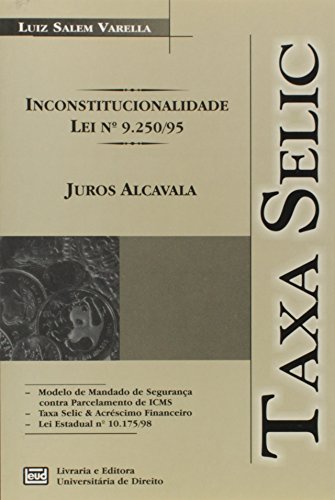
In this book, Selic interest rates are presented as a kind of tribute that vassals once paid to their feudal lords; for this reason, the archaic term ‘interest—alca-vala’ would be more fitting—a term we all know refers to a forced “surcharge”; pure extortion by the tax authorities.
Conclusion
Understanding the basic interest rate It is essential for making more informed financial decisions.
It affects everything from the cost of the credit until the profitability of their investments. The Central Bank, through the Monetary Policy Committee (Copom), adjusts this rate to control the inflation and balance the Brazilian economy.
The Copom meetings, held every 45 days, set the course for the fees, directly impacting the market.
For the investor, keeping up with these changes is crucial for adjusting strategies and maximizing returns.
In addition, understanding how the fees affects consumption and the credit It can help you plan your finances better.
Stay up to date on the decisions of the Central Bank It's a valuable practice. To learn more, check out our complete guide to Selic rate and its implications for everyday life. Information is the key to making more informed financial decisions.
FAQ
Q: What is the Selic rate?
A: The Selic rate is the Brazilian economy's benchmark interest rate, used as a reference for financial transactions and to control inflation.
Q: What is the role of the Selic rate in the economy?
A: It influences the cost of credit, consumption, and investment, helping to control inflation and stabilize the economy.
Q: How does the Copom set the Selic rate?
A: The Monetary Policy Committee (Copom) meets periodically to analyze economic indicators and decide on the interest rate.
Q: What is the relationship between the Selic rate and inflation?
A: The Selic rate is adjusted to control inflation, rising when prices go up and falling when the economy needs a boost.
Q: How does the Selic rate affect loans and financing?
A: When the Selic rate rises, interest rates on loans and financing tend to increase, making credit more expensive.
Q: What impact does the Selic rate have on investments?
A: The Selic rate influences the returns on investments such as government bonds and fixed-income investments, thereby attracting or discouraging investors.
Q: What is the Special Settlement and Custody System (SELIC)?
A: It is the system that records and processes transactions involving government securities, ensuring the security and efficiency of financial transactions.
Q: How is the Selic rate related to the CDI?
A: The CDI (Interbank Deposit Certificate) is a rate similar to the Selic, used as a benchmark for interbank transactions and fixed-income investments.
Q: What criteria does Copom use to set the Selic rate?
A: The Copom takes into account indicators such as inflation, economic growth, the unemployment rate, and the international outlook.
Q: How does the Selic rate affect consumer spending?
A: When the Selic rate is high, consumption tends to decline because the cost of credit rises and purchasing power decreases.
Q: What strategies can investors adopt based on the Selic rate?
A: When the Selic rate is rising, fixed-income investments become more attractive, while when it is falling, seeking higher-risk alternatives can be advantageous.