Navigating the world of investments may seem complex, but understanding what is an investment fund and how to choose The ideal is a crucial step for those seeking profitability and diversification. Many people get lost among the options, fearing the risks or not knowing where to start. This complete guide demystifies funds, showing how they can be a powerful tool for you to achieve your financial goals and multiply your capital safely and intelligently.
What is an Investment Fund: The Gateway to Multiplying Your Capital
Understanding what is an investment fund and how to choose The best option is to understand that this type of investment works like a financial condominium. We pool resources from different investors so that a professional manager can make the decisions about buying and selling assets.
The Power of Collective Investment
A fund allows you to access markets restricted to large fortunes with small contributions, such as R$ 100.00.
When you buy a share, you own a fraction of a diversified portfolio that can include government bonds, shares and debentures.
In practice, this means that the risk is diluted among all the assets that make up the portfolio. Unlike buying a single stock at XP Investimentos, the fund offers a ready-made and monitored basket of assets.
Professional Management and Scale
The big difference here is having a specialist dedicated entirely to monitoring the macroeconomic scenario for 2026.
The manager uses advanced tools to find the best fund profitability within the mandate established in the regulation.
📊 Quick Simulation: > If you tried to replicate a portfolio of 20 stocks individually, you would spend hundreds of reais on brokerage. > In a BTG Pactual stock fund, you access this same strategy with a single fee, optimizing your operating cost.
This collective structure reduces costs and democratizes access to structured products that were previously exclusive. To understand how this system works on a day-to-day basis, we need to look behind the scenes.
Understanding the roles of each institution involved gives you the security you need to invest your assets with peace of mind. ## How Funds Work: Understanding the Structure and Key Roles
The operation of an investment fund involves different figures who guarantee the transparency and security of your money. Each participant has specific responsibilities defined by the CVM funds (Securities and Exchange Commission).
The Role of the Manager and the Administrator
The manager is the “brain” of the fund, responsible for deciding which assets to buy or sell in order to beat the benchmark index.
The administrator, on the other hand, takes care of the bureaucratic part, such as calculating the value of the quota and attending to the quota holders.
- Manager: Focus on strategy and performance.
- Administrator: Focuses on legal and operational compliance.
- Custodian: They store assets safely, usually with a large bank like Itaú or Bradesco.
The Dynamics of Quotas
When you invest, the capital is converted into shares, the value of which fluctuates daily as the assets in the portfolio rise or fall.
O fund redemption happens when you request the transformation of these shares into cash again, respecting the settlement period (D+1, D+30, etc).
What nobody tells you is that the separation of assets protects the investor: the money in the fund doesn't belong to the bank. If the broker or the managing bank goes bankrupt, the fund's assets remain intact and are transferred to another institution.
💡 Smart Strategy: > Always check the manager's track record in previous crisis periods, such as 2024, to understand how they protect their capital. > Consistency is worth much more than an isolated spike in profitability in a single month.
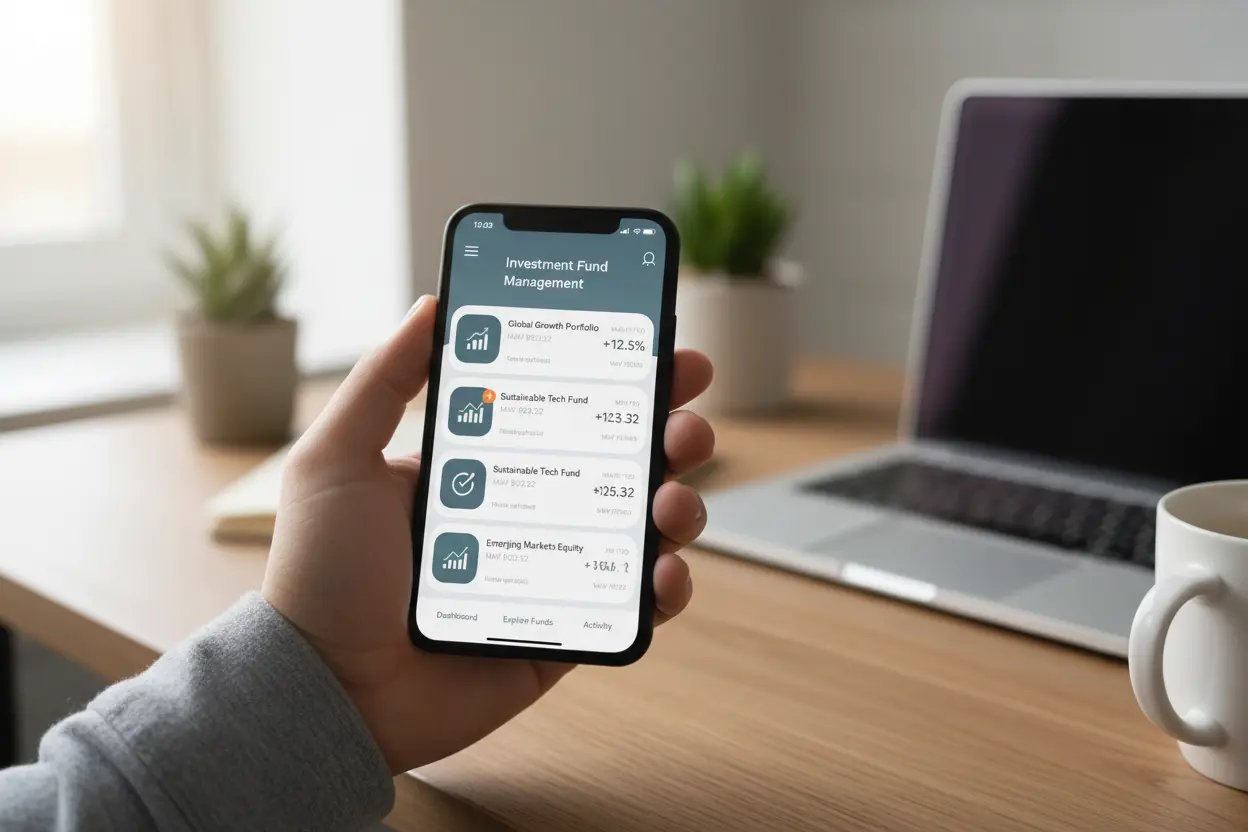
Investing in funds requires understanding who the professionals are behind the management of your money.
After understanding the technical structure, the next step is to identify which fund category aligns with your moment in life. ## Types of Funds: Which is Best for Your Purpose?
There are several types of funds in the Brazilian market in 2026, each with a specific relationship between risk and expected return. The right choice depends directly on your investor profile, which defines its tolerance to oscillations.
Fixed Income and Multimarket
The fixed income They track changes in the Selic rate or the CDI, making them ideal for emergency savings.
Multimarket funds, on the other hand, have greater freedom and can invest in interest rates, foreign exchange and shares simultaneously.
| Type of Fund | Risk | Suggested objective | Ideal deadline |
|---|---|---|---|
| DI Fixed Income | Bass | Emergency Reserve | Short Term |
| Multimarket | Medium | Diversification | Medium Term |
| Actions | High | Equity growth | Long term |
| Exchange rate | Medium/High | Hedge | As required |
Equity and Currency Funds
Equity funds must keep at least 67% of their assets in variable income, aiming to outperform the Ibovespa in the long term.
Currency funds, on the other hand, protect purchasing power against the appreciation of the dollar or euro.
Historically, the 2026 scenario points to a maintenance of interest rates that still favors premium fixed income. However, equity funds focused on dividends tend to be resilient for those seeking recurring passive income.
📊 Quick Simulation: > In a scenario with the Selic rate at 10.5% per year, a fixed income fund with a rate of 0.5% could yield approximately R$ 1,000 profit on R$ 10,000 invested after one year. > In savings, this gain would hardly exceed R$ 700 over the same period, a real difference of R$ 300 in your pocket.
Once we have identified the type of fund, we need to apply a rigorous filter to separate the good opportunities from the market traps. ## How to Choose the Right Fund: A Step-by-Step Guide to Investing Well
Know what is an investment fund and how to choose the best option involves analyzing technical documents in addition to past profitability. Historical profitability does not guarantee future results, but it does reveal how the manager behaves under pressure.
Analysis of the Blade and the Regulation
The slide is an essential summary that contains the fund's fees, target audience and return history.
We recommend looking at the “Sharpe ratio”, which measures whether the return obtained justifies the risk taken by the manager.
Also check the fund's net worth to ensure that it has sufficient scale to operate efficiently. Very small funds can suffer from proportionally higher fixed costs, eroding their final return.
Alignment with the Redemption Deadline
Liquidity is a critical factor: some funds pay redemptions in 1 day (D+1), while others take 60 days (D+60).
Never put the next month's rent money into a stock fund with a long redemption period.
⚠️ Common mistake: Investing in highly volatile funds without having a solid emergency reserve in a CDB with daily liquidity. This forces you to redeem during downturns, turning a momentary loss into a real loss.

Diversification between different classes of funds is the basis for a balanced portfolio in 2026.
Just as important as the gross return is understanding what's left in your pocket after the government and the manager collect their shares. ## Costs and Taxation: The Impact of Fees and Income Tax on Funds
Internal costs can be the biggest villains of your profitability if they are not closely monitored. A management fee is charged annually to remunerate service providers and is levied on total assets.
Administration and Performance Fees
A rate of 2% per year on a fixed-income fund is considered abusive in the current scenario of 2026.
In stock funds, on the other hand, it is common to charge a performance fee (usually 20% on what exceeds the benchmark).
The performance fee acts as an incentive for the manager to deliver results above the market average. In my view, paying performance is fair when the manager delivers alpha, i.e. a return higher than expected.
Taxation and the Come-Cotas
Most funds follow the regressive IR table, where the rate drops as the investment time increases.
The “come-cotas” is the semi-annual anticipation of this tax, which occurs in the months of May and November in fixed income and multimarket funds.
| Length of stay | Income tax rate |
|---|---|
| Up to 180 days | 22,5% |
| From 181 to 360 days | 20,0% |
| From 361 to 720 days | 17,5% |
| Over 720 days | 15,0% |
📊 Quick Simulation: > If you invest R$ 50,000 and redeem it after 2 years, you will pay 15% in income tax. > If you redeem before 6 months, the bite goes up to 22.5%, which could mean hundreds of reais less in your net income.
Transparency about these costs is guaranteed by regulatory bodies that oversee every movement in the financial market. ## Security and Regulation: The Protection of the CVM and the Central Bank
Investing in funds in Brazil is one of the safest activities from a regulatory and legal point of view. A CVM funds establishes strict rules, such as CVM Resolution 175, which modernized the structure of collective investments.
Supervision and External Audit
All funds are obliged to hire independent auditors every year to validate their balance sheets and records.
This prevents managers from cheating on results or misusing resources outside the regulations.
The Central Bank also supervises the financial institutions that manage these investment vehicles. Unlike dubious schemes, the funds have their own CNPJ and a public register that can be consulted on the CVM website.
Credit and Market Risk
Although the fund is regulated, it does not have the protection of the FGC (Fundo Garantidor de Créditos).
The security of the fund lies in the quality of the assets that the manager buys, such as National Treasury bonds.
⚠️ Common mistake: > Believing that CVM regulations eliminate the risk of losing money if the stock market falls. > The CVM ensures that the rules of the game are followed, but the market risk belongs to the investor.
With institutional security guaranteed, many investors are beginning to compare funds with more traditional products. ## Investment Funds: A Smart Alternative to Savings and CDBs
Many people still leave their money in savings accounts out of fear or ignorance, losing purchasing power to inflation. Investment funds have emerged as a superior alternative for those seeking real returns and professional diversification.
Advantages over savings
Savings yield only 70% of the Selic when the prime rate is above 8.5% per year.
A simple Digital Fixed Income fund (such as those offered by Nubank or Inter) tends to deliver 100% of the CDI.
In practice, this means that your money works much more efficiently without requiring you to be an expert. The diversification of a fund is also greater than that of a single CDB, which depends on the health of just one bank.
Comparison with medium-sized bank CDBs
CDBs from smaller banks can offer attractive rates, but require the money to be “tied up” for long periods.
Private credit funds provide access to large company bonds with greater liquidity and active risk management.
💡 Smart Strategy: For those looking for extra income, real estate funds (FIIs) or pension funds can be more tax advantageous. In 2026, portability between pension funds became even more agile, making it possible to look for better managers without paying IR.
In addition to traditional options, the market has evolved to include global trends that connect your money to the future. ## Global Trends and Innovations: ETFs, ESG and the Future of Investing
The fund market is becoming increasingly technological and focused on sustainability and governance. ETFs (Exchange Traded Funds) have gained a lot of ground because they are exchange-traded funds with extremely low costs.
The Growth of ETFs and Index Funds
By investing in an ETF that replicates the S&P 500 (such as IVVB11), you become a shareholder in the world's biggest companies.
This is an efficient way of diversifying your assets geographically and protecting yourself against risks specific to Brazil.
Studies indicate that, over the long term, low-cost passive funds tend to outperform many active managers. The simplicity of buying and selling ETF shares directly through XP or BTG's home broker makes management easier.
ESG Investments and Cryptoassets
ESG (Environmental, Social, and Governance) funds select companies with good environmental and social practices.
In 2026, these companies show greater resilience and a lower risk of suffering global regulatory sanctions.
💡 Smart Strategy: > Consider allocating a small portion (1% to 5%) to regulated cryptoasset funds to capture technological innovation. > This offers exposure to Bitcoin and Ethereum with the security of a CVM-regulated fund.
To consolidate all these concepts, we've prepared the final recommendations for you to start investing today. ## Essential Tips for Maximizing Your Profitability and Avoiding Pitfalls
Success in investments doesn't come from a “sure shot”, but from a disciplined and well-founded process. The biggest pitfall is following hot social media tips without understanding whether the product fits into your planning.
Focus on the Long Term
Time is the greatest ally of compound interest, especially in stock and multimarket funds.
Avoid looking at your balance every day; short-term fluctuations are natural noise in the financial market.
Always reinvest the income or dividends you receive to accelerate the growth of your principal. Consistent monthly contributions, even small ones, tend to generate solid results after a decade.
Periodic Portfolio Review
We suggest reviewing your allocation every six months to ensure that it still respects your risk profile.
If a fund has changed managers or started delivering results that are consistently below the benchmark, it may be time to switch.
📊 Quick Simulation: > An investor who puts R$ 500 a month into a fund that yields 1% a month will have around R$ 115,000 in 10 years. > If he manages to increase the return to 1.2% per month by choosing better funds, the value rises to R$ 138 thousand. > This difference of R$ 23,000 is the reward for studying and choosing your assets well.
This content is for information purposes only and does not constitute financial advice. Please consult a 2026 expert before investing.
Best choice: For beginners, the ideal starting point are low-cost DI Fixed Income funds (zero fee or up to 0.2%). For those looking for growth, global stock index funds (ETFs) offer the best balance between cost, risk and return potential.
Understanding what is an investment fund and how to choose is the first step towards building a solid financial future. With the right strategy, you can diversify your assets, optimize your profitability and achieve your goals. Don't let your money sit idle; explore the fund options and start investing smartly today!
FAQ - Common Questions About Investment Funds and How to Choose Them
We have prepared this section to clarify the most frequently asked questions and help you make financial decisions with much more confidence and clarity.
Currently, there are very affordable options, with initial contributions starting at R$ 100.00 or even less on some digital platforms. The most important thing is to analyze the regulations to understand what is an investment fund and how to choose the one that suits your current budget.
No, the funds do not have the protection of the Credit Guarantee Fund (FGC), Unlike savings accounts or CDBs. However, they are segregated structures, which means that investors' assets are separated from those of the financial institution, offering an important layer of legal security.
O EAT QUOTAS is a six-monthly advance payment of income tax that takes place in May and November on fixed income and multimarket funds. It automatically reduces your number of shares, which is why we always stress the importance of considering this impact when comparing the net performance of your investments.
While savings have a limited return that is fixed by law, funds offer professional management and access to diversified assets that can outperform inflation. We believe that funds are the ideal next step for those seeking higher returns and a more robust investment strategy.
To guarantee this security, you should consult the Essential Information Sheet and check the fund's risk rating. Understanding what is an investment fund and how to choose requires you to align the timeframe of your objective with the volatility (variation) that the fund historically shows.