
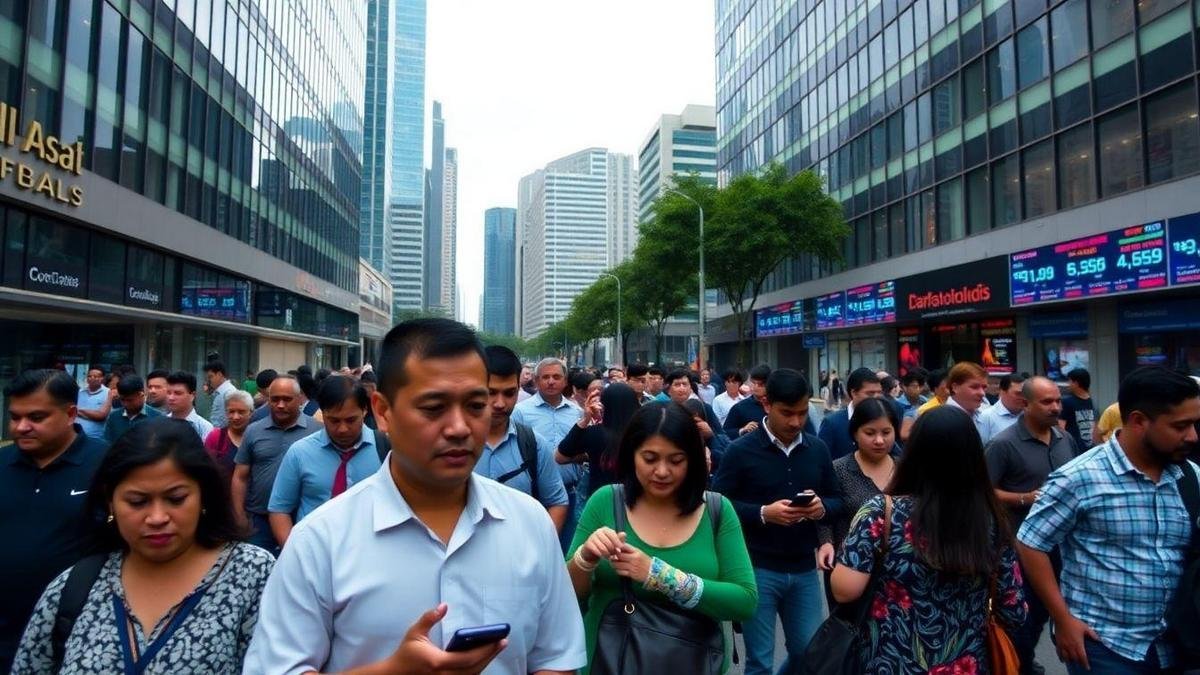
A fiscal distrust is affecting Brazilian economy, and its impact on currency and inflation cannot be ignored. In this article, you'll discover the opinions of Andre Bannwart, head of multimarket UBS Evolution. He warns that Faria Lima, symbol of savings of Brazilians, calls for the government to stop spending, while the administration refuses to listen. This discussion between the market and the government leads to a dissatisfaction and a confluence of uncertain expectations.
- Faria Lima represents what remains of Brazilian savings.
- The government shows no interest in cutting spending.
- Fiscal distrust hurts the Brazilian currency.
- Inflation is on the rise due to economic uncertainties.
- Dissatisfaction with democratic governments is growing among the population.

The Brazilian Savings Crisis: Faria Lima and the Cry for Change
The Reality of Faria Lima
Have you ever stopped to think about what Faria Lima represents for the Brazilian economy? This important financial center reflects what's left of the Brazilian savings. What was once a symbol of stability is now crying out for attention. The message is clear: the government needs Stop spending and consider the the need for fiscal adjustment.
The Fiscal Dilemma
The current situation is marked by a fiscal distrust that weighs on Brazil's currency, impacting expectations of inflation. Why is that? The answer lies in actions of the government and the contradictory messages it sends out. While there is a desire to spend more, the population and the financial market are calling for restraint, reflecting a complicated external scenario.
The Conversation of the Deaf
Imagine a conversation between two deaf people. Each shouts their opinion, but neither can hear the other. This is exactly what is happening between the government and the financial sector. While the government insists on increasing spending, Faria Lima, representing investors, calls for prudence. This lack of communication results in a scenario of uncertainty, where the financial crisis becomes a reality.
The Impact on the Market
This fiscal distrust has a profound effect on the market. Investors are sending a clear signal: monetary policy is losing control. When inflation declines, investors demand more prizes to compensate for the risks involved. This situation is a warning about the health of the economy, which can be analyzed through the main economic indicators.
Popular dissatisfaction
In addition, there is a growing feeling of dissatisfaction among the population. The former president of Chile mentioned that this frustration stems from the fact that democratic governments do not meet the expectations of the people. This is visible on the streets, in demonstrations and in daily discussions. People are tired of unfulfilled promises and actions that don't reflect their needs, like the financial education that could help clarify these questions.
The need for action
Faced with this scenario, what can be done? The answer is not simple, but it is essential. The government needs to listen to what Faria Lima is saying. It's time to reassess fiscal policies and find a balance that benefits both citizens and the economy. This reassessment should include a detailed analysis of the GDP situation and how it relates to market confidence.
The role of the citizen
As a citizen, you also have a role to play. It's important to inform yourself about the fiscal and monetary issues that affect your life. Participating in discussions, voting and demanding accountability from leaders is key to having your voice heard. Getting involved in organizing personal finances can also be a way of contributing to a better future.
Conclusion
In short, the fiscal distrust is becoming a growing weight in the Brazilian economy, directly affecting the currency and inflation. The current situation calls for a profound reflection on fiscal policies and an attentive listening to the demands of Faria Lima, which symbolizes the savings and the desires of investors. It's a critical moment, where popular dissatisfaction is intensifying, and the voices calling for change cannot be ignored. You, as a citizen, have a responsibility to inform yourself and take an active part in this debate. The time to act is now; Brazil's economic future depends on the decisions we make today. To continue your journey of learning about finance and understand more about these topics, we invite you to explore more articles at learnaboutfinance.com.
Frequently asked questions
What is Faria Lima?
Faria Lima is a region in São Paulo, an important financial center in Brazil.
What is Faria Lima's concern?
The concern is with the actions of the government and the high spending that affects the economy.
What does UBS say about confidence in the Brazilian economy?
UBS says that confidence in the economy is declining due to fiscal distrust.
How does fiscal distrust affect the Brazilian currency?
Ela pesa contra a moeda, elevando as expectativas de inflação e impactando os investimentos.
What is needed to improve the economic situation?
The government needs to cut spending and meet the demands of the population.