

The banking sector is going through a major technological transformation, and you should be aware of the new risks that arise in this scenario. Isaac Sidney, president of Brazilian Federation of Banks (Febraban), He warns that the risks are not fully mapped. He discusses how provision of services by third parties and the growth of cryptoassets add uncertainty to the market. In this article, you will explore these changes and the challenges facing the sector in the future.
- The global banking sector is going through a technological transformation.
- New risks are emerging, many of them still uncharted.
- The growth of cryptoassets brings new risks to the sector.
- Regulation needs to change to keep up with these new threats.
- The implementation of IFRS9 will be on January 1, 2025, bringing modernization.
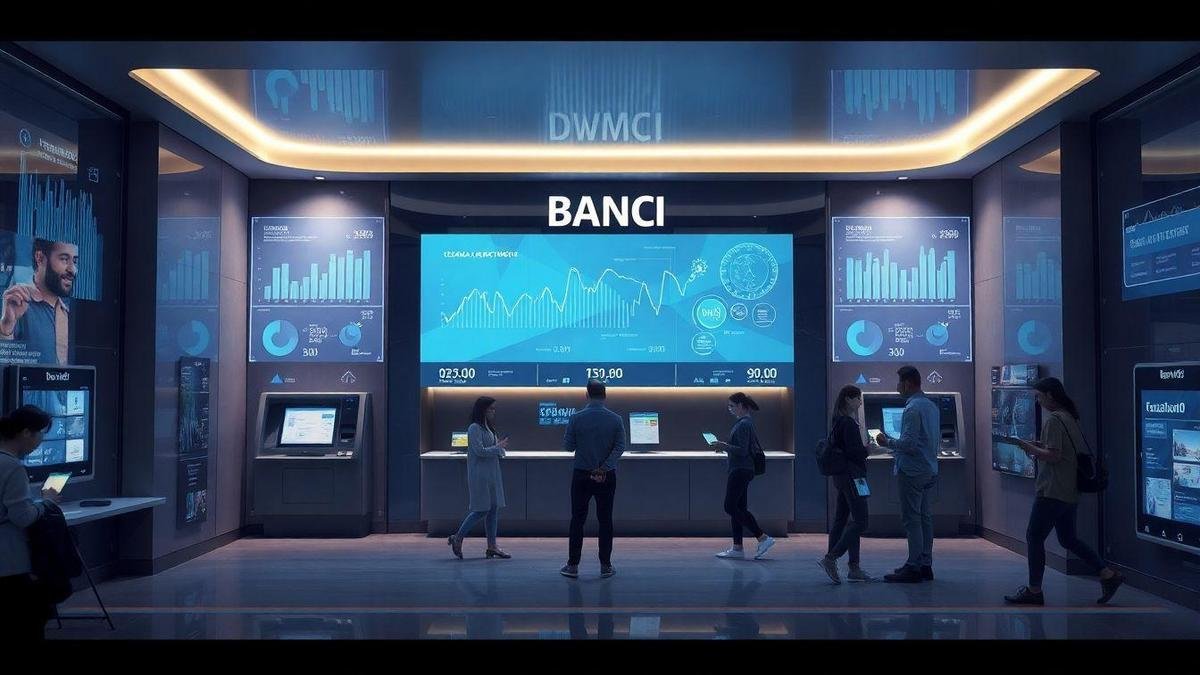
Technological Transformation in the Banking Sector: Risks and Opportunities
The Banking Revolution
Have you ever stopped to think about how banking sector is it changing? The world is going through a technological transformation which directly affects how banks operate. This change brings new ways of doing business, but it also introduces risks which are not always easy to identify. To better understand these impacts, it's worth analyzing how technology is shaping the financial market.
Emerging Risks
Isaac Sidney points out that we are dealing with risks that are not fully mapped out. This means that as you navigate new technologies and services, it's important to keep in mind that not everything is clearly defined. This uncertainty extends both in Brazil and elsewhere in the world, especially with the growth of cryptoassets.
Third-party services
One of the risks mentioned is that of provision of services by third parties. When banks rely on outside companies to provide services, they can expose themselves to problems that they do not directly control, including security issues and regulatory compliance. This dependency can be critical, especially in an environment where the rules are constantly evolving, as in the PIX case.
Cryptoassets on the rise
Another important point is the increase in cryptoassets. Elas estão se tornando cada vez mais populares, mas também trazem incertezas. As transações em criptoativos podem ser voláteis e, em muitos casos, não estão sob a mesma supervisão que os ativos tradicionais. Isso significa que, ao lidar com esses novos tipos de ativos, você deve estar ciente dos riscos que podem surgir, como discutido em understanding what cryptocurrencies are.
The Need for Regulation
Sidney emphasizes that regulation in the banking sector is never a finished job. New technologies and business models require rules to be constantly updated to keep up with changes, guaranteeing protection for both banks and consumers. This dynamic is fundamental to avoiding risks associated with political and fiscal instability.
Implementation of the Basel 3 rules
One of the challenges banks face is implementing the rules of Basel 3. These rules were created to increase financial stability and ensure that banks have sufficient reserves. It is crucial to understand the characteristics of the Brazilian market when applying these international standards, especially in a context where the fiscal policy plays a vital role.
The New IFRS9 Accounting Standard
The introduction of IFRS9, a new international accounting standard that will come into force on January 1, 2025, is considered a modernization which will help banks to better manage their assets and liabilities. The phased implementation of IFRS9 will help avoid excessive operating costs and is an important step towards more efficient accounting.
Balance between benefits and costs
Regulation must always seek a balance between benefits and costs. It's vital that the adoption of new rules doesn't make banking more difficult or cumbersome. The rules must be fair and proportionate, avoiding penalizing the entire banking sector for problems in specific areas. The analysis of future interest rates is an example of how this dynamic can affect the sector.
Individualized Risk Treatment
Sidney suggests that the same types of activities and risks should be treated individually, with the same regulatory force. This means that when tackling a specific challenge, it is important not to apply a one-size-fits-all solution. This approach can help mitigate emerging risks, such as those associated with the use of new financial technologies.
Conclusion
In a constantly evolving scenario, The banking sector is facing unprecedented challenges due to the technological transformation. The emerging risks, such as the dependence on third-party services and the growth of cryptoassets, require you to be alert and informed at all times. A regulation must be a dynamic process, adapting to new market realities to guarantee the safety of institutions and consumers. The implementation of IFRS9 and the rules of Basel 3 represents an important step in the modernization and stability of the financial system, but requires a careful balance between benefits and costs.
Be prepared to navigate these uncertainties e opportunities. By understanding the risks and changes, you can make more informed and safer decisions. To deepen your knowledge of finance, we invite you to explore more articles at Learning about Finance.
Frequently asked questions
What are the main risks brought about by technological transformation in the banking sector?
Risks include services provided by third parties, crypto-asset trading and threats beyond regulatory control.
What is IFRS9 and why is it important for banks?
IFRS9 is a new accounting standard that begins in January 2025. It is important because it modernizes bank accounting and improves risk management.
How does Febraban plan to deal with the new risks in the sector?
Febraban believes that regulation must always keep pace with change, adapting the rules to the new challenges facing the financial market.
Why does regulation never end, according to the president of Febraban?
Because new risks are always emerging. The financial sector is constantly changing and the rules must be updated to keep up.
What will be the impacts of implementing the Basel 3 rules?
The rules aim to improve the security of the financial system. The challenge is to adapt them to the Brazilian market without increasing costs for banks.