

All about Rural RetirementDid you know that rural retirement Is it a benefit for those who work in the countryside? More than 15 million people face difficult conditions. They work with pesticides and run the risk of accidents.
In this guide, you will learn about the rural retirement. Find out who is entitled and how to ask INSS.
A rural retirement protects rural workers. In this article, you will understand the differences with urban workers. You'll also find out which documents are required.
Get ready to learn more about social security.
What is Rural Retirement and how does it work?
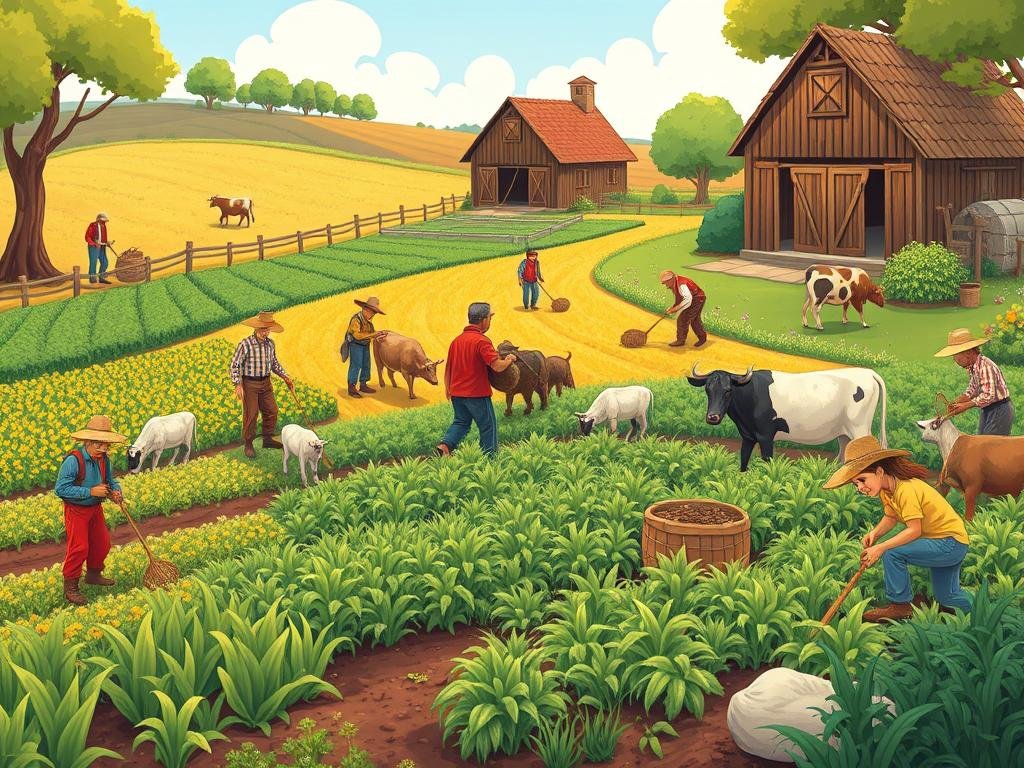
Rural pensions help those who work in the countryside. This includes agriculture, livestock, fishing and extractivism. Four types of rural workers can receive this benefit: insured employees, self-employed workers, individual contributors and special insured persons.
Categories of rural workers
- Insured rural employee: Works on rural properties with a formal contract.
- Freelance workers rural: Provides temporary services in the field, such as harvesting.
- Individual contributor rural: Small producers who work alone.
- Special insured: They work in the family economy, as family farmers.
Differences between rural and urban pensions
Rural retirement has one major difference: the minimum age. Men can retire at 60 and women at 55 if they have worked in rural areas for at least 15 years. In addition, special insured persons can retire without formally contributing to the INSS.
Main features of the benefit
A major advantage of rural retirement is the possibility of combining periods of rural and urban work. This creates the hybrid retirement. In addition minimum age is smaller and the special insured persons don't have to make a formal contribution.
“Brazil has more than 15 million rural workers, according to data from the last agricultural census.”
Who is entitled to the rural benefit
Rural pensions in Brazil help those who work in the countryside. This includes farmers, livestock farmers, artisanal fishermen e extractivists. They also help people working in family economy or individual, indigenous e rural employees with a formal contract.
To apply for rural retirement, you need to prove that you have worked in the countryside for 15 years. This applies even to those who have not paid social security contributions.
It is possible to combine urban and rural working time. This helps those who have worked both in the countryside and in the city.
| Type of Rural Retirement | Minimum Age | Contribution Time |
|---|---|---|
| Rural retirement by age | 60 years (men) and 55 years (women) | 15 years of rural activity |
| Hybrid retirement | 65 years (men) and 60 years (women) | At least 15 years of contributions or rural activity |
| Mixed Retirement | It's not a benefit specific to INSS | Rural and urban working time |
This means that many rural workers can retire. All they have to do is prove that they have worked in rural areas for a minimum period of time.
Requirements for Rural Retirement
Rural retirement has specific rules. They help rural worker to retire. Let's take a look at the main requirements, such as minimum age, o required contribution time and benefit waiting period.
Minimum Age Requirement
Men need to be 60 to retire rurally. Women need to be 55. These rules have not changed with the pension reform 2019.
Required Contribution Time
For rural retirement, you need to have worked for 15 years (180 months). contribution time. This rule has not changed with the reform either.
Benefit waiting period
A shortage for the rural benefit is 15 years (180 months). This means that the rural worker you need 15 years of rural activity to retire.
For hybrid retirement or mixed, the rules are different. Men need to be 65 and women 62.
Documentation required to prove rural activity
To apply for rural retirement, you need to prove that you worked in the countryside. There are a number of documents that help you prove this to the INSS.
The most important document is the rural self-declaration. It's a form that shows your work in the field. You can fill in this declaration in the My INSS app, at the time of application or up to 30 days later.
In addition to the self-declaration, there are other documents that can help. For example:
- Rural producer notebooks
- Declaration of delivery to PRONAF
- Rural lease or partnership contracts
- Proof of registration with INCRA
- Proof of payment of Rural Land Tax (ITR)
- Rural school transcripts
- Marriage certificate noting rural activity
- Declaration from the rural union
You don't need to show documents for all periods of work. All you need is proof of the facts you want to prove. You can also use documents from other family members.
If you don't have all the documents, you can use the testimonial evidence. You need some documents and testimonials from people who confirm your work in the field.
It is therefore crucial to prove your rural activity in order to have access to social security benefits. With the right documents, your application will be approved by the INSS.

How to prove 15 years of rural activity
To request rural retirement, you need 15 years (180 months) of proof of rural time. The INSS accepts several rural documents for that. It also accepts witnesses as an alternative.
Documents accepted by the INSS
- Military enlistment form
- Public certificates
- Receipts from government programs
- PRONAF documents
- Rural union files
- Children's school records
- Rural property documents
- Invoices
Alternative forms of proof
The INSS also accepts other ways of proving proof of rural time. For example:
- Declarations of witnesses
- Registration of rural associations
These options help if you don't have all the documents. But you can have the support of people who confirm your rural activity.
The self-declaration is the main document to prove 15 years of rural activity. However, additional documents can be submitted to the INSS.
Types of retirement for rural workers
If you work in rural areas, you have several retirement options. Each has its own requirements. The main ones are rural old-age pension, a hybrid retirement and retirement for contribution time.
Rural Old Age Pension
A rural old-age pension is for those who have worked in rural areas for 15 years. Men must be 60 and women 55. It is common among farmers and artisanal fishermen.
Hybrid retirement
A hybrid retirement is for those who haven't worked in rural areas for 15 years. But you can combine periods of rural and urban work. Men must be 65 and women 62.
Length of Service Retirement
A retirement for contribution time is for those who have contributed for 15 years. It doesn't matter how old you are.
Choosing the right type of pension is important. Talk to an expert to find out which one is best for you.
How to apply for Rural Retirement from the INSS
To request rural retirement, o rural worker need documents and contact the INSS. You can do this via the Meu INSS website, by telephone on 135 or in person at a branch. But remember to scheduling in advance.
Step by step to apply for the benefit
- Collect documents that prove your rural activity. This includes land titles and producer's licenses.
- Go to the My INSS website or app and choose the option for the rural retirement.
- Prepare the form with your details and information about your rural activity.
- Attach the digital documents to the file.
- Check the progress of your request through Meu INSS or wait for the INSS to contact you.
Service channels available
- My INSS (website and app): Allows you to make the scheduling and rural retirement application online.
- Phone 135: INSS telephone assistance for information and guidance on the rural retirement application.
- INSS branchesYou can schedule a personal visit to an INSS office for the rural retirement application.
Choose the channel you prefer, but make sure you have all the documents from the rural activity ready. This will help a lot in the rural retirement application at the INSS.
The INSS is striving to simplify the process of rural retirement application. He wants to speed up the service to rural workers.
Calculating the value of the rural benefit
The value of rural retirement is a minimum wage. Special insured people, who have not contributed, receive this amount. Those who have contributed more can receive more, according to INSS rules.
Contributions from July 1994 onwards are used to calculate benefits. Benefits have been adjusted every year since 2004. This is done on the basis of the National Consumer Price Index (INPC).
Benefits can be adjusted differently. This depends on whether the amount is minimum wage or more. Those who have received the benefit for more than one year can have it adjusted in full.
Sometimes benefit amounts can change. This can happen due to court decisions or changes in the law. O minimum wage is adjusted based on various variables, such as inflation and economic growth.
Additional rights and benefits for rural workers
Rural workers are essential for producing food and raw materials. They have social security rights guaranteed by Brazilian law. This includes rural retirement by age, sick pay, maternity pay e death pension.
To receive these benefits, they need to prove that they work in the countryside. They also need to meet specific requirements. This social protection makes working in the countryside more dignified and secure.
Additional social security benefits for rural workers
- Sick pay: This is given when someone is unable to work due to illness or accident.
- Maternity payIt is a benefit for rural workers during maternity leave.
- Death pension: Provides a monthly income to the dependents of those who died working in the fields.
In addition, rural workers are entitled to a working day that suits them. They also receive bonuses for unhealthy or dangerous work. And they are entitled to overtime pay if they work more than is allowed.
Types of rural workers
Rural workers are divided into four main categories:
- Rural employee
- Temporary workers
- Freelance workers
- Self-employed rural worker
Each group has different rights and benefits. This depends on the working relationship and the activity they do.
All rural workers have the right to a fair wage. This wage is based on minimum wage national. And it can be adjusted through union negotiations.
With more than 18 million professionals, rural workers are essential to the country. They guarantee agricultural production. The rights and benefits they enjoy are fundamental to improving their working conditions and well-being.
Situations that may prevent the benefit from being granted
Rural retirement is an important right for those who work in the countryside. However, some situations can prevent you from obtaining this benefit. It is crucial to know what these impediments to rural retirement to avoid problems.
Activities not considered rural
Certain activities are not considered rural by the INSS. This includes membership of agricultural cooperatives and involvement in artisanal industrialization processes. These activities can cause you to lose the status of special insured, preventing retirement.
Loss of special insurance status
Working with employees for more than 120 days a year can disqualify one from being specially insured. Earning income not permitted by law can also de-characterize the special insured. This means that the rural worker loses the right to rural retirement.
It is essential to keep all documents and information up to date. It is also necessary to provide proof of life every year. Follow the INSS guidelines to avoid cuts or revisions to your rural old-age pension.
It is therefore essential for rural workers to be aware of these situations that can prevent the granting of rural pensions. They must keep their documentation up to date to guarantee access to this important benefit.
Conclusion: All about Rural Retirement
Rural retirement is an important right for those who work in rural areas. field. She recognizes the difficulties of rural work. In this way, she helps to improve the lives of Brazilian farmers.
If you work in the field, it's crucial to know about your rural social security rights. Keep your documentation up to date. This helps guarantee your right to retirement when you're ready.
Seek help to better understand how to get your pension. This could be at the INSS or at trusted places. That way, you can make the most of your rural retirement benefits and peace after years of work.
FAQ
Q: What is rural retirement and who can apply for it?
A: Rural pensions help those who work in the countryside. This includes farmers, ranchers and fishermen. It also indigenous e rural employees with a formal contract.
To apply, you have to work as a family or on your own. Or be an indigenous person working in rural areas. And also rural employees with a formal contract.
Q: What are the main differences between rural and urban pensions?
A: Rural retirement has minimum age lower. Men are 60 and women are 55, while the urban age is 65 for men and 62 for women.
Q: What are the requirements to obtain a rural old-age pension?
A: For rural retirement by age, you have to be 60 for men and 55 for women. You also need to have worked in the countryside for 15 years.
Q: What documents are accepted to prove rural activity?
A: Various documents can be used to prove work in the field. Notepads, PRONAF declarations and contracts are all acceptable.
Other documents include proof of registration with INCRA and rural school transcripts. Marriage certificate and rural union declaration are also valid.
Q: How do I prove 15 years of rural activity?
A: To prove 15 years of work in the countryside, the INSS accepts various documents. Military enlistment forms and public certificates are examples.
PRONAF documents, rural union records and invoices are also accepted. Declarations of witnesses and registration of rural associations are alternatives.
Q: What types of rural pensions are available?
A: There are three types of rural retirement. Age retirement, hybrid retirement and retirement for contribution time. Each type has its own requirements.
The worker can choose the most advantageous one. But they must meet the necessary conditions.
Q: How do I apply for rural retirement from the INSS?
A: To apply for rural retirement, you need to gather documents. Then you just have to contact the INSS.
The request can be made via the Meu INSS website, by telephone on 135 or in person. But you need to make an appointment.
Q: How much is the rural pension?
A: O value of rural retirement is a minimum wage. For special insured people, it's the standard amount. But those who have contributed more can receive more.
The amount is calculated based on the contributions made. Respecting the INSS rules.
Q: Are there any other social security benefits for rural workers?
A: Yes, apart from retirement, there are other benefits. Sick pay, maternity pay e death pension are some examples.
To receive it, you need to prove you work in the countryside. And meet the requirements of each benefit.
Q: What situations can prevent rural retirement from being granted?
A: Some situations can prevent rural retirement. This includes working in agricultural cooperatives or in non-rural activities.
Loss of quality special insured can also be a problem. And hiring employees for more than 120 days a year.