


In 2016, the rate of return on savings surprised many. This shows that savings are a safe and easily accessible investment for Brazilians.
But, the question is: are savings of fixed income or variable? Let's explore these concepts and better understand where savings fit in.

Understanding Basic Investment Concepts
Exploring the world of investments starts with understanding the difference between fixed and variable income.
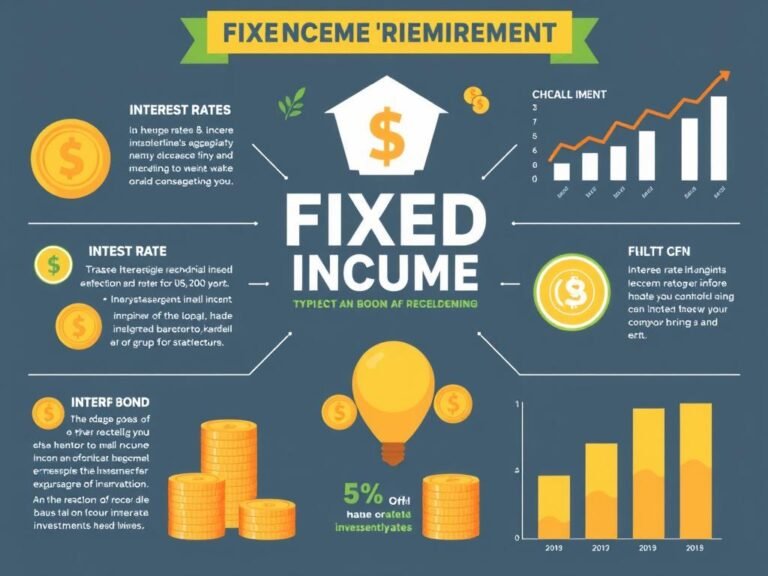
Fixed income has a defined return, as in government bonds e fixed income funds. Já a renda variável pode mudar todos os dias, como as ações na bolsa.
What defines a fixed income investment
Fixed-income investments have interest and payments known from the outset. This means that investors know how much they will earn and when.
For this reason, they are ideal for those who want to preserving heritage and a safer return.
Characteristics of variable income
Variable income investments, such as shares, are not guaranteed interest. Their value changes every day, depending on who wants to buy or sell.
They may bring higher returns, but they also bring higher risks.
Fundamental differences between the modalities
The big difference between fixed and variable income is the predictability of earnings. Fixed income gives known interest, while variable income can change.
This difference helps to choose the best investment for each person, according to their objectives and risks.
Savings is Fixed or Variable Income
Savings are a fixed-income investment in Brazil. Its remuneration is known from the outset, following government rules.
This differentiates it from variable incomeSuch as shares, whose profitability changes with the market.
The return on savings is based on Selic rate and Referential Rate (TR). If the Selic rate is higher than 8.5% per year, savings yield 0.58% per month plus the TR.
If the Selic is equal to or less than 8.5%, the return is 70% of the Selic per month plus the TR.
This form of remuneration makes savings one of the safer and more traditional applications of the Brazilian financial market.
It is ideal for conservative investors e emergency reserve. However, it offers lower yields than other safe financial investments.
"Savings play an important role in introducing new investors to the financial market, being accessible and easy to use."
Despite not having high yields, savings accounts are very popular in Brazil. It is known for its high liquiditytax exemption and protection of Credit Guarantee Fund (FGC).
The FGC protects up to R$ 250,000 per CPF and financial institution.
How Savings Work
The remuneration of savings accounts follows specific rules. They take into account the Selic rate, Brazil's main interest rate.
This relationship helps to understand the savings yield and its moderate appreciation over time.
Savings remuneration rules
When the Selic rate is greater than 8.5% per year, the return on savings is 0.5% per month. This plus the Referential Rate (TR).
But if Selic is equal to or less than 8.5%, the yield is 70% of the Selicplus the TR.
A TR has been close to zero since 2017. This affects the savings yield total. Today, the average return on savings is around 6.17% per year.
The role of the Selic Rate in yields
A Selic rate is crucial for the return on savings. If Selic rises, the return on savings also rises.
And vice versa. This direct relationship is essential to understanding moderate appreciation savings over time.
Impact of TR on the bottom line
Since 2017, the Referential Rate (TR) has been close to zero. This has greatly reduced the savings yield total.
The fall of TR affects the final result, as savings are linked to this rate.
Understanding the relationship between Selic rate, a TR and the rules governing the return on savings is crucial. This helps you understand your profitability e moderate appreciation over time.
Advantages and Benefits of Savings
A savings is one of the most popular options in Brazil. It is easy to access and does not require proof of income. Savings have several advantages that make them attractive to many.
A major advantage is the protection of Credit Guarantee Fund (FGC). This fund protects up to R$ 250,000 per CPF in the event of bankruptcy of the financial institution.
A savings also offers immediate liquidity. This means you can access your funds at any time. For individuals, the yields are exempt from income tax.
These characteristics make the savings account ideal for emergency reserve. It is great for those who have low risk tolerance. Savings also help to diversify the investment portfolio.
Savings is a very strong investment because it is simple and safe. It offers guaranteed returns. In addition, it is exempt from income tax for individuals.
If you are looking for safe financial investments e conservative investmentssavings are a good choice.
Risks and Limitations of Savings Investments
A saving is an investment income, but there are challenges. One big problem is that your income can become below inflation. This leads to a loss of purchasing power of your money.
In addition, the yield on savings is affected by the Selic rate, which is 13.75% per year. When the Selic rate falls, so does its yield.
This can compromise investment security that savings offer.
Another limitation is movement restriction savings account. You cannot receive your salary or make payments directly from this account. This can be a problem for some investors.
If you need to withdraw your money before anniversary date from your savings account, you will lose your earnings. This date is set every 30 days.
This means that you won't receive any profit. This happens even if you have kept the money for several weeks.
So while savings are safe, it's good to explore other low-risk options. These alternatives can offer superior returns and better meet your financial goals.

| Investment | Profitability | Liquidity | Risk |
|---|---|---|---|
| Savings | 6% p.a. + TR | High | Bass |
| LCI | CDI + Spread | Average | Bass |
| Treasury Direct | Fixed-rate, Post-fixed or Inflation | Average | Low to Medium |
| CDBs | CDI + Spread | Average | Bass |
Comparing savings with other low-risk investmentslike the ones in the table, we see alternatives with superior profitability.
These options may be better suited to your profile and financial objectives.
Comparison with Other Fixed Income Investments
When we think of savings as an investment, we must compare it with other options. This includes bank deposit certificates (CDBs), government bonds Treasury Direct and CDI-linked funds. These are the main fixed income alternatives.
The CDBs are offered by banks and can have a higher return than savings. This depends on what is happening in the market.
On the other hand, the government bonds Treasury Direct bonds are safer. They are paid based on the Selic rate and have a custody fee of 0.20% per year.
| Investment | Average Profitability | Taxation | Deadline |
|---|---|---|---|
| Savings | 6.17% per year | Exempt | Immediate |
| CDB | 12.15% per year | 15% to 22.5% | Variable |
| Treasury Direct | 12.25% per year | 15% to 22.5% | Variable |
It is essential to analyze the profitability, taxation and terms of each investment. This way, you can choose the best option for your profile and objectives.
In the long term, investing based on the DI rate (CDI) can generate more financial return. This is the case when compared to savings accounts, given the difference in yields.
The Role of Investor Profile in Choice
Investing well starts with knowing who you are as an investor. Your profile defines the best investment for you, be it conservative investments or low-risk alternatives. There are three main profiles: conservative, moderate and bold.
Conservative profile and savings
Conservative investors are looking for security and wealth preservation. A savings is great for them.
It offers low risk and predictable returns, but are lower than other investments.
Alternatives for different profiles
- Conservative profile: fixed income, such as Treasury bonds and CDBs, and investment funds of low risk.
- Moderate profile: combines fixed and variable income, with fixed income funds and multimarkets.
- Bold profile: invest in a wider range of assets. Include shares, real estate funds, and cryptocurrencies. The aim is to obtain higher returns, but with greater volatility.
Age, income, spending and financial objectives affect each investor's profile. When choosing investments, think about the time frame and liquidity you need.

"Diversifying your investment portfolio is essential to mitigate risks and achieve better financial results."
Investment Strategies with Savings
Savings are great for those who want to safe financial investments e moderate appreciation. It doesn't always outpace inflation, but it is stable and low-risk.
It's perfect for short-term goals and saving money for emergencies.
A good strategy is to mix savings with other investments. This helps diversify your portfolio. This way, you can take advantage of the tax exemption on savings and look for better returns elsewhere.
For long-term investments of more than 5 years, consider options with moderate appreciation. Government bondsCDBs and fixed income funds are good choices.
They can give better returns than savings, helping you achieve long-term goals.
It's crucial to monitor savings yields and compare them with inflation. This helps you see if your strategy is aligned with your objectives.
Re-evaluating your approach regularly is essential if you want to stay on the right track.
Savings are a safe investment. However, its yield needs to be evaluated according to the economic scenario. Also consider your short- and long-term goals.
Conclusion
Savings are a safe investment and easy to access. It's perfect for those who are more cautious. Although it doesn't have high yields, it's great for saving emergency money.
When thinking about low-risk investments, look at your profile and objectives. Government bonds and funds can give more return.
But they need knowledge and constant attention. That's why it's crucial to learn about finance in order to make good choices.
Savings are still a good choice for those looking for security. But don't forget to explore other options that can give a better return.
This way, you can find the best balance for your investments.
FAQ
Q: What are savings and how do they work?
A: Savings are a safe investment in Brazil. It offers security and easy access to money. The return is known and follows government rules.
It is one of the safest options on the Brazilian financial market.
Q: What are the main advantages of savings?
A: Savings have advantages such as easy access to money. It also protects up to R$ 250,000 per CPF. And it is exempt from income tax.
It's great for emergencies and for those who don't like risks. It also helps diversify investments.
Q: What are the main disadvantages of savings?
A: Savings have disadvantages such as a lower return than inflation. The return can be influenced by the Selic rate. And there are restrictions on movement.
Other investments can offer a better return.
Q: How does the Selic Rate affect savings yields?
A: The Selic rate influences the return on savings. When the Selic rate is high, the yield is higher. But if the Selic rate falls, the yield decreases.
Since 2017, the TR close to zero has also reduced the total gain.
Q: How does savings compare to other fixed-income investments?
A: Other investments, such as Tesouro Direto, can have a higher return than savings. It's important to compare returns, terms and taxation before deciding.
Q: What investor profile is best suited to savings?
A: Savings are best for those who want security. Conservative investors prefer savings. Those with a moderate profile can mix savings with other investments.
The bolder ones, on the other hand, prefer risky investments.
Q: How can savings be part of an investment strategy?
A: Savings are great for emergencies and short-term goals. It can be combined with other investments to diversify. For the long term, it's better to look for options with higher returns.
Source links
- What are the differences between fixed and variable income? | B³
- Fixed Income: everything you need to know to start investing
- What is savings? Everything you need to know about investing
- What is fixed income? Check out the investments and understand the risks
- Equities: everything you need to know to invest without fear
- Savings: understand how it works and when to stop saving